
Company Official: Warwood Facility Will Build Modules for Data Centers
Trending
WHEELING -- An official from Silicone Foundation on Wednesday dispelled what he described as misconceptions and clarified the company's intentions regarding plans for the recently acquired Centre Foundry & Machine Co. property in Warwood.
Many people in the Wheeling area have expressed concerns and even outrage as news about the development has circulated through the community, with fears about how a multi-megawatt data center at the site could impact local residents.
Andrii Garanin, chief energy and infrastructure officer for Silicone Foundation, was attending a conference in Munich, Germany, on Wednesday when he expressed concerns about inaccurate statements and feedback about the project over the past couple of days.
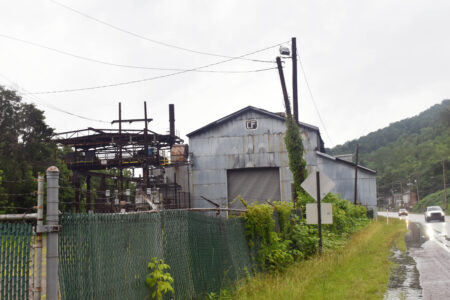
"I don't know where the information actually came from, exactly, because there was a statement that we were going to build some kind of a giant data center over there," Garanin said during a phone call from Munich on Wednesday night. "This is incorrect information. We're planning for an infrastructure buildout to utilize part of the existing infrastructure in Centre Foundry -- like cranes and the industrial production area -- for constructing modules and elements for the data center industry."
Silicone Foundation acquired the 15-acre Centre Foundry site earlier this spring, including the 60,000-square-foot building along W.Va. 2 that for decades housed a steel foundry. According to the deed, the property was purchased for $1.5 million. Silicone Foundation is now a company registered in Wheeling.
Garanin, who is from the Netherlands, said part of his team is located in the San Francisco area. He said he is moving to the United States from the Netherlands and has most recently been commuting between West Virginia and South Carolina while working in the U.S.
"This will be a primary production facility for modules which will be used in data centers," Garanin said. "What we want to do in Wheeling at Centre Foundry is -- and I want to reiterate, not build a giant data center. This is incorrect. We want to put in a few modules -- really few. It's about 10 units. You cannot really put more than that because there is not enough power capacity."
Silicone Foundation's website has a landing page titled "West Virginia Data Center," which describes the brownfield infrastructure site as "a grid-ready compute and infrastructure campus in West Virginia." The website states that Silicone Foundation is redeveloping a brownfield industrial site in northern West Virginia into a phased GPU data center and energy technology campus built around existing power, cooling, fuel, BESS (battery energy storage system) and modular power infrastructure.
The company's online "strategic rationale" notes that the bottleneck for the data industry is infrastructure, stating that AI compute demand is growing faster than data center supply can respond. It adds that for new sites, the limiting factor is often grid access, power availability, cooling density and interconnection timing. The West Virginia site, it states, starts with the hard parts already present: energized high-voltage service, industrial zoning, river cooling potential, gas infrastructure and a site plan that can phase from an initial 10-megawatt deployment toward a larger regional compute hub.
That 10-megawatt grid connection at the site has a defined path to 20-30 megawatts and a longer-term 100-megawatt campus, the company's website stated.
However, Garanin on Wednesday said the future power capacity of the site is still undetermined.
"We don't know yet what will be possible to build there," he said, noting that the company has been working with AEP to determine what utility infrastructure support can be provided. "Our request to AEP is to clarify what power is possible from this site to deliver. That doesn't mean it's going to be 100 megawatt or 70-80 megawatt. Technically under the current setup, the only power that is there is a 10-megawatt connection."
"To build a 100-megawatt facility, you need to rebuild the whole electrical grid in the area. Theoretically it's possible. But that's only in theory."
Garanin said he has met with city leaders about the project and expressed surprise about apparent confusion over the company's plans. A pop-up town hall about the project was held this week in Warwood, where legislators and residents debated opposing positions about West Virginia's House Bill 2014, the Power Generation and Consumption Act, which establishes state rules regarding high-impact data centers.
"What we do as a company, we specialize in software and development solutions for the data center industry like AI and GPU data centers," Garanin said, noting that he met with about 10-15 local leaders about the company's plans and was perplexed by the misunderstanding. "We had a meeting with all of the city officials last month, and I answered all of the questions regarding the proposed plans. I think we've been quite open to city officials."
Garanin said at the time of those meetings he proposed an informational meeting for the public. Local legislators and concerned citizens have said such a meeting is still needed.
"We're happy to hold a town hall meeting or a social hearing -- the only thing is right now we're in the process of acquiring and understanding what kind of capacity we can get from the local utilities in terms of the infrastructure," he said. "We haven't gotten a response yet, therefore we did not submit any plans. We haven't gotten any feedback from the utilities or power supplier, but they know about our plans."
"Once we have the response from the utility, we want to actually see a buildout happening in the second half of this year."
Garanin said Silicone Foundation has partnered with Stokes Inc., a South Carolina-based company that specializes in grid-scale battery storage, data centers and energy systems. Stokes Inc. recently posted on its LinkedIn page about the Warwood project, noting that it is being brought back online as a 21st-century compute and energy technology campus.
"I want to just state clearly that we are planning an infrastructure buildout there," Garanin said, encouraging people to look into videos and podcasts of panel discussions in which he has participated.
As CEO of Hiveon Energy, Garanin has participated in expert panels on bitcoin mining, AI and energy optimization.
He said energy efficiency and data infrastructure are vital to supporting modern technology, and he believes there will be a major infrastructure buildout in the United States in the coming years. He also said Silicone Foundation hopes to develop a school focused on data center deployment applications in the future.
Garanin said he understands public concerns about the data center industry's projected impact on energy systems, but stressed the company's focus on improving efficiency on the utility side of expansion.
"We look at how we can help manage this increased load from consumption and from supplies like renewables," he said, noting that success in this area could benefit consumers. "It actually, eventually, should bring the bills in the community down."
Garanin said he will be traveling back to the U.S. next week and hopes to address community concerns in Warwood.
"We only have good will for the community," he said. "There's nothing that we want to hide. We want to be quite open. I'm really kind of concerned and sad that the publicity kind of went sideways. If there are any questions, I'm happy to answer."