
Historic Sistersville Ferry Drifts Into Uncertain Waters
Sistersville Council Delays Decision on Replacement as Officials Seek Financial Answers
Trending
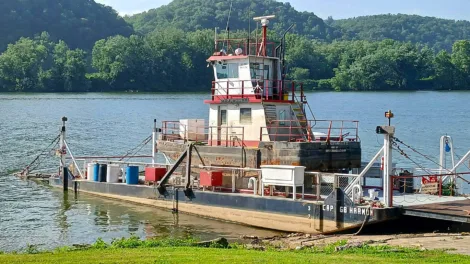
SISTERSVILLE -- The future of Sistersville’s historic ferry remains uncertain after City Council postponed a decision Wednesday on replacing the vessel, opting to take two more weeks to gather financial information and inspect potential replacement boats.
Council's special meeting was called to address the fate of the ferry, a service that has connected West Virginia and Ohio for more than 200 years and remains one of the community’s most recognizable landmarks.
While council members expressed unanimous support for preserving the ferry, they said they need more complete information before committing to what could be a significant financial investment -- particularly with insurance and operational costs.
Mayor Bill Rice, who has led efforts to explore replacement options, and Sistersville Ferry Board Chairman Gary Bowden outlined the current financial picture and available options.
Bowden said the ferry board has approximately $94,000 available, made up of grants, donations and operating revenue. Some grant funding is restricted to specific purposes, but he said $15,000 originally designated for operating expenses has been approved for restoring ferry service.

Insurance proceeds from the current ferry are expected to total about $162,000 after salvage expenses. In addition, the salvage company has offered $30,000 for the damaged ferry if the city purchases one of two replacement boats it currently has available. Each vessel is priced at $250,000 and carries three years remaining on its inspection certificate.
Rice cautioned council members that the boats are currently on the market and could be sold if the city waits too long to decide.
One of the available boats is less than 26 feet in length and would not require a licensed pilot, while the larger vessel would require a certified operator.
If the city instead allows the insurance company to keep the damaged ferry, Bowden said the insurance settlement would be reduced to approximately $90,000.
Council members also questioned the ferry's long-term operating costs, including insurance premiums, fuel, maintenance and staffing. Bowden said labor accounts for roughly 70% of the ferry’s operating expenses.
Officials also discussed possible fundraising efforts. Bowden said the ferry board would consider launching a GoFundMe campaign, while local lawmakers have indicated they may be willing to help financially.
According to officials, state Sen. Charles Clements, R-Wetzel, has said he could provide $10,000 in discretionary funding depending on the council’s decision. Bill Bell also told Rice he intended to seek a $25,000 state appropriation following the ferry salvage.
Bowden urged council members not to allow the historic crossing to disappear.
“I hope this council is not the council that is going to end a 200-year tradition,” he said. “We, as the ferry board, are willing and eager to go to work trying to get the ferry back in operation.”
Another council member said more detailed financial projections are needed before moving forward.
Council unanimously approved a motion directing Rice and Bowden to continue researching available funding and clarify all pledged and available funds before the council meets again. The two will travel to Pittsburgh to inspect the potential replacement boats and determine whether either would meet the city’s needs.
They are expected to report back to council by July 15, when the future of one of the Ohio River’s oldest ferry operations could become clearer.