
TANF Trouble: Lawmakers Scratching Heads As Clothing Voucher Program Comes To Halt
Trending
CHARLESTON – Two days prior to Gov. Patrick Morrisey promoting West Virginia’s back-to-school sales tax holiday, the annual School Clothing Allowance program funded through the Temporary Assistance for Needy Families program went dark, leading lawmakers and advocates to ask why.
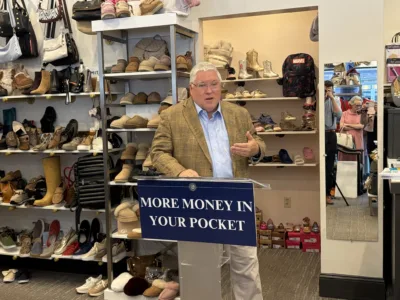
Morrisey was in Greenbrier County Wednesday announcing the sales tax holiday, taking place today through Monday, Aug. 3., when the state drops the 6% consumer sales and use tax on qualifying back-to-school purchases. The sales tax holiday has been in place since the legislature passed House Bill 206 in 2019.
“As families across West Virginia prepare to send their children back to school, I know this time of year brings both genuine excitement and real financial stress,” Morrisey said in a statement. “Between new shoes, clothes, backpack essentials, and modern classroom tech, the costs stack up quickly. As your Governor, my mission is to get government out of the way and put more of your hard-earned dollars back in your pocket.”
However, on Monday, the state Department of Human Services (DoHS) announced that the School Clothing Allowance program had to shut down after the application period opened seven days earlier on July 20 due to running out of funding.
“The 2026 School Clothing Allowance application period has closed effective 11:59 PM on July 27, 2026, since program funding has been exhausted,” according to a statement on the website for DoHS’ Bureau for Family Assistance. “Applications submitted by 11:59 PM on July 27, 2026, will be approved if eligibility requirements are met. Applications received after 11:59 PM on July 27, 2026, will be denied. DoHS appreciates the strong response to this year’s School Clothing Allowance program.”
DoHS announced on July 10 that it would begin accepting applications for the School Clothing Allowance program on July 20 after service providers were left in the dark when the program did not begin on July 1. The deadline to apply was Saturday, Aug. 15.
"It's alarming that the state stopped accepting applications for school clothing assistance after just one week and appears to have reduced funding for the program,” said Jim McKay with Prevent Child Abuse West Virginia, a part of the Legislative Action Team for Children and Families (LAT). “Families shouldn't lose access because the application window closed before many parents even knew it was available. At a time when families are facing higher costs for groceries, gas, rent, and other necessities, reducing the number of children who receive clothing assistance makes it even harder for parents to prepare their kids for school.”
The School Clothing Allowance is one of several programs funded through Temporary Assistance for Needy Families (TANF), also called WV WORKS. TANF is a federal block grant that distributes more than $16 billion nationally, with state’s provide a certain percentage of matching funds.
According to the Governor’s Office, DoHS spent approximately $11.4 million in the previously fiscal year that ended on June 30 on the School Clothing Allowance, with nearly 55,000 applicants benefiting from the program that distributes $200 per eligible child for purchase clothes and back-to-school items.
By comparison, approximately 52,000 applications were received between July 20 and July 27, though the Governor’s Office stressed that that number could increase as DoHS processes additional applications received by midnight July 27 and determines eligibility.
“We won’t know the final amount spent on the program until all applications have been processed and vouchers have been redeemed,” said Lars Dalseide, a spokesperson for Gov. Morrisey. “Our goal was to make funding available at the same level as last year.”
Legislative reaction to the halting of the School Clothing Allowance was bipartisan in disappointment.
“TANF services our most vulnerable families in West Virginia, and I was disappointed by the delay in implementation of the program for this fiscal year, and even more disappointed with the pause,” said state Sen. Mike Oliverio, R-Monongalia, a member of the Senate Finance Committee.
“I think we’re failing our children,” said House Finance Committee Minority Chairman John Williams, D-Monongalia, Oliverio’s Democratic opponent in the 13th Senatorial District general election race. “I don’t think it’s been explained exactly what the problem that the governor’s office is having, and t’s hard to be helpful when you’re unsure of what the problem is.”
The issues with the School Clothing Allowance are just the latest in a line of issues with TANF since Morrisey first announced a potential $43 million structural deficit for the program in May. Morrisey placed the blame for the alleged structural deficit on an influx of federal dollars that came into the state during the COVID-19 pandemic, with previous state officials using the one-time funding to expand TANF spending, with temporary TANF carryover balances masking the problem.
The Legislature amended and approved the Governor’s recommended general revenue budget line item for TANF for fiscal year 2027 beginning on July 1, which is $177.1 million. The budget line item for the previous fiscal year for TANF was $176.7 million. But the fiscal year 2025 budget for TANF during the final year of former Gov. Jim Justice's second term was $134.7 million, or $42.4 million less than the current fiscal year.
The Governor’s Office has argued that the $177.1 million TANF line item is spending authority and not indicative of how much the program has, with the program receiving $98.8 million in federal funding but expenses topping $137 million. The Governor’s Office estimates TANF carryover fund will be exhausted within the next 13 months. House Finance Committee Chairman Vernon Criss pushed back on these claims.
"The dollars that were asked for in the budget that started July 1 were appropriated by the legislature as the governor had asked for,” said Criss, R-Wood. “We are in the first month of that new fiscal year. There should be no reason that in less than 31 days that he has, quote unquote, run out of money. None at all.”
State Treasurer Larry Pack, a former Republican lawmaker and former Department of Revenue secretary, called on Morrisey and the legislature to come together to fix the issues with TANF, including moving some of the available surplus tax collections left over from the end of fiscal year 2026 into the School Clothing Allowance.
West Virginia ended fiscal year 2026 with a $370 million general revenue budget surplus, covering the $245 million in appropriations placed in the surplus section in the current general revenue budget and leaving $125 million in unappropriated surplus collections for FY27.
"It is outrageous and unacceptable that, as we celebrate millions of dollars in surpluses, we claim we lack the proper funding for programs that protect our most vulnerable children,” Pack said. “Providing for these needy children is a fundamental duty of government. With rising costs, we must do more to ensure that needy families have the resources required to give their children a real chance at success.”
But lawmakers said that Morrisey and DoHS has flexibility within State Code to move funding around within the DoHS budget to address short-term needs, such as fully funding the School Clothing Allowance
“These are matching dollars for federal drawdowns, and therefore, if they have mismanaged their drawdowns or have mismanaged the money in 30 days, that is an administrative problem and not a legislative problem. And we will not cover him if he’s mismanaged the situation,” Criss said.
“I know that the Governor’s Office does have the discretion to move money around,” Williams said. “We could have this thing fully funded tomorrow if we really wanted to. I think it’s just another example of us having our priorities out of whack.”
“The administration has cash flow management tools available to them to meet the needs of these citizens,” Oliverio said. “I hope they will take advantage of those opportunities and begin meeting the needs of these families during this summer season.”