
Warwood Residents File Civil Suit to Stop Data Center Development
Trending
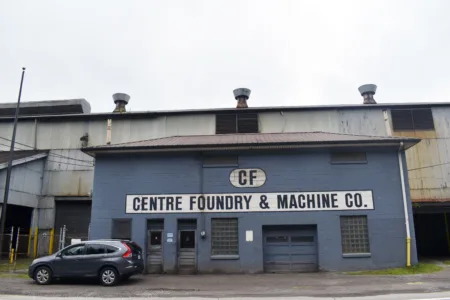
WHEELING -- A group of Warwood residents is attempting to halt the development of a data center on the former Centre Foundry & Machine Co. property along W.Va. 2 by taking legal action against the new owner.
A civil complaint was electronically filed Wednesday in Ohio County Circuit Court by attorney J. Anthony Edmond Jr. of the local law offices of Edmond & Baum PLLC against Silicon Foundry Energy LLC, doing business as Silicon Foundation. The action was filed on behalf of several Warwood residents, many of whom appeared this week before Wheeling City Council to voice their concerns about the proposed data center.
The complaint seeks declaratory judgment, a temporary protective order and preliminary and permanent injunctive relief to prevent the construction, development, operation and maintenance of the Warwood Data Center by Silicon Foundation on the former Centre Foundry site.
Assertions contained in the complaint also allege that House Bill 2014 -- passed by the West Virginia Legislature last year to establish state regulations for high-impact data centers -- is unconstitutional.
The case was filed under the docket of Ohio County Circuit Judge David Sims.
Individual plaintiffs listed in the complaint are Polly Barks, Joe DePaulis, Owen Dobreynski Hines, Savannah Fedczak, Elizabeth Hannah, Albert “Marc” Hannah, Heather Hines, Heidi Kossuth, Betinna Makley, Natalie Miniard, Liz Stephens and Randy Stephens. All of the plaintiffs are listed as Warwood residents.
“Plaintiffs’ property, their primary residence, is located in the same ward, area and community as the proposed Warwood Data Center,” the complaint states.
There has been a public uproar over the proposed development ever since information about the Centre Foundry property’s purchase and information posted on websites by Silicon Foundation and a business associated with the site’s planned development, Stokes Inc., initially indicated that long-term plans for the Wheeling site were to expand to a 100-megawatt data facility. Such a facility would fall under state jurisdiction because facilities with a capacity of 90 megawatts or more are considered high-impact data centers.
Company officials have since maintained that a large-scale data center would not be possible because of the site’s limitations.
Andrii Garanin, chief energy and infrastructure officer for Silicon Foundation, said the data center itself is expected to create about 10 permanent jobs. Around 50 to 100 construction jobs, with as many local workers as possible, also will be required during development, and a Phase 2 module assembly system eventually will employ about 30 people per shift.
Although Garanin said earlier this month that the company was still working with AEP to determine the full availability of electricity at the site, he noted the maximum capacity of the existing power line is theoretically 50 megawatts.
Officials close to the Warwood project have indicated that Silicon Foundation, whose executives have international roots and technology business experience in Europe and the United States, plans to invest more than $100 million in the currently vacant brownfield site in Wheeling.
Opponents of the project appear to be exploring every means possible to stop it from moving forward. According to the complaint filed Wednesday, the proposed Warwood Data Center, if constructed or operated, would “create substantial and unreasonable interference with the plaintiffs’ use and enjoyment of their property, including but not limited to noise, fumes, odors, vibration, storm water runoff, flooding, contamination, light trespass, fire risk, water withdrawal and discharge impacts, diminished electric service reliability, potential utility cost shifting, reduced property value, loss of quiet enjoyment and interference with residential use.”
The complaint maintains that laws set forth in House Bill 2014 bar counties and municipalities from enforcing ordinances, regulations or rules that limit the creation, construction, development, expansion or operation of high-impact data centers, including ordinances concerning zoning, noise, lighting, building permitting, inspections, code enforcement, licensing and legal jurisdiction.
Furthermore, the plaintiffs allege that the proposed data center would fall outside Wheeling’s zoning ordinance for the property, which is zoned I-2 Industrial. The complaint claims the zoning classification does not encompass this type of land use.
The plaintiffs ask the court to declare that any proposed development associated with the data center be subject to Wheeling’s municipal approval process through its zoning authority and City Council, including site plan and use applications, permitting, Planning Commission review, public comment, Board of Zoning Appeals involvement and City Council approval.
Attorney David Croft, who has represented Silicon Foundation in legal matters, said Wednesday evening that he had not reviewed the complaint.
“We will review the nature of the claims set forth and will respond to them accordingly,” he said.