
Crowd Packs Council Meeting With Presentation by Silicon Foundation Official
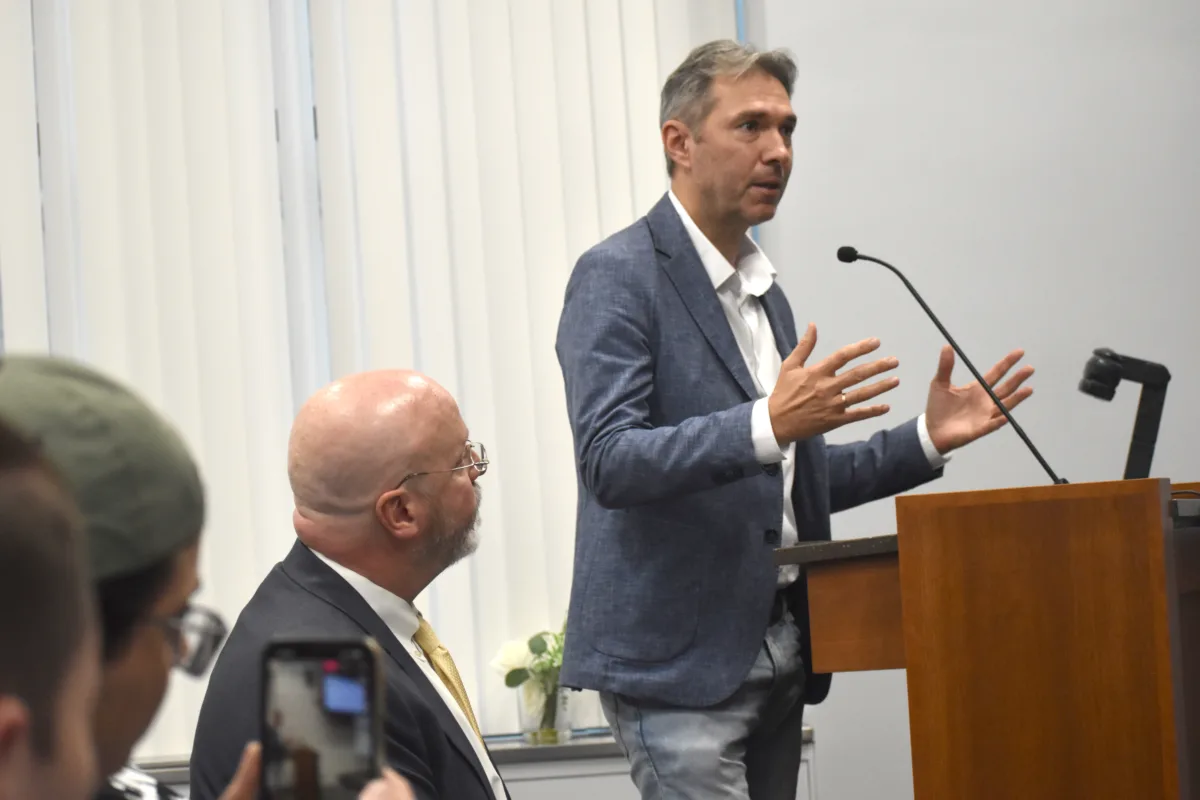
Andrii Garanin, right, of the Silicon Foundation, during Tuesday night's Wheeling City Council meeting speaks in a public setting in the city for the first time since word swept through the community that the company planned to build a data center and energy technology campus in Warwood.
Photo by Eric Ayres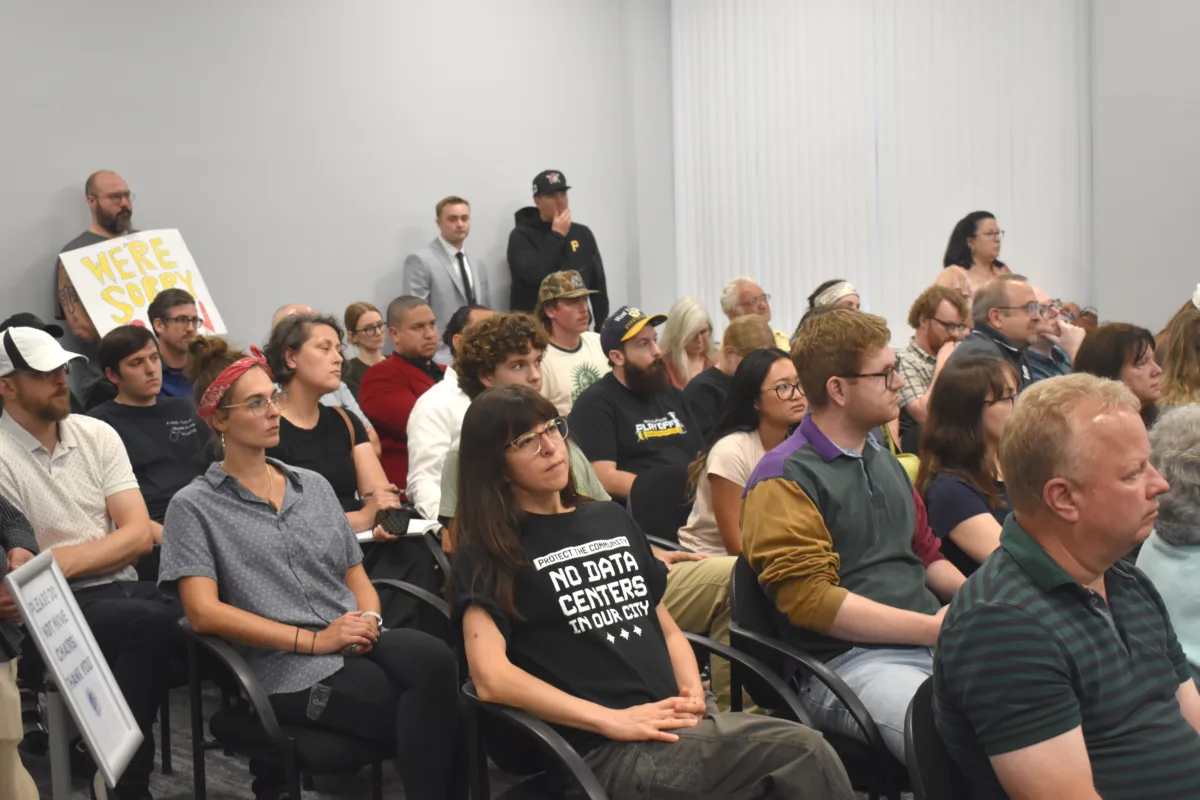
A standing-room-only crowd packed Tuesday night's meeting of Wheeling City Council when Andrii Garanin of Silicon Foundation came to speak in public before city leaders about the company's plans for the former Centre Foundry property in Warwood.
Photo by Eric Ayres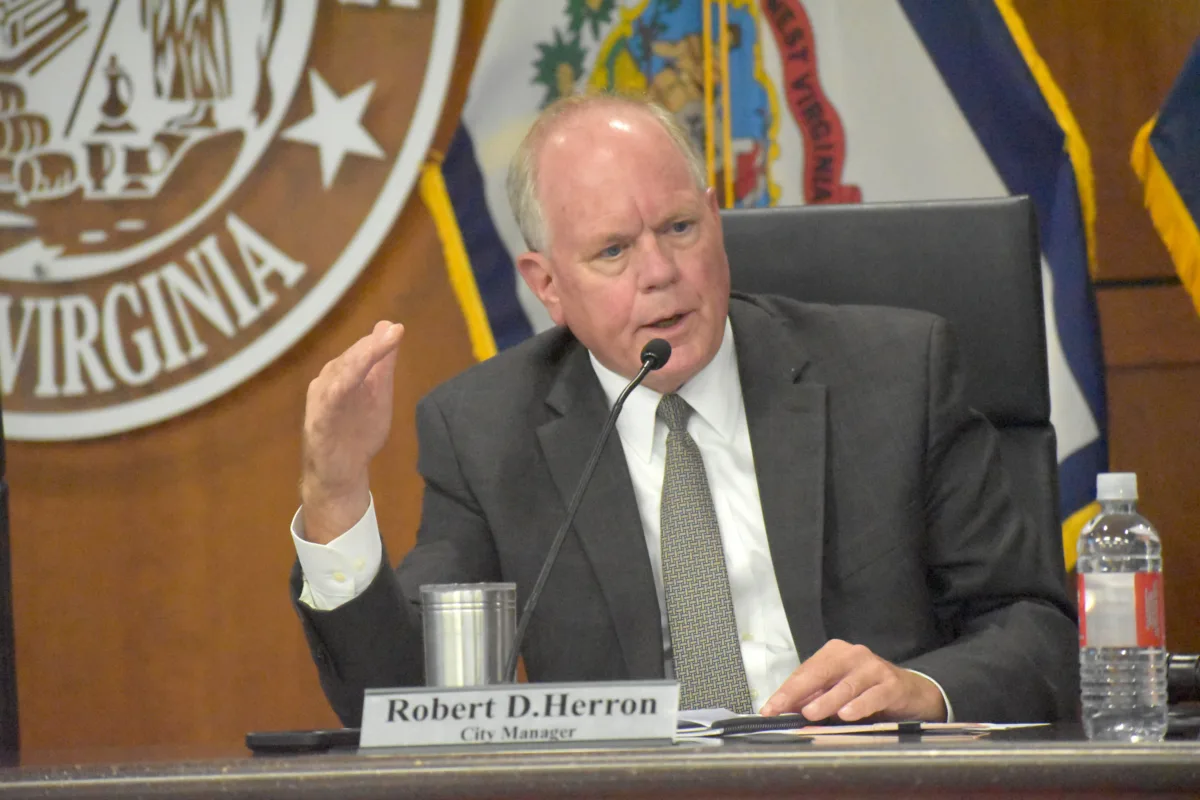
Wheeling City Manager Robert Herron speaks during Tuesday night's meeting of Wheeling City Council.
Photo by Eric Ayres
Polly Barks of Warwood speaks out against data centers during Tuesday night's meeting of Wheeling City Council.
Photo by Eric Ayres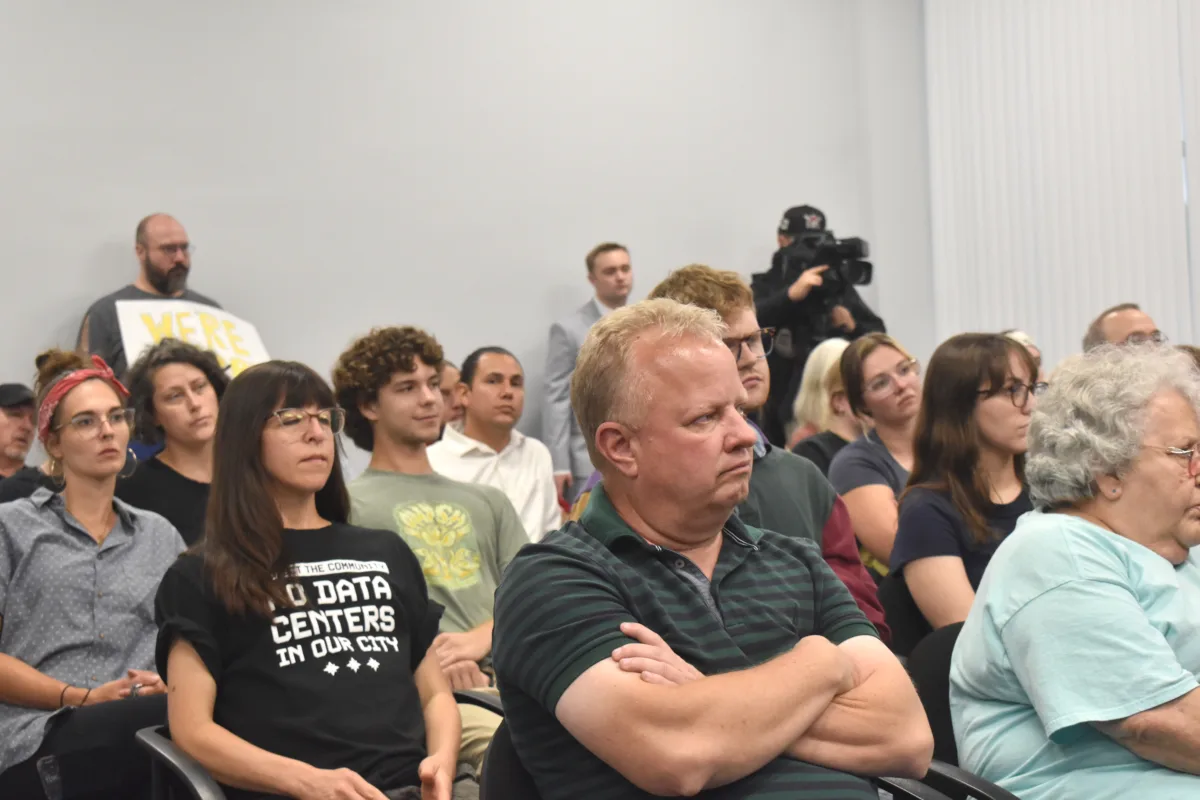
A standing-room-only crowd packed Tuesday night's meeting of Wheeling City Council when Andrii Garanin of Silicon Foundation came to speak in public before city leaders about the company's plans for the former Centre Foundry property in Warwood.
Photo by Eric Ayres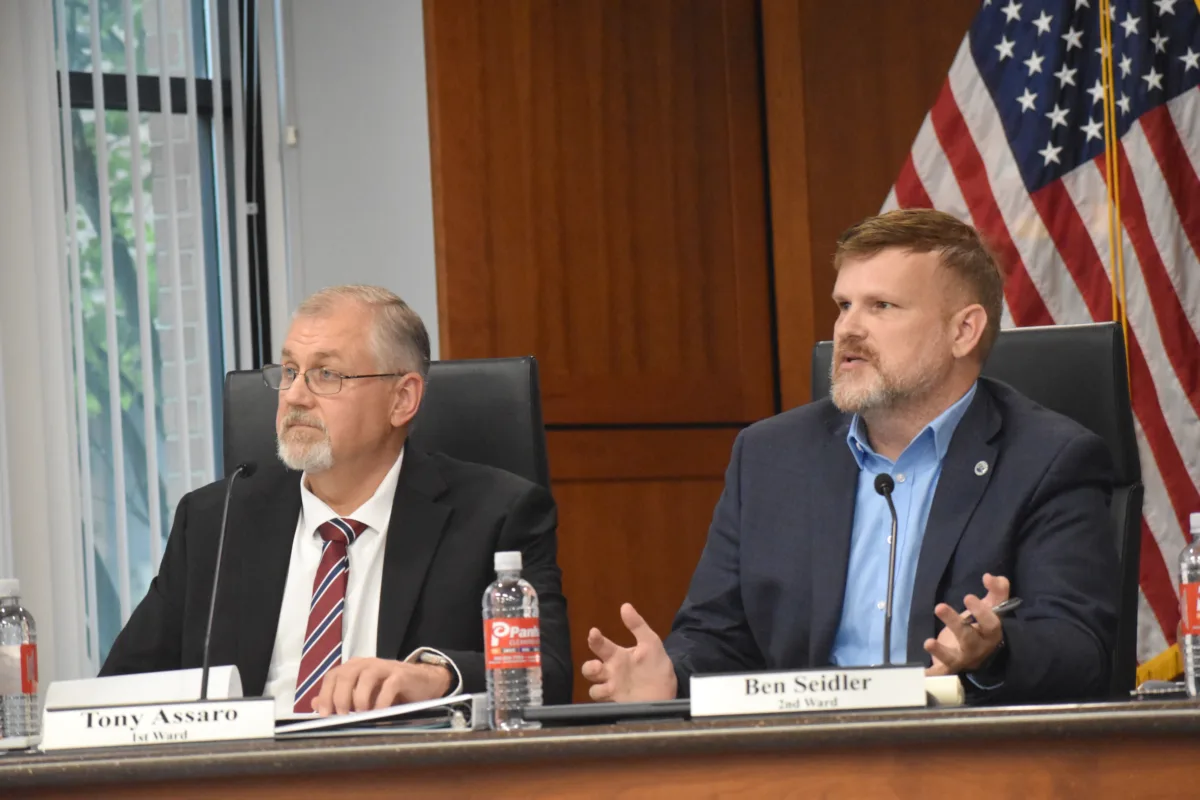
Wheeling City Councilmen Tony Assara and Ben Seidler, from left, attend Tuesday night's city council meeting, when hours worth of discussion unfolded about a proposed data center in Warwood.
Photo by Eric Ayres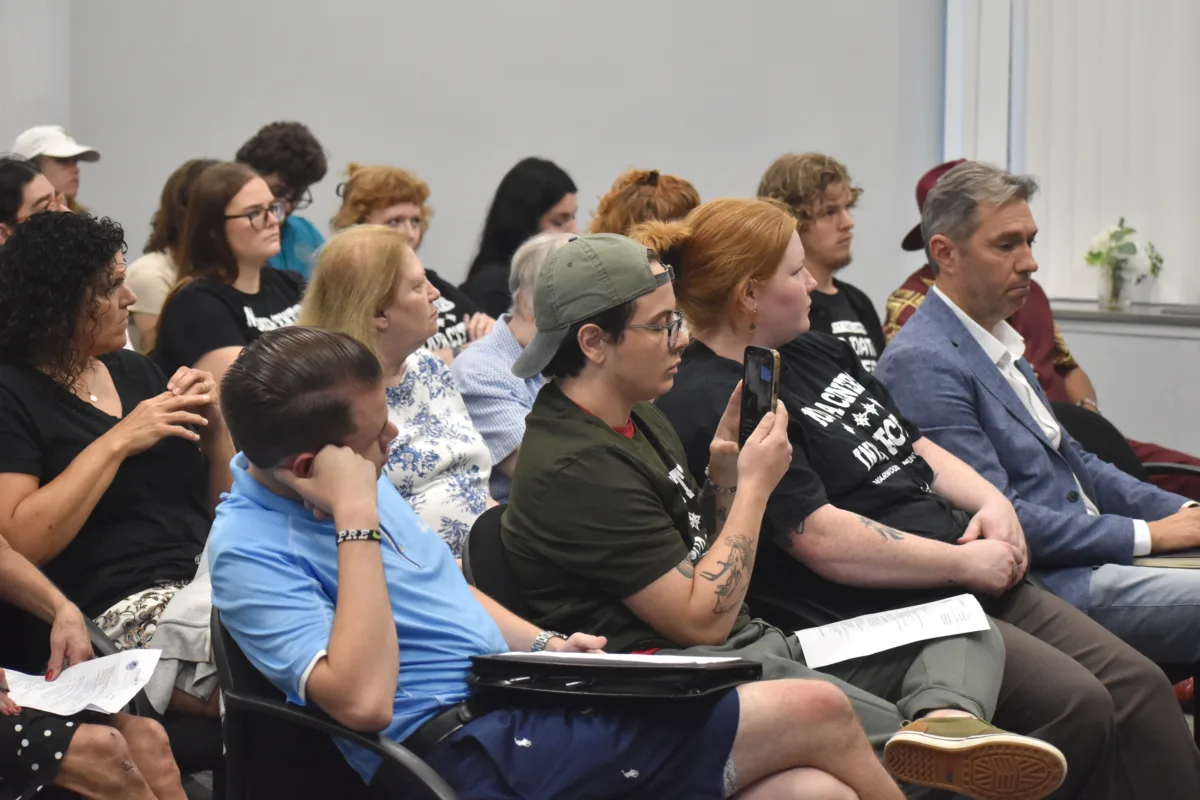
A standing-room-only crowd packed Tuesday night's meeting of Wheeling City Council when Andrii Garanin of Silicon Foundation, in front row at right, came to speak in public before city leaders about the company's plans for the former Centre Foundry property in Warwood.
Photo by Eric Ayres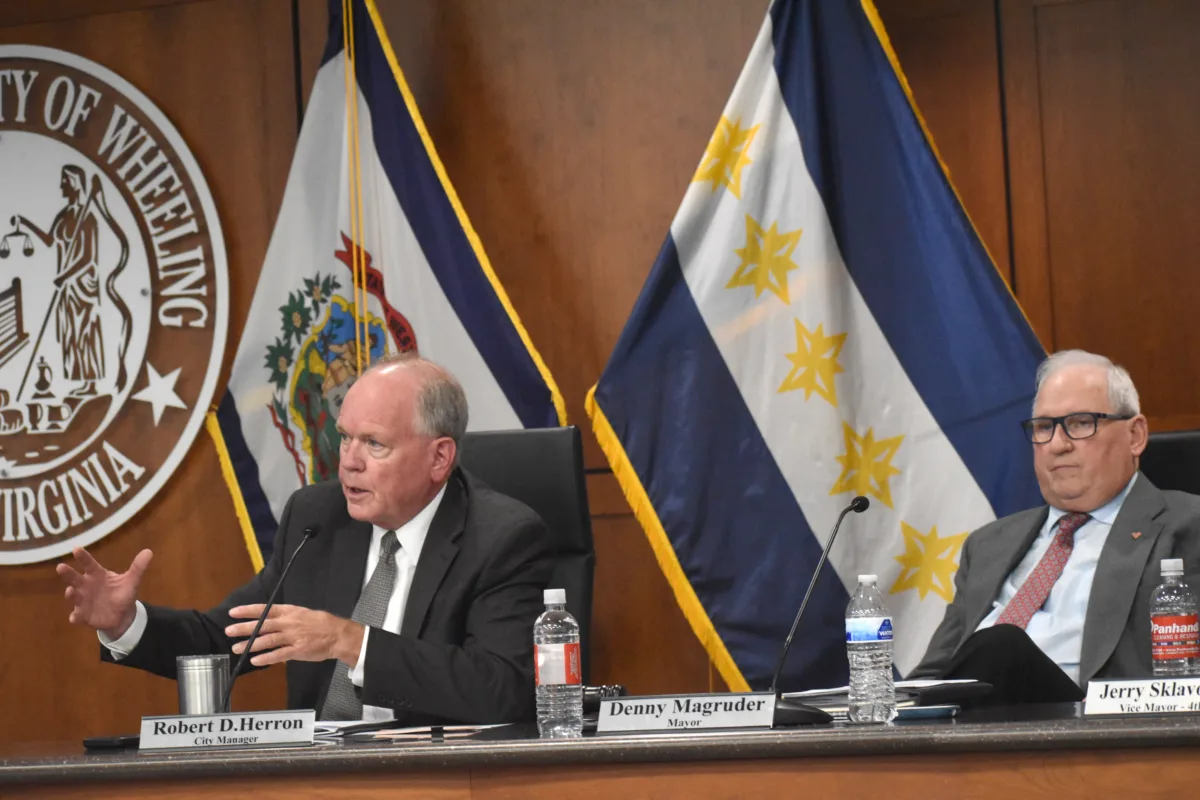
Wheeling City Manager Robert Herron, left, and Mayor Denny Magruder attend Tuesday night's meeting of Wheeling City Council.
Photo by Eric Ayres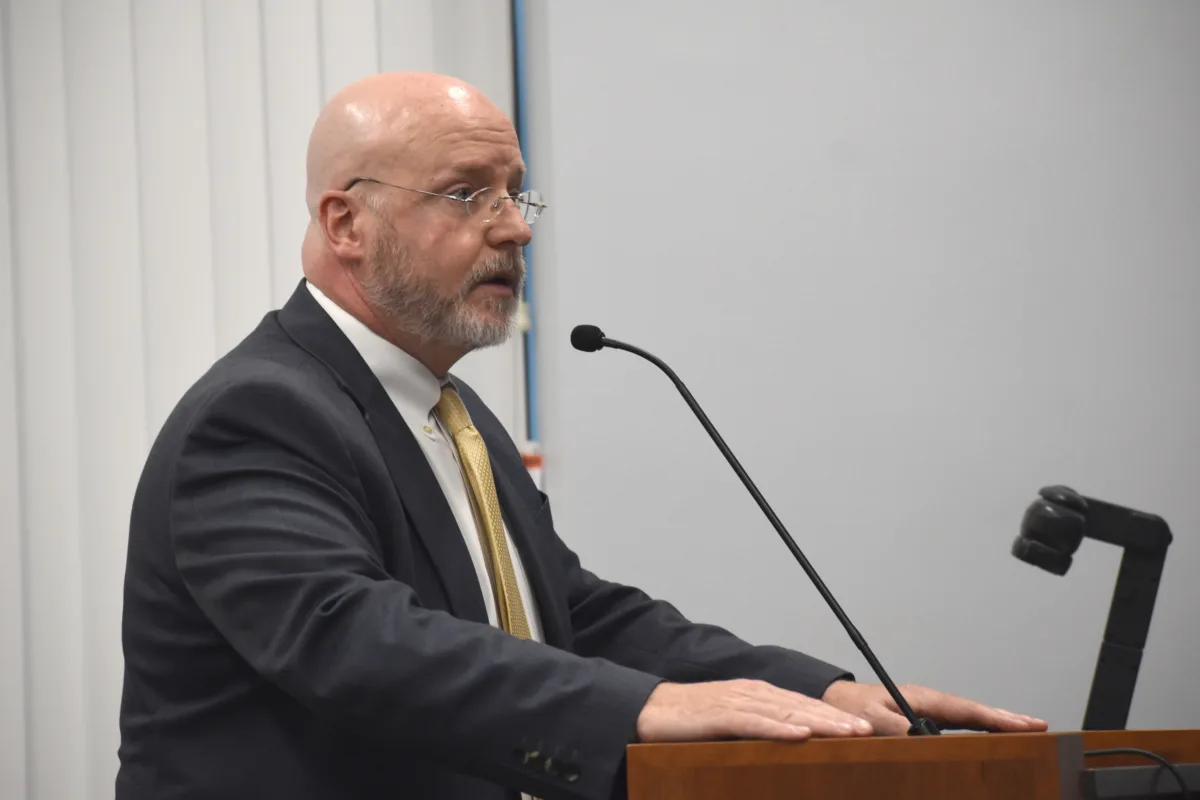
Attorney David Croft, legal representative for the Silicon Foundation, speaks before Wheeling City Council during Tuesday night's meeting.
Photo by Eric Ayres
Andrii Garanin, right, of the Silicon Foundation, during Tuesday night's Wheeling City Council meeting speaks in a public setting in the city for the first time since word swept through the community that the company planned to build a data center and energy technology campus in Warwood.
Photo by Eric Ayres
A standing-room-only crowd packed Tuesday night's meeting of Wheeling City Council when Andrii Garanin of Silicon Foundation came to speak in public before city leaders about the company's plans for the former Centre Foundry property in Warwood.
Photo by Eric Ayres
Wheeling City Manager Robert Herron speaks during Tuesday night's meeting of Wheeling City Council.
Photo by Eric Ayres
Polly Barks of Warwood speaks out against data centers during Tuesday night's meeting of Wheeling City Council.
Photo by Eric Ayres
A standing-room-only crowd packed Tuesday night's meeting of Wheeling City Council when Andrii Garanin of Silicon Foundation came to speak in public before city leaders about the company's plans for the former Centre Foundry property in Warwood.
Photo by Eric Ayres
Wheeling City Councilmen Tony Assara and Ben Seidler, from left, attend Tuesday night's city council meeting, when hours worth of discussion unfolded about a proposed data center in Warwood.
Photo by Eric Ayres
A standing-room-only crowd packed Tuesday night's meeting of Wheeling City Council when Andrii Garanin of Silicon Foundation, in front row at right, came to speak in public before city leaders about the company's plans for the former Centre Foundry property in Warwood.
Photo by Eric Ayres
Wheeling City Manager Robert Herron, left, and Mayor Denny Magruder attend Tuesday night's meeting of Wheeling City Council.
Photo by Eric Ayres
Attorney David Croft, legal representative for the Silicon Foundation, speaks before Wheeling City Council during Tuesday night's meeting.
Photo by Eric AyresTrending
WHEELING -- Officials in Wheeling on Tuesday night welcomed Silicon Foundation’s Andrii Garanin to speak and answer questions about the company’s plan for the former Centre Foundry property in Warwood, but anti-data center protesters who packed the City Council meeting were less welcoming.
Garanin was given a chance to speak during the mayor’s report, when he reiterated Silicon Foundation’s plan to build a phased GPU data center and energy technology campus around existing infrastructure at the former industrial site along River Road on the south end of Warwood.
Council members, who have faced public scrutiny over the private company’s plan, launched several questions about the venture. Attorney David Croft, legal representative for Silicon Foundation, noted that the company hoped to enter into a memorandum of understanding with the city to assure Wheeling officials and members of the public that the operation at the Centre Foundry site will never be a high-impact data center like those that have raised concerns in communities across the country.
Croft said a draft of a pact pledging this has been presented to Wheeling City Solicitor Rosemary Humway-Warmuth.
"There is an agreement on the table that I had sent to City Solicitor Humway-Warmuth that binds Silicon Foundry Energy LLC to never apply to be a high-output data center, so House Bill 2014 is completely off the table," Croft said, citing the state’s legislation that sets forth regulations for large-scale, high-impact data centers.
To provide additional assurances, the city proposed expanding a Tax Increment Finance (TIF) district to the Warwood site that would, in essence, bind the company to a smaller size and prevent it from expanding to a larger operation.
"House Bill 2014 specifically excludes TIF districts from high-impact data center consideration," Wheeling City Manager Robert Herron explained. "The city would be able to actually expand the Downtown TIF district to the Centre Foundry property, which currently does not have a whole lot of value on it. Then any value associated with this project would then be captured as part of this TIF district and would be able to be used as economic development in our very lucrative and successful TIF district that we’ve utilized for the past 25 years."
Herron went on to explain that if the company entered into an agreement with the city and the property is included in a TIF district, the city could issue bonds backed by the TIF to fund projects. This would be binding on the company as the property owner to uphold its end of the agreement, Herron said, noting that if the agreement were violated upon an expansion of the operation into a high-impact data center, Silicon Foundation would be liable for damages in the event that the TIF district had to be dissolved because of rules outlined in HB 2014.
Garanin, chief energy and infrastructure officer for Silicon Foundation, said the company plans to use the existing infrastructure at the sprawling Centre Foundry site to build several battery storage compute modules and create a training facility for skilled work related to the technology.
Council members questioned whether the venture would consume electricity to the point that it would raise power rates for local consumers -- one of the key concerns of data center opponents. Garanin said the facility will not go above the existing 69 kV high-voltage grid connection and will not create a situation in which the power company would need to raise rates.
The facility will not draw water from or discharge water into the Ohio River, the operation will not discharge anything into the air as it uses electricity and it will not create excessive light or noise pollution, Garanin noted.
"We’ve all seen these videos of these horrible, monstrous data centers that completely destroy the quality of life of people surrounding them," Councilman Ben Seidler said. "Those are very valid concerns, and they’re real. We’ve seen the videos where they turn the water on, and they don’t get any water or they get brown water. They have this low-pitch hum that never goes away ... what reassurances do you have so that people here know that that’s not going to be the case?"
Garanin said the data center industry has evolved in recent years from its early designs. He noted that the company is transforming an "old, run-down brownfield site" -- one that could likely otherwise remain vacant -- into a modern technology facility. Their intent is to make the site even better than when the Centre Foundry operated there, Garanin indicated, and they would be happy to compile and provide noise-level data.
Because the site lies within the city limits, it will be subject to existing noise ordinances and other city regulations.
"I think the concerns here are valid. Nobody in this community wants to see a gigantic, seven-story data center that is a ridiculous, loud problem that takes away from peaceful enjoyment of everybody’s property in this community," Seidler said. "I do appreciate your effort to clarify the details on that, because that matters."
Ward 1 Councilman Tony Assaro, who represents the community of Warwood, has noted that the majority of his constituents who have expressed their thoughts on the venture do not welcome it. During a previous council meeting, several Warwood residents came to speak against the data center, requesting that City Council implement a moratorium on the development of new data centers in town.
On Tuesday night, Assaro said he explored the issue, and the city’s legal department cited case law that prohibits communities from adopting such a moratorium.
City officials noted that they have to abide by the law and cannot obstruct progress on a private venture by taking action that would be considered outside legal parameters.
"I can tell you how my residents are going to look at it. They’re not going to see a ‘win-win.’ They’re going to see an improvement limiting the impact. We’re still getting an impact. Our ordinances do apply -- that’s a good thing. We can keep a lid on things and keep things from getting out of hand. Are my neighbors going to be happy? They’re going to let me know, I know that. But it’s like a doctor walking into the office and telling you that you have a lot less cancer than they thought you had."
Several people came to speak against the venture, which is said to bring an investment into the community that tops $100 million. Many individuals in attendance during Tuesday’s meeting wore T-shirts with slogans in opposition to data centers in the community.
"I would ask you just to look at those folks and tell them that you’re not going to ruin their lives," Seidler told Garanin.
Polly Barks, who has spoken on the matter previously, noted that data centers have contributed to massive jumps in power supply costs within the regional power grid to the tune of billions of dollars.
"When they tell you it’s not happening, we have the studies to back up -- we have documented this very thoroughly," she said.
Vincent DeGeorge expressed frustration about the fact that Garanin was given unlimited time to speak during the meeting, but opponents of the data center were limited to three minutes each. The crowd loudly booed as Croft and Garanin left the meeting before the public was permitted to address council. They also cheered and applauded each speaker, many of whom asserted that Silicon Foundation has lied to the community and that city leaders need to rely on information provided from sources other than the company.
"Stop operating in the shadows," DeGeorge said. "Let the light of truth shine on this issue. Give us equal treatment, and stop with the lies and simple answers."