
Lawmakers Blast Rising Costs, Failures Of Human Services Data System
Trending
CHARLESTON - A recent audit of the West Virginia Department of Human Services found a potential for $68 million in savings, but department officials said that could take years to realize and lawmakers expressed frustration at growing expenses for the data program underpinning the entire system.
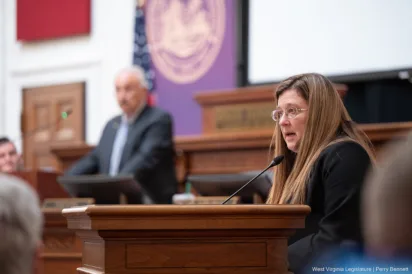
The Joint Standing Committee on Finance held a question-and-answer session Sunday evening with Christina Mullins, deputy secretary for the Department of Human Services and interim cabinet secretary since March following the resignation of DoHS Secretary Alex Mayer.
Mullins was asked about the comprehensive performance audit conducted by BDO USA, which was released in May by Gov. Patrick Morrisey.
The BDO audit provided recommendations totaling nearly $68.4 million in potential savings. These included finding ways to reduce reliance on out-of-state services for foster children, replacing outdated technology, fixing the Medicaid verification process, updating grant management systems and cutting postage and mail costs. Other recommendations included improving the reimbursement and payment processes for vendors and providers, reducing paperwork for caseworkers and coordinating services between state departments and agencies.
"I would like to emphasize that this has been a productive initiative that has produced a roadmap so that we can provide better services to kids and families," Mullins said. "We understand that if we can operate more efficiently, we can implement our mission better, and we are excited to work on this initiative."
According to the audit, DoHS could see approximately $18.5 million in potential savings by addressing technology constraints and mainframe dependency within the troubled and expensive People's Access to Help system. The mission-critical system manages the state’s family assistance programs, such as Medicaid, the Supplemental Nutrition Assistance Program, Temporary Assistance for Needy Families program, child welfare documentation and more.
DoHS is seeking a new vendor to run PATH, which is managed by software company Optum, whose parent company is UnitedHealth Group. To date, West Virginia has paid Optum more than $400 million since contracting with the company in 2017 during former Gov. Jim Justice’s first term.
"Mainframe data migration is a key priority for PATH. It is a must for us to be able to do the other improvements that need to be done," Mullins said.
PATH relies on a 40-year-old mainframe with substantial annual costs, such as $7.2 million for the current fiscal year. According to the audit, payments to Optum rose from $14.5 million in FY21 to $97 million in FY25.
According to DoHS, Optum is set to receive $39 million for an extension of the original contract to manage PATH while the state looks for new options. Other enhancements to the contract and efforts to manage changes to federal programs caused by President Donald Trump’s One Big Beautiful Bill Act take the price tag to $48 million.
"This seems like a runaway train, and we need to get ahold of this, especially with this audit saying that, hey, we need to get off our legacy system," said House Health and Human Resources Committee Chairman Evan Worrell, R-Cabell.
Lawmakers also asked whether DoHS was in a position to see any of the proposed $68.4 million savings in fiscal year 2028 beginning July 1, 2027.
"I don’t have enough data yet to be able to tell you that for sure," Mullins said. "We have requested a lot of information, and I do not have enough information yet to provide you that answer. ... It is possible, yes.”
Mullins also confirmed that $8 million in TANF dollars was going to PATH to cover the costs of the portions of that program the PATH system manages. Morrisey has said there is a $38 million structural deficit in the current fiscal year for TANF due to expenses outpacing the federal TANF block grant.
Lawmakers have expressed frustration with the Morrisey administration for its handling of the TANF structural deficit, which saw several programs paused at the beginning of the new fiscal year in July and an abbreviated school clothing voucher program due to alleged funding issues. But Mullins would not comment on the TANF issue, which will be before a separate legislative interim committee later in the week.
"The same day that this (BDO audit) was announced ... the governor announced an internal audit on TANF. Do you know why TANF wasn’t included in your department’s portion of the BDO audit?" asked House Finance Committee Minority Chairman John Williams, D-Monongalia.
"I do not know," Mullins said. "I am going to defer to the cabinet secretary (Carl Ayers) and his presentation on Tuesday."