
Attorney Claims City Is ‘Wrong’ on Its Approach to Data Center
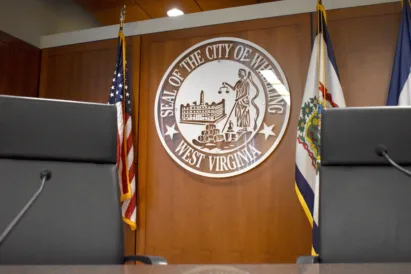 File Photo by Eric Ayres
 Trending
WHEELING -- An attorney who, on behalf of a group of Warwood residents, filed legal action against Silicon Foundry Energy LLC to halt the development of a data center at the former Centre Foundry & Machine Company site is urging city leaders to change course on the matter.
Members of Wheeling City Council are slated to vote on a memorandum of understanding during tonight’s council meeting, forging an agreement with Silicon Foundry Energy that the company will not develop a facility that will be considered a high-impact data center. By definition, this would be a facility that utilizes 90 megawatts or more of power.
J. Anthony Edmond Jr., an attorney with the law firm of Edmond & Baum, forwarded a letter to city leaders over the weekend after information about the city’s proposed MOU was shared on Friday.
"The purpose of this writing is to provide the civic leaders of our city with action items that can be taken now, along with a brief commentary on the proffered MOU," Edmond stated. "It is also designed to remind civic leaders that our government is of, by and for the people. The offices you hold will change hands over time. But the consequences of the decisions civic leaders make while holding office will live on."
Edmond said it was "incumbent upon civic leaders to do their best to represent the interest of the people" of the city.
Citizens, including those Warwood residents whom Edmond represents in the legal action against Silicon Foundry, have on numerous occasions urged city council to place a moratorium on the development of data centers in the city. Wheeling officials have stated that they have no legal standing to pass such a moratorium -- citing previous West Virginia Supreme Court action on similar matters -- or take other action that would in essence obstruct the development of a business on a properly zoned piece of property.
In his letter, Edmond countered those claims, attaching a letter from the office of then-W.Va. Attorney General Patrick Morrissey outlining how the Pendleton County Commission could issue a moratorium on the construction of windmills within its county borders. He also included excerpts from a document penned by an official from Loudoun County, Virginia -- known as the "data center capital of the world." The official stated that it was "incumbent upon local governing bodies to preemptively impose stringent land use and performance standards on data center construction in their communities."
The documents referenced by Edmond "demonstrate one thing for certain," he stated, "that the assertion that ‘there’s nothing we can do’ echoed by various members of council is factually inaccurate."
Edmond also provided city leaders with a proposed ordinance calling for a moratorium on data centers in Wheeling.
"There is a difference between not being able to take certain actions and not having the political will to act," he said. "The options are available. The question is whether council has the political will to act."
In reference to the proposed MOU, Edmond credited council for attempting to keep the proposed data center from scaling up to the size of a facility that exceeds the 90-megawatt threshold to fall under state control as outlined in House Bill 2014. But the attorney questioned the timing of the MOU, stating that the public has not had a reasonable opportunity to review the agreement and comment on it. He described the posting of the MOU two business days before a vote as "irresponsible," indicating that the public should have more time to review it.
"Despite its attempt and assumed best efforts, this MOU fails," Edmond asserted. "The way I read it, the document does not preserve local control over the data center in a manner that ensures the preservation of the health, safety and well-being of the people of Wheeling. Instead it seems to preserve the city’s ability to put money into its coffers at the expense of the health, safety and well-being of its people."
On Monday, Wheeling City Manager Robert Herron responded to some of the assertions in the letter.
The city intends to establish a Tax Increment Financing, or TIF, District on the Warwood property where the proposed data center is to operate. Under HB 2014, a TIF District cannot exist where a high-impact data center operates. The MOU is designed as a reassurance that Silicon Foundry will not expand into a large-scale data center. If it does, it would impact the city’s ability to finance projects via the TIF District tax revenues and, under the MOU, face penalties.
Edmond suggested that fines would not be a deterrent if the company was making substantial profits and questioned what would happen if the city cannot establish the proposed TIF District.
"The city can do a TIF with or without the MOU," Herron said Monday. "The commitment from Silicon is not contingent on a TIF District. Although, from a TIF perspective, it makes issuing TIF bonds more marketable if the increment from this project is to be included in a bond transaction."
Herron explained that 100% of TIF obligation rests with the bond holder.
"As a result, prospective lenders are super sensitive to such things," Herron said. "A TIF doesn't fill the city's ‘coffers.’ TIF funds don't go into the General Fund, they are for economic development."
The city manager said that all TIF project plans are reviewed and approved first by city council, then the West Virginia Development Office and then a second time by city council.
"TIF has state code rules for uses and are used for economic development projects," Herron said, noting that examples of TIF-involved projects included Lowe's, the Capitol Theatre, the Stone Center, The Health Plan headquarters, the proposed JC Lando waterfront hotel complex, the Downtown Streetscape Project and the WVU Medicine regional cancer center.
"Silicon doesn't have to sign the MOU, which takes HB 2014 off the table completely," Herron said. "The MOU provides certainty regarding keeping local control. Issues with HB 2014 were amongst the first areas of concern expressed by people, including some city council members. You can pick apart any agreement, but this agreement addresses that concern."
Herron said that although the MOU does not address all of the concerns raised regarding the proposed data center, the agreement limits the company and keeps it under local regulation.
"As I have stated earlier, in my opinion, this is an important step in accomplishing at least one big issue, that being HB 2014," Herron said.
One of the arguments put forth in the Warwood residents’ legal action against Silicon Foundry Energy LLC also asserts that HB 2014 itself is unconstitutional. West Virginia Attorney General J.B. McCuskey has since intervened in this civil case to defend the constitutionality of the bill.
"I encourage leaders to sift through all of the noise and listen to what its people are saying," Edmond wrote in his letter to the city. "We are a city full of residents who care deeply about the future of this city for themselves and their posterity. I will take that over apathy all day long.
"There is a lot of work yet to be done. Please do not truncate this process for the sake of short-term expediency at the risk of long-term, ever lasting, negative consequences that could potentially be impossible to undo. I personally know, like and respect all of you, but I am here to tell you that I believe you are getting this wrong. The time to correct that course of action is now. If you don’t now, later will be too late."