
W.Va. Treasurer Pack Vows To Defend Hope Scholarship From New Lawsuit
Trending
CHARLESTON - In 2022, the West Virginia Supreme Court of Appeals lifted a block on the Hope Scholarship educational voucher program. Nearly five years later, a different state treasurer will have to defend the program in court once again.
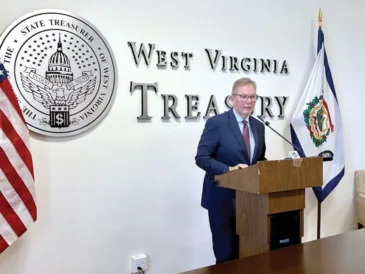
State Treasurer Larry Pack released a statement Tuesday stating his office will defend the Hope Scholarship after a class action lawsuit was filed by Mingo County parents last Friday seeking an injunction as the program is now open statewide to eligible families.
"It is unfortunate that the Hope Scholarship is still being used as a political football, distracting from the urgent issues facing our public schools," Pack said. "While parents in Mingo County are right to demand solutions for public education, their anger is misdirected. We will aggressively oppose any attempt to reverse the universal expansion approved by the Legislature and signed by the Governor."
The families, represented by Beckley attorney Steven New, are seeking a temporary restraining order and preliminary injunction to block the Hope Scholarship. The suit, filed last week in Kanawha County Circuit Court, asks a judge to declare that the Hope Scholarship violates the state Constitution. The lawsuit was first reported over the weekend by West Virginia Watch.
The families argue that the Hope Scholarship's rapid growth has caused fiscal distress in public schools, such as in Mingo County, leading to potential school closures and a failure to maintain "a thorough and efficient system of free schools" as required by the state Constitution.
The lawsuit further alleges that the scholarship violates equal protection, because rural families lack access to private educational service providers. Attorneys for the families also claim it involves the unconstitutional use of tax dollars for religious instruction.
The lawsuit comes as the Mingo County Board of Education, a school system under direct intervention by the state Board of Education since 2025, is considering the closing of Dingess Elementary School after the 2026-27 year, citing declining enrollment and financial pressures. New argues that the Hope Scholarship benefits children in more urban parts of the state while rural counties are left with crumbling schools and reduced enrollment.
"The Program as administered distributes its benefit according to the geographic supply of participating providers, while distributing its fiscal consequences uniformly across all county school systems," New wrote. "This geographically determined disparity falls disproportionately on rural, lower-income communities that depend on a single remaining local public school, and is not narrowly tailored to any compelling State interest.”
According to last year’s October headcount report, which is used by county school systems to develop budgets for the following school year, there were 234,957 students enrolled in the state’s 55 county school systems, a 2.52% decrease from this time last school year of 241,024 and a 15.32% decrease from the 277,452 fall enrollment number in 2015.
Earlier this summer, the state Department of Education released updated information showing that county school systems have seen an additional reduction of approximately 5,000 students as of the end of the 2025-26 school year.
Meanwhile, the State Treasurer's Office released data at the end of June showing that 26,617 students applied for the 100% Hope Scholarship award by a June 15 deadline. Those students will receive $5,435.62 each for the 2026-27 school year that began last month.
The Hope Scholarship - which was passed by the Legislature in 2021 and went into effect at the beginning of 2023 - is an educational voucher program that gives parents the option to use an equivalent portion of the per-pupil expenditure for their children from the state School Aid Formula for educational expenses such as private or religious school tuition, home school, tutoring and learning aids.
The program was previously limited to children eligible to be enrolled in a county school system’s kindergarten program the year the parents are applying, public school students who were enrolled full-time during the school year prior to applying or public school students enrolled for at least 45 days during the current school year. But beginning July 1, eligibility opened to all children in the state. The program is administered by the State Treasurer's Office.
"As Chairman of the Hope Scholarship Board, I am committed to ensuring every student in the program receives the unique educational opportunities they deserve," Pack said.
A majority of the West Virginia Supreme Court of Appeals issued an order in October 2022 dissolving an earlier injunction blocking the Hope Scholarship from being implemented after a Kanawha County judge ruled in favor of Putnam County parent Travis Beaver, Upshur County parent Karen Kalar and Raleigh County teacher Wendy Peters, who had filed a lawsuit against the program earlier that year.
A RAND Corporation study commissioned by the Legislature and released prior to the start of the 2026 legislative session cautioned against the universal expansion of the Hope Scholarship, recommending that future Hope Scholarship eligibility be income-based to maximize the program's impact on student achievement.
The Hope Scholarship is funded in the current fiscal year general revenue budget at $297 million for universal implementation, up from approximately $12.9 million during the program's first year.
County school superintendents and state Board of Education President Paul Hardesty have issued several pleas this year calling on the Legislature to address the complicated seven-step school aid formula. The ACLU of West Virginia announced its intention last month to file a lawsuit against the state over school funding. Pack has previously called for public education reform and additional pay for public school teachers.
"We encourage the Legislature to act quickly and confront the urgent challenges in our public schools," Pack said. "Our schools are demanding help, and the time for action is long overdue. We must cut burdensome regulations so teachers can focus on teaching. But let's be clear: improving public schools does not require sacrificing educational freedom."
"We can - and must - strengthen public education and uphold school choice at the same time," Pack continued. "We are ready to partner with policymakers to deliver real change. The future of our students depends on it. Let's get to work."