
City Reviews Source Water Protection Plan Update
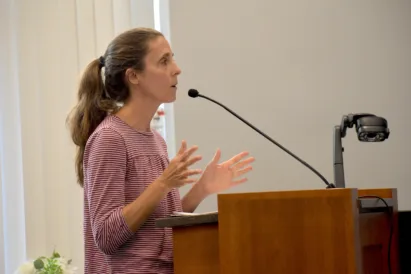 Photo by Eric Ayres
 Trending
WHEELING - Like all other cities in West Virginia operating a municipal water system, the city of Wheeling must keep a strategic plan in place in case an event would introduce harmful contaminants within the watershed.
Every three years, municipal utilities like the Wheeling Water Department are required to update their Source Water Protection Plan and share this information with the public. Members of the Public Works Committee of Wheeling City Council recently met with officials from the city’s water department and Kendra Hatcher, environmental scientist with Downstream Strategies, to discuss the most recent plan update.
Hatcher noted she has worked with the Wheeling Water Department for more than 10 years in addition to a number of other different water utilities throughout West Virginia on similar state-required plans.
These precautionary measures and protocols were developed in the wake of the Elk River spill outside Charleston in 2014. Thousands of gallons of a crude chemical leaked from a storage tank at an industrial facility into the river, impacting 300,000 water customers in a nine county region around the state’s capital, causing a state of emergency to be declared.
The incident resulted in the passage of Senate Bill 373 - also known as the Spill Bill, which enacted a number of different measures related to source water protection.
"Public utilities are now required to have a Source Water Protection Plan in place," Hatcher said.
They are also required to inventory above ground storage tanks within the greater watershed and know what types of chemicals are stored in them. Tanks are to be registered and inspected, and there are several other state regulations regarding the storage of potentially harmful chemicals. Source Water Protection Plans also have protocols for contingency planning in case of a situation that calls for action and a communication plan to let appropriate agencies, other utility service providers and the general public know about the issue.
"We want to know everything that could potentially cause an incident," Hatcher said. "We’re not saying that all these facilities in the watershed are just dumping chemicals into the water, but we want to know where something is located if there is a potential problem."
Hatcher noted hundreds of locations are inventoried via GIS mapping in the greater Wheeling watershed. Because the city draws raw water from the river, the entire watershed area is massive compared to communities drawing from reservoirs and other more localized water sources.
"The city of Wheeling water comes from the Ohio River, predominantly," Hatcher said. "The watershed size here in the city of Wheeling is 25,000 square miles - so it’s huge. There’s a lot of water coming downstream past the city of Wheeling. The city of Wheeling serves approximately 30,000 people directly with an additional 16,000-ish people through water purchases. For West Virginia, that’s a pretty good sized water utility."
Having an emergency plan in place helps to prevent contamination or minimize the risk of contamination in case of an emergency, and it helps provide a step-by-step process to follow if an incident were to occur.
"The city of Wheeling can just shut the water intake in a relatively quick amount of time," Hatcher said. "Almost always, that’s going to be the default. If there’s potential for contamination - if you get a spill notification from DEP (the West Virginia Department of Environmental Protection) or some other information comes in, that’s the first thing the utility’s going to be able to do very quickly."
If Wheeling’s main raw water intake from the river had to be closed, the system has a four to six-day supply of water on hand, Hatcher indicated.
"Wheeling is lucky to have a backup water supply with seven wells," she added. "In the event of an emergency, those wells can be utilized if the Ohio River can’t be utilized immediately."
The plan establishes two zones within the sprawling Wheeling watershed - the Zone of Critical Concern, or areas where if anything happens upstream, it could reach the raw water intake within five hours. The Zone of Potential Concern involves a wider area in the watershed where it would take up to 10 hours of travel time to reach the intake. Hatcher indicated that these zones dictate the action needed to respond to potential incidents.
There are many sources of potential hazards, she explained. From above ground and underground storage tanks to industrial facilities, power plants, oil and gas development, transportation and recreation on the Ohio River, and other activity within the watershed, harmful chemicals can accidentally be introduced into the source water.
Some registered tanks in the watershed have a capacity of 1,500 gallons, where others can be as large as 9 million gallons, Hatcher said, noting a leak could seriously impact the river.
The Wheeling Water Department and other water service utility providers constantly monitor the quality of the source water coming into the system, officials noted. This is a routine practice to ensure clean water is being provided through the system. The Source Water Protection Plan provides guidelines and steps to take in case emergency action is needed.
"The point of this is to make sure there is a plan - if something happens, it makes it a lot easier to say ‘these are the steps that we have to do to minimize any chance that something like the Elk River spill would happen in the city of Wheeling,’" Hatcher said.