
Temporary restraining order granted blocking AG McCuskey investigation into environmental groups
Trending
CHARLESTON – After hearing more than an hour of arguments Thursday, U.S. District Judge Joseph Goodwin granted a temporary restraining order prohibiting West Virginia Attorney General J.B. McCuskey from investigating environmental advocacy organizations.
In an order released Thursday evening, Goodwin granted the restraining order, which prohibits the Attorney General’s Office from seeking any documents from West Virginia Rivers Coalition (WV Rivers) and 350.org. The temporary restraining order is good through Thursday, Nov. 12.
“What these organizations do is argue in public about what coal, oil, and gas do to West Virginia's waters and climate,” Goodwin wrote. “The State's chief legal officer, who has publicly condemned that advocacy, now demands to know how they reached their views and who stood with them. The First Amendment forbids a State from using its investigative power that way, and I will not allow it while this case is pending.”
WV Rivers and 350.org filed suit last week in the U.S. District Court for the Southern District of West Virginia following subpoenas issued in September by the Attorney General’s Office to as many as six environmental groups seeking 10 years of communications and documents. The investigation was being conducted under the West Virginia Consumer Credit and Protection Act.
In his memorandum order and opinion, Goodwin found that the nonprofit organizations do not engage in commercial trade, meaning the state consumer protection law cannot regulate their protected speech.
“AG McCuskey's actions violate the protections afforded by the United States Constitution,” Goodwin wrote. “The Plaintiffs, on this record, have only engaged in protected advocacy speech, not commercial speech. The subpoenas issued on the Plaintiffs trespass on their freedom of association, chill their exercise of the First Amendment, and deter others from engaging in similar conduct.”
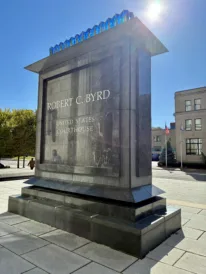
Attorneys representing the Attorney General’s Office and two environmental groups, WV Rivers and 350.org, were at the Robert C. Byrd Federal Courthouse in downtown Charleston Thursday afternoon. Goodwin said he moved quickly to place the case on his docket due to the constitutional issues raised.
“It’s always a high priority in any court...when the Constitution is involved,” Goodwin said from the bench.
According to Ryan Donovan, an attorney with Hissam Forman Donovan Ritchie PLLC representing the Attorney General’s Office, explained that the investigation was valid in order to determine whether the environmental groups were knowingly deceiving donors by using what he called discredited claims about climate change in order to boost fundraising.
“This case has been framed as the Attorney General investigating climate in general. He isn’t,” Donavan said. “This is about a very narrow investigation into narrow statements made to knowingly deceive.”
Amanda Demmerle, an attorney with Appalachian Mountain Advocates representing WV Rivers and 350.org, said the Attorney General’s subpoenas of environmental advocacy groups violate their 1st and 14th amendment rights by targeting protected environmental advocacy and political speech under the false pretext of state consumer protection laws. that the ongoing investigation inflicts immediate and irreparable harm by chilling speech, forcing self-censorship, and demanding sensitive associational records without legal authorization or compelling justification.
“He issued these because he doesn’t like our speech,” Demmerle said “it is having a chilling effect ... All of that chill’s their (freedom of) speech and association.”
Demmerle said that the Attorney General’s Office is trying to shoehorn non-profit advocacy groups into the Consumer Credit and Protection Act, a broad law that was first put into effect in 1974 meant to protect consumers from deceptive practices by for-profit companies in order to push certain goods and services. But WV Rivers and 350.org are 501(c)(3) non-profit organizations.
“They’re keen on you being a business engaged in commerce,” Goodwin said. “You’re keen that you are not.”
“That’s correct,” Demmerle answered. “WV Rivers and 350.org are not engaged in commerce for their advocacy ... It is very broad how they are wanting you to read this act. It is broad, but it is not unbridled.”
Donovan conceded that the freedom of speech of advocacy groups through the 1st Amendment is protected but argued that different kinds of speech have different kind of protections, with false statements meant to deceive donors not falling under protected speech.
“The attorney general has probably cause to believe that (the statements made by WV Rivers and 350.org) was knowingly false because ...the statements were made for the solicitation of donations,” Donovan said.
Donovan cited statements over the years WV Rivers citing what he called a debunked United Nations RCP8.5 emissions scenario, also called the “business as usual” scenario, which alleged severe consequences for the climate should greenhouse emissions continue apace. According to Donovan, RCP8.5 has fallen out of favor over the last several years, but WV Rivers continues to cite the RCP8.5 on their website with donation buttons on the same webpages.
For 350.org, Donovan accused the group of reliance on a retracted 2024 GDP climate loss study, as well as what he called unsubstantiated “event attribution” claims that ignore scientific uncertainty. But Goodwin remained skeptical of Donovan’s arguments, saying that the 1st Amendment provides broad rights, including the right to be wrong.
“It flat makes me nervous when people can’t say ignorant things,” Goodwin said.
The environmental advocacy groups had until Tuesday, Nov. 3, to comply with the Attorney General’s subpoenas. The Attorney General’s Office has since modified its requests for information, including declining to seek identifying information on donors, arguing that there was no need for a temporary restraining order.
“I appreciate your goodwill ... but informal offers that are amorphous are not interesting to me,” Goodwin said.
Attorneys for WV Rivers and 350.org are asking Goodwin to declare the subpoenas unconstitutional and issue preliminary and permanent injunctions against McCuskey against these and future subpoenas. Hearings on those motions have yet to be set.