
WVU Medicine Recognizes Marshall County EMS Staff For Resuscitating Cardiac Arrest Patient
Trending
WVU Medicine on Friday recognized six members of Marshall County Emergency Management Services who succeeded in a very difficult task — resuscitating a cardiac arrest patient and supporting his recovering without lasting neurological impairment.
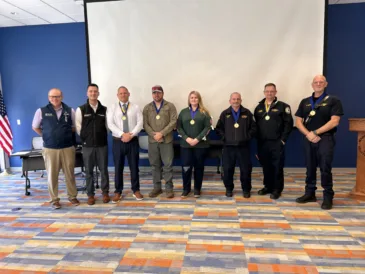
WVU Medicine recognized Marshall County EMS paramedics Mathew Earnest and Brandon Williams, EMTs John Stofen, Brittany Sperringer and Robert Bandy, and paramedic and crew chief Robert Nash. The presentation at the Marshall County Emergency Services headquarters celebrated a part of emergency care that often goes unseen: the intensive treatment delivered before a patient ever reaches the hospital.
The six were with a cardiac arrest patient for more than 45 minutes of care and performed more than 15 interventions while continually reassessing the patient and adapting the resuscitation effort.
"This outcome reflects far more than transportation," said Nicholas Betts, MS, NRP, FP-C, regional Trauma Outreach Coordinator for WVU North Region. "It reflects disciplined teamwork, clinical judgment, repeated intervention, and the determination to continue working for the patient. Marshall County EMS delivered critical care at the point of need, and that care was integral to the patient's improvement."
Cardiac arrest immediately interrupts blood flow to the brain and other vital organs. The longer circulation has stopped, the greater the risk for brain injury. According to the American Heart Association, fewer than one in 10 EMS-treated adult cardiac arrest patients survive to hospital discharge.
That response, WVU Medicine officials said, demonstrates the essential role EMS staff plays in care of patients.