
Morrisey launches in-state child welfare expansion to bring out-of-state placements back to West Virginia
Trending
CHARLESTON - Less than a year after he first stated intentions to bring foster children in out-of-state facilities back to West Virginia, Gov. Patrick Morrisey announced Monday the first steps toward making that goal a reality.
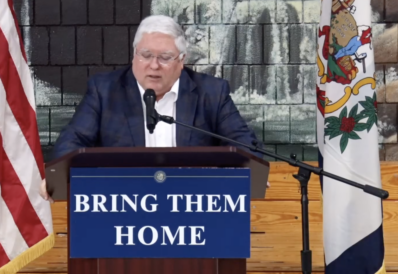
In a press conference in Barboursville Thursday afternoon, Morrisey announced that the state Department of Human Services was entering into a five-year lease with Utah-based Youth Health Associates to reopen a former public school in Barboursville for a 36-bed facility to begin the process of bring home the 513 children in state custody who have been placed in out-of-state facilities.
"When I took office, I said that it was really important that we tackle the problems in the West Virginia child welfare system and was very clear that one of my highest priorities would be to bring our kids home back to the State of West Virginia," Morrisey said. "I’m pleased to announce that we are going to reopen this school as a residential treatment facility for West Virginia children in state custody."
The proposed facility will focus on youth in state custody with complex psychiatric and behavioral needs, with the goal of admitting children in early 2027 and filling the majority of 36 beds by the end of March. State officials hope this project will become a template for opening new in-state facilities in the near future.
"We know children do best whenever they are placed in communities and when they are placed near their families. And these partnerships, these types of activities, are what set us in those stages and provide for that progress," said DoHS Secretary Cary Ayers.
A facility director has been hired, with active recruitment underway for additional staff. When fully up and running, the facility could hire as many as 60 employees.
Mace Warren, senior director of clinical services for Youth Health Associates, said his company operates seven facilities in Utah with ground broken on an eighth, as well as one facility in Texas. The company was founded 25 years ago.
The cost of the five-year lease between Youth Health Associates and DoHS was not released, though the state Department of Education has spent more than $1.1 million with Youth Health Associates since fiscal year 2024 for educational services for children in out-of-state placements in its Utah facilities.
"We pride ourselves in working with the most difficult kids to place really anywhere," Warren said. "When a state says, 'Hey, what about coming to our facility, our state, and providing services here,’ that’s something that kind of goes without saying (but) we really appreciate the opportunity. The reality is when kids are closer to home and they have more opportunities to reintegrate to their families, they just do way better than being halfway across the country in a program."
Morrisey said this facility is the first step in an initiative he announced last December called "Bring Them Home." Originally planned as an evolving investment fund to renovate state-owned foster care facilities and enhance in-state treatment capacity in order to bring out-of-state foster children back to West Virginia, the Legislature never passed the bills to create the fund, which required a $6 million appropriation.
DoHS estimates the cost to taxpayers for one out-of-state placement is $161,000 per child on average. According to the DoHS Child Welfare Dashboard, 513 children - 9.4% of the state’s total 5,430 children in state custody - are in out-of-state placement due to limited space at in-state facilities capable of providing care to children with psychological or behavioral issues.
"I was absolutely upset that we were spending more per person sending people out of state because we weren’t investing right here at home in terms of the physical infrastructure and the provider network when we knew we could do it less expensively at home and we knew that we could bring our kids closer to their families and to their loved ones," Morrisey said. "This made no sense to me."
"While we are excited and thrilled about the first step today, if we’re going to bring 400 children home or ultimately prevent them from ever needing to go outside of the state, we have to continue making investments that are in facilities, that are in homes that are willing to take our youth when they are done with treatment, and with the community-based supports that are necessary to keep our children safe and in their communities when they need to go for treatment for a limited period of time and then come back into the communities," Ayers said.