
Ohio County Schools Board of Education defends alternative school’s move to WPHS
Trending
WHEELING -- Members of the Ohio County school board said the decision to move the district's alternative school to Wheeling Park High School (WPHS) was a sound one and was made with the consideration of the impacts it would have on students and staff.
Board President David Croft said he was not aware of any issues needing addressed on the plan until teachers and parents of special education students spoke out at the Nov. 9 meeting. Unlike last meeting, only one parent spoke out on the plan, with no teachers present.
"I must say I'm disappointed I don't see any of those teachers here," Croft said. "We put it on the agenda to address this, so hopefully they're watching."
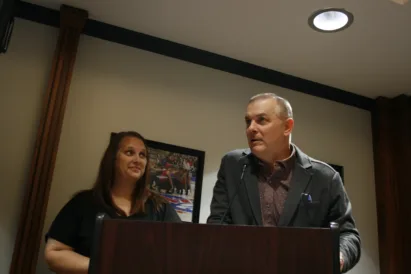
Rick Jones, assistant superintendent and Safe Schools director, did much of the explaining about the Ohio County Learning Center -- also known as the alternative school -- and its move to WPHS. He said the concerns about other student's safety were considered and should not be a point of concern.
Additionally, Jones said students who are deemed a threat to others or were expelled from WPHS for a violent incident would not make a return to the building.
"If a student is expelled and we deem them to be a dangerous student, they will not be attending this program at Wheeling Park High School," Jones said. "We have other educational options for them outside of the school.
The previous home of the alternative school, the Triadelphia Middle School Annex, was originally going to be demolished in 2018, however board members then voted to instead continue using the building. However, they say it has now run past its useful life, especially given it does not have working heat.
Jones said repairing the annex would be expensive and "not fiscally responsible" to do. He recounted a time where the school used space from the Youth Services System at the former Hazel Atlas Glass headquarters in downtown Wheeling, which he said was unsuccessful due to safety issues around the building, especially with students being around drug paraphernalia.
Another issue parents and teachers brought up at the previous meeting was having students from the alternative school near special education students, with one parent at the previous meeting, Elizabeth Wood, saying it's careless to place high-risk students near the most vulnerable students.
Jones said a program similar to an alternative school called Support Space, which is like a shorter placement for alternative schooling -- typically three days versus 45 days -- has already operated across the hall from special education classes without issue, with some students in this program having more challenges than those in the alternative school. He also said in-school suspension, which state law recognizes as a kind of alternative education, operates close-by without issue.
"Our in-school suspension kids also have very challenging behaviors, sometimes worse than the students that are in the actual alternative school directly across from the classroom in question for 20 years, and there's never been a comment made about it," Jones said.
Also at issue was the use of the multi-purpose room, which WPHS special education teacher Dionne Cox said in the previous meeting serves as a sensory space for her students and was concerned about them losing a necessary part of their education.
Jones clarified they would not lose the space and special education students would not be expected to share it with alternative education students.
"If the special education class or individual wanted it while it was being used by alternative education, we would adjust and move the alternative education kids and let them go in there if there was an emergency, or if they really needed a calm down space, we would have easily made that adjustment with our administration to make sure they had access any time they wanted it," Jones said.
Board member Jerry Ames remarked how he's never been aware of an issue with any of the alternative education students causing problems with special education students, especially since they all share the same restroom without incident.
Much of what was addressed about the plan involved safety concerns and how WPHS has systems in place, such as several support staff, two resource officers and communication tools to prevent incidents or stop them quickly. However, Charles Fithen, who was also at the last meeting and is a parent of a student in the special education program, said student safety was not the main concern.
"It seems like now we've kind of lost the plot a little bit," Fithen said. "My concern is, you're taking something as a space away from this population. You don't have to displace another student body to have that happen. Why not look in a different area of Wheeling Park?"
Additionally, Fithen said less people were likely present because the agenda was not clear enough.
"I wish [the teachers] were here too as well," Fithen said, "But I literally just spotted that on the agenda yesterday, very vaguely posted.
"I think if it was posted, 'hey, let's have a discussion of some sort,' you probably would have seen more teachers or more parents show up and speak about this, but it seems like that discussion might be thrown out the window now."
He took issue with space being taken from a student body already present at WPHS, which he said always seemed to be the plan, even if the alternative school was placed elsewhere.
"Why are we always taking from a vulnerable population? Why are we looking at [Tiffany Barnes] room or [Cox's] room or those spaces first?" Fithen said. "If the permanent plan is Wheeling Park, let's figure out a way to do that where it doesn't take from the special education kids, where those kids have access to that multi-purpose room eight periods a day again, not just the 4.5 or the five or whatever the negotiated back and forth is."
Nicole Shepherd, director of student intervention and support programs, said shifting alternative school students out of the multi-purpose room would be easy, also noting specialized program classrooms have de-escalation spaces built in.
However, she said she's in talks with staff and administrators at WPHS to either allow access to the multi-purpose room for special education students as they had previously, or to give them access to "a much larger, more comprehensive sensory space."