
Trending
By EMMA DELK
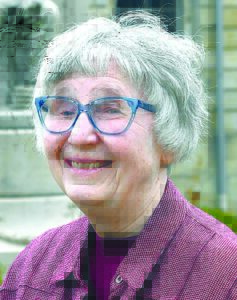
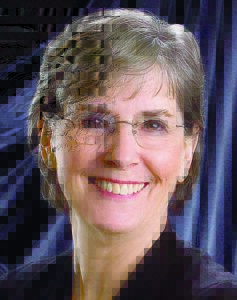
WHEELING -- Two local historians who share the goal of preserving and sharing Wheeling's past came to love history through vastly different means.
Friends of Wheeling President Jeanne Finstein did not become interested in the subject until later in life when she purchased a historic house in the city. On the other hand, former Wheeling Area Historical Society President Margaret Brennan fell in love with the subject in college.
As a former mathematics teacher at Wheeling Park High School, Finstein's least favorite subject in school was history. However, she found a passion for local architecture when she acquired a Wheeling house built in 1906.
"Owning that house was definitely a trigger for me to become interested in the subject," she described. "The next step for me was digging into my genealogy, which can be a real rabbit hole."
From there, Finstein became connected with the local history scene and has been involved with the local history group Friends of Wheeling since its founding in 1970.
The local historic preservation organization aims to draw attention to Wheeling's built environment and rich history. As president, Finstein works with board members to set up house tours, conducts historical research and performs other activities related to historic preservation.
"Whenever Friends of Wheeling tours a building, we provide a history of that building for the owners or the Realtor," explained Finstein. "If we find something interesting, we turn that history over to either the owner or the Realtor."
Today, Finstein sees herself as "standing on the shoulders of giants" of the local female historians who founded the club,
"They got the ball rolling when it comes to the appreciation of what we have here," Finstein said. "When I think about how they got us started, it's amazing."
While Finstein immersed herself in equations in college, Brennan became immersed in history books. After a recommendation from a mentor at Wheeling College to pursue her passion for the subject, Brennan described "never working a day" in her life.
"Working as a historian and archivist has always been fulfilling and enjoyable," described Brennan. "You are always listening, and it's never dull, as there is always loads of work to be done."
The work Brennan has done to teach and preserve local history has been varied. For 11 years, Brennen taught social studies at Central Catholic High School. She then spent six years as an archivist for the Diocese of Wheeling-Charleston.
Brennan's hand in preserving local history is displayed in front of West Virginia Independence Hall in the Gov. Francis Pierpoint statue she had a hand in erecting. Brennan also played a role in helping relocate a Civil War Monument to the building.
Much of Brennan's time as a historian is spent not displaying pieces of history but compiling local histories of organizations. Brennan has traced back the roots of the First Presbyterian Church, the Florence Criterion Home and the Wheeling Symphony Orchestra.
Just as Brennan traces the origins of local organizations, Finstein loves to put together the pieces of the history of local families. To weave these individual narratives into the greater history of the city is "the gift that keeps on giving" for Finstein.
For those interested in digging into the history of a city or their family, Finstein encourages them to become involved in "some sort of history organization." She noted one needs to "just take a good look around" to begin appreciating the architectural heritage around them.
"I hope that Wheeling residents take the time to look into the history we are surrounded by daily," said Finstein. "If you walk down North Main Street, for instance, you see so much amazing information just from looking up at the building around you."
Brennan also hopes to see more younger folks in the city "catch the history bug" to carry on "remembering the past and bringing it forward." Brennan noted young women today are still adding to the city's history, pointing out Weelunk.com's female researchers.
"We can all be enriched by the stories of our forefathers and mothers and appreciate the sacrifice to build the town on the Ohio River that is such a special home to us all," described Brennan.
While these stories enrich Brennan, she acknowledged they can also be complicated. She pointed to the slave auction block once located at the end of 10th Street in Wheeling as one of the elements of Wheeling's past that "needs forgiveness."
"Yet, it is all a part of where we are today," noted Brennan. "We need to know where we were to understand how we got here and who we are now to better choose who we will become."
Though there are mars in the city story, Brennan also pointed at the "many bright spots." Combining the dark with the bright in the city's history makes "us who we are today," described Brennan.
"The city has a strong backbone, with its schools, churches, institutions and businesses," described Brennan. "Right now we are filling the pages of future history books and the choices we make today will hopefully lead to a brighter future for Wheeling, for all of us."
Due to its ability to entice many into the city's past, Finstein named Wheeling's architecture a "very underappreciated bright spot" in the Ohio Valley. Saving and preserving the architecture of the city, as well as the knowledge carried within its walls, is vital to Finstein as she believes the city's buildings "hold our heritage."
Finstein noted, "100 years from now, we'll all be gone, but the buildings will remain."