
“Implanted Device Brings Hope to Those With Overactive Bladder”
Trending
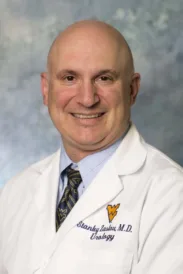
Dr. Stanley Zaslau joined Reynolds Memorial Hospital a little over a year ago with the mission of creating a dedicated urology department at the hospital. He had previously spent 25 years of his career at Ruby Memorial Hospital, serving as chief of urology and then founding chair of the department, among other leadership roles. Now he's back to doing what he loves as a doctor--patient care. The Urology Department at Reynolds Memorial Hospital has been a welcome addition to the community, allowing area patients to receive world-class urologic care close to home. Now Dr. Zaslau is expanding the department's treatment offerings by becoming the first and only physician in the area to offer a revolutionary new treatment for overactive bladder.
Overactive bladder affects 1 in 6 U.S. adults. It is a condition that causes the patient to experience a sudden and difficult-to-control urge to urinate. Besides urgency, symptoms may include frequent urination, waking during the night to urinate, and sometimes leakage caused by the strong urge to urinate. It's important to note that you can have an overactive bladder without having urinary leakage.
Unlike stress incontinence (which is caused by physical stress, such as sneezing, jumping or laughing), urge urinary incontinence involves abnormal nerve signaling in the nerves and muscles involved in bladder control.
Approved by the FDA in late 2025, Altaviva is an implantable device used to treat urge urinary incontinence. Physicians are just starting to use the device, and Dr. Zaslau is the first in the area to offer Altaviva to his patients. He performed the first Altaviva implantation at Reynolds Memorial Hospital in March 2026.
The tiny device is implanted near the patient's ankle, where the tibial nerve is located. Tibial nerve stimulation works because the tibial nerve shares sacral nerve roots with neural pathways involved in bladder control. A protocol for treatment is set by the physician, and it happens automatically, usually once a day for about 30 minutes. When the device is activated, it is barely perceptible for the patient, and the sessions do not require any downtime. The battery lasts upwards of 10 years so there is very little maintenance.
"Programming the device and therapy for the device is individualized. We find the right settings and the right stimulation protocol for the patient," says Dr. Zaslau.
Candidates for the tibial nerve implant must have refractory urge incontinence, which means they have tried and failed other therapies, including biofeedback, physical therapies, medical therapies, or lifestyle changes like limiting liquids.
Side effects and risks are very minimal, with implant-site infection being the most prevalent. This affects less than 5% of patients, and none of Dr. Zaslau's patients have experienced infection. There can be some initial pain at the implantation site as well, so Dr. Zaslau usually implants the device on the left ankle so as not to impede driving.
Dr. Zaslau has now performed 12 Altaviva implantations in his patients and so far, the results have been overwhelmingly positive.
"For patients with the diagnosis of urge incontinence, the success rate is on the order of 65% to 85%. Meaning the patient will have an improvement of their urge incontinence episodes," says Dr. Zaslau.
With successful treatment of overactive bladder, quality-of-life improvements can bring a greater sense of freedom. This is why Dr. Zaslau strove to bring the Altaviva procedure to his patients. Many people with urge urinary incontinence face social isolation, fearing a wetting accident in public or around others.
"The biggest thing that patients will say is that 'it’s amazing that this small device gave me a chance to have my life back'," he says.
"It’s a game-changer because now they have that confidence back that they can go out and not have an accident."
To learn more about the procedure and to address other urologic concerns, you can call Dr. Zaslau's office at 304-221-4543.
Sponsored content brought to you by WVU Medicine.