
Trending
MORGANTOWN -- It came roaring out of the clouds in the midst of what only can be described as a baseball revival in these parts, with West Virginia University's baseball team sweeping Baylor in a Big 12 road series and the Pittsburgh Pirates up the road 90 miles surging to the National League East lead.
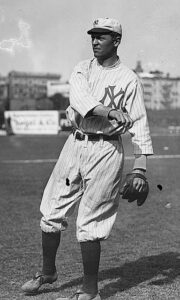
That may have gotten the radar up, making reference to a baseball player from the dead ball era named Guy Zinn on the anniversary of his leading off for the New York Highlanders, who would become the New York Yankees, and scoring the first run ever scored in Fenway Park.
Fenway was celebrating its 111th anniversary and, the item noted, that Zinn was a West Virginian. Now West Virginia has been far more famous for the football coaches it has produced over the years, from Fielding Yost of Michigan's "Point a Minute" fame to Nick Saban, but it has turned out a number of prominent baseball players.
Zinn, however, was never prominently named among the Bill Mazeroskis, John Kruks, Don Robinsons, George Bretts, Lew Burdettes and Hack Wilsons who are talked about when it comes to the best native-born West Virginians… but a light went off when noted he was from the Clarksburg area.
Could he have been part of the Nate Zinn family, Zinn being a former placekicker at WVU and later part of the athletic department. When he was approached about it, he said he'd heard stories about him and would check, a couple of days later getting back saying that indeed they were related.
So off went an amazing tale for this member of both the Zinn and Spiker families from the area, a story that actually makes Guy Zinn one of the most intriguing of athletes to ever come from the area.
Much of the research on Guy Zinn was compiled a decade ago when Fenway Park celebrated its 100th anniversary, and it turned out that he had a couple of other claims to fame in a career that lasted no more than four years as it was cut short by injury.
Indeed, he not only scored that historic run in Fenway Park, but is one of only 11 players in the entire history of the game to steal home twice in a single game.
As interesting as that may be, his history as the subject of a baseball card is the most amazing of all, for at one time it was selling for $125,000 and up.
But first, a bit of history on the man himself.
In an article written for The Society of Baseball Research (SABR) historian Bill Lamb noted that he was born on Feb. 13, 1887, in Holbrook, which is about 40 miles southwest of Clarksburg, as the second of eight children to Noah Zinn and his wife, Elizabeth.
The family relocated in Clarksburg shortly after his birth and he went to school through the sixth grade entering the work force, mostly as a lathe operator.
Zinn played a lot of sandlot ball, first being noticed as an outfielder-pitcher for the Clarksburg team in an area amateur league. The next year he signed with the Clarksburg Class D Western Pennsylvania League team but suffered an arm injury and was released.
He got back into the minor leagues with the Clarksburg Drummers of the Class D Pennsylvania-West Virginia league but was released in May. It was in 1909, at age 22, that he signed with Grafton of that same league, hit .294 and stole 19 bases while playing the outfield.
One newspaper in a rival town wrote "besides being a star in left field, was great [with] the bat and a good baserunner. His throw from left field was a much-admired feat."
He moved up to Class A the next year and split time between Memphis and Toledo, then had a good season at Altoona -- which, coincidently, is where the modern-day Pirates brought Drew Maggi up this past weekend to create a warm baseball story of his own.
Zinn had a big year at Altoona and the Highlanders bought his contract for $1,000, making his major league debut against Hall of Fame pitcher Chief Bender.
The next year was 1912 and injuries opened a spot for him in the outfield, allowing him to draw that leadoff walk as the first batter ever to appear in Fenway Park and to wind up scoring the first run on Roy Hartzell's single.
Zinn seemed to be on his way to stardom for the Highlanders, a Washington newspaper calling him "one of the finds of the year" and a Cleveland newspaper writing "Zinn gives promise of development into a great batter. He hits the ball hard and what is more, does his hitting in pinches."
But greatness ever came. He had defensive deficiencies and personality problems and was seen as a clubhouse troublemaker. He was sent to Rochester and suspended there, threatened to give up baseball, but returned the next season.
He played well, but spiced up the season with a clubhouse fight, and wound up being sold to the Boston Braves, for whom he played well but again was banished to Rochester.
Eventually, he jumped to the Baltimore team in the fledgling rival Federal League and again scored a historic first run in that league's history.
Zinn was playing well when in a midseason exhibition game, he suffered a severe broken ankle and never was the same player after that.
His five-year major-league career ended with a combined .269 batting average, 89 extra base hits, 136 runs scored and 139 RBI in the American, National and Federal Leagues combined.
Zinn bounced around the minor leagues for a while, wound up living in Poughkeepsie, New York, was divorced, remarried and went into the work force. He eventually came down with terminal lung cancer, returned home to West Virginia and died while living with a former childhood friend in Nutter Fort.
But what about that baseball card? This is where the story twists, according to Lamb's biography and a decade old blog by Bobbi Spiker Conley, also a family member.
Several years after he died and was buried in the family plot in Greenlawn Cemetery in Clarksburg, a baseball historian became interested in him and tried to track him down, eventually discovering the only survivor of his immediate family, daughter Jean Zinn Talley.
She'd had little contact with her father and Lamb noted she provided little information, but did provide answers to a questionnaire in which she labeled her father a "German-Jew." Where she came up with that is a mystery because the family ancestry had Protestant roots that went back centuries.
All of a sudden, he was accepted as Jewish.
"Even Jewish historical societies embraced him," Lamb wrote. "This, in turn, had a dramatic effect on the value of the 1914 Guy Zinn Baltimore News schedule-back baseball card, already a rare piece of baseball memorabilia, Zinn's now-presumed Jewishness skyrocketed the card's market value.
"In 2010 a collector named Dan McKee placed a $250,000 value on his Zinn card. Six years later, McKee put the card up for sale. reducing its asking price to a mere $125,000."
Jeff Aeder, a collector of Jewish baseball player cards, entered into the picture, stating "if Zinn was not a Jewish player, his card is probably a $10,000 card."
The negotiations broke down but now, Lamb noted, many took note of the situation.
Bob Wechsler, an expert of Jewish baseball cards, didn't understand why a distant cousin of Zinn had researched the family history and traced them back to settling in the Virginias in the 1740s and were Seventh day Baptists.
Turned out, no one had researched Jean Zinn Talley's questionnaire characterization of him being a German Jew and after the Jewish Baseball Museum took him off its rolls of former Jewish Players, the value dropped significantly.