
After Historic Season, WVU Baseball Balancing Pride And Disappointment
Trending
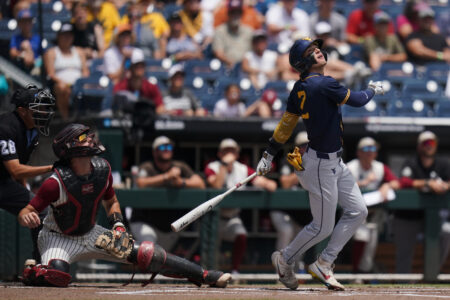
OMAHA, Neb. - Ben Lumsden's fly ball in the bottom of the ninth Wednesday, man, for a split second, it looked really good for West Virginia.
"Definitely thought it was a homer," WVU baseball coach Steve Sabins later said following the Mountaineers' 12-7 loss against North Carolina in the College World Series. "I think when you’re at that point, you’re seeing everything in a positive light. You’re like, 'Lumsden is about to hit a three-run homer, we’re about to get hit in the ankle the next pitch and the next dude’s going to hit a two-run dinger.' "
If it had been any other point of the NCAA tournament, maybe that's what would have happened for the Mountaineers. Just two weeks earlier, they seemed to be in a no-win situation, yet somehow pulled off a ninth-inning comeback and then a 10th-inning walk-off to beat Kentucky twice to advance to the super-regional round.
"You go through so much to get here and so you just expect home run after home run from these guys," WVU pitcher Reese Bassinger said. "They're all so talented. I was wishing."
It instead ended up being a long final out for a WVU team that beat long odds to appear in its first College World Series.
The most successful season in program history ended with 47 wins, three more than last year's total, which was the previous mark.
It ended with heads in hands inside the WVU dugout, looks of disbelief that this season had finally come to an end were found throughout.
Hugs were eventually shared, and maybe it was outfielder Paul Schoenfeld who perfectly captured the moment of what the Mountaineers had accomplished by advancing to the national semifinals.
With an empty water bottle in his left hand, Schoenfeld kneeled down behind third base, scooped up dirt from Charles Schwab Field and put it into the bottle for safe keeping.
"It means so much," he later said, the bottle firmly still in his back pocket. "Only a few people get to do this. Being in the Final Four, it means a ton. This is special ground right here. You take it, you cherish it and you enjoy it."
One by one, WVU players spoke volumes about the brotherhood that was created through this journey of exceeding so many expectations, while also putting Mountaineers baseball firmly on the national map of contenders.
The question: How did that happen?
Bassinger, a Texas native, answered that by highlighting the work WVU players put into their craft well before the season even begins. That work comes in the fall, when the rest of the sports world has its eyes on football. In the spring, it's not baseball weather in West Virginia, but, yeah, there's work to still be done then, too.
"When (Sabins) first called to recruit me, I was a little skeptical at first, because, you know, the snow and stuff," Bassinger said. "We work really hard in the fall. I feel like we work harder than most schools. With the pitchers, we go through snow, sleet and rain.
"What we've done and the way we train, it just makes us tough. You don't win regionals and super regionals without being tough."
There was also WVU's bond of belief, in that no matter what situation the Mountaineers faced, they could overcome it together.
WVU lost to its most-hated rival Pitt, 23-1, back on April 21. The Mountaineers followed that with getting outplayed on the road in two of three games by Cincinnati.
Omaha, at that point, was as far away from West Virginia as the moon. Yet, confidence was never shaken. WVU's goals - at least to the players - were still firmly within reach.
Setbacks were quickly flushed. Triumphs, of which there were several, were never really that big of a deal. There was always more work to be done, another big game to play.
How did the Mountaineers get to the Final Four? Together, simple as that.
"I’m just glad that I could be a small piece of that," WVU catcher Matthew Graveline said. "I think if you look around, you’ve got guys from all around the country and I just think it’s really special when you have a group like that come together and make a run like this and become brothers and have a long-lasting brotherhood for the rest of your life."
The run finally came to an end underneath the blanket of a Nebraska summer. Before it did, Sabins was named the national coach of the year. Maxx Yehl was named the Big 12's top pitcher. Gavin Kelly tied the school record with 19 home runs in a season.
All the honors were worth celebrating, yet the ending also somehow felt like a bookmark of sorts. The bar has been raised at WVU, but Sabins said there is still more to be written about the program.
"It’s not the rich always have to get richer in these situations, right?" he said. "I’m pretty sure we’re going to capitalize on going to Omaha and recruit the hell out of that."