Fire Fee Payment Required in Ohio County, But Many Residents Don’t Pay

Photo by Janet Metzner Valley Grove Volunteer Fire Department Chief Scott Himrod, center, and firefighters Craig Blacker, left, and Chris Oliver, finish up a call at Walmart at The Highlands on Jan. 2 after a vehicle fire spread to multiple vehicles.
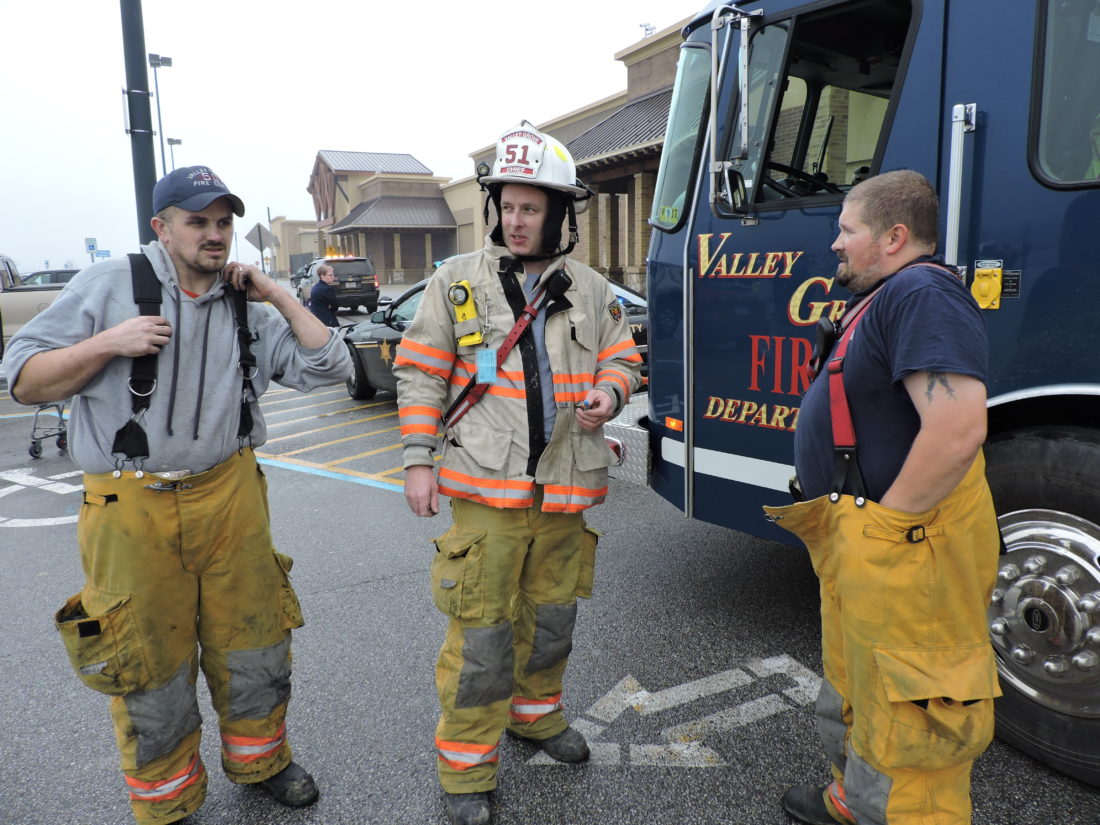
Photo by Janet Metzner
Valley Grove
Volunteer Fire Department Chief Scott Himrod,
center, and
firefighters Craig Blacker, left, and Chris Oliver, finish up a call at
Walmart at The Highlands on Jan. 2 after a vehicle fire spread to
multiple vehicles.
WHEELING — A fire service fee assessed to Ohio County property owners generates about $300,000 annually — about $50,000 less than the cost of one new fire truck for just one of the seven volunteer fire departments sharing the revenue each year.
The problem is not all residents pay their fire fees, and this has Ohio County Fire Board members concerned. Retired Wheeling firefighter Robert Fowler is now working with the board to get the message out that payment of the county fire fee isn’t optional.
“There’s a lot of misperception out there about the whole issue, and that’s my bigger concern,” he said. “It’s a law. There was some ambiguity when it started … . People don’t always know they have to pay, and why. That’s my concern more than anything. People are obligated to comply with law. We can agree to disagree (about the law), but it’s the law.”
The fire fee is assessed to all Ohio County residents living outside the city of Wheeling and Bethlehem. Wheeling has its own fire fee and paid department, while Bethlehem’s fire fee is assessed as part of property taxes.
Volunteer fire departments benefiting from the revenue are Valley Grove, Stone Church, West Liberty, Triadelphia, Mozart, Clearview and Bethlehem.
The fire fee has been in effect in Ohio County since county commissioners signed it into law in 1990, while a second ordinance passed in 2015 extends the fee to those owning active well pads, compressor stations and communication towers.
The intent of the fee is to generate money to help volunteer fire departments defray the cost of providing fire protection.
Owners of residential property are assessed a $50-per-year fire fee, while owners of non-residential property can pay anywhere from $62.50 to $1,250 annually based on the size or their property.
The fire fee for active wells pads and compressor stations is $5,000 each, while owners of communication towers pay $625 annually.
And what happens when a bill is left unpaid?
The county’s fire fee ordinance states that if a volunteer fire department is called to the property of an owner who is delinquent in paying the fire fee, a penalty of $250 will be charged to the property owner in addition to all unpaid fees already assessed.
“Any and all legal means will be pursued to secure payment of the fire service user’s fee,” the ordinance states.
The fire fee generates about $300,000 annually, and is distributed to departments according to a formula based on the number of a department’s calls and the population of its nearby area, according to Fowler.
Collection of fees owed for fire service are necessary because fire equipment is necessary, he said.
While just one fire truck can cost $350,000, Fowler said the yearly cost for insurance and workers’ compensation for each department typically is between $30,000 to $40,000.
Volunteer fire departments also are required to purchase one air pack per seat on their fire truck, with these costing $1,500 each. And each firefighter’s bunker gear must be custom fit, and costs $1,300.
“It costs about $3,000 just to get a firefighter on the truck, and that doesn’t include training,” Fowler said.
Top Headlines

Capito: FEMA Payments ‘Stuck’ in Partial Government Shutdown

Longtime Preservationist Betty Woods ‘Snookie’ Nutting Dies at 90
West Virginia Senate Finance Committee Recommends Bill Offering Financial Lifeline to Hancock County Schools
CHARLESTON – Members of the Senate Finance Committee approved a bill to provide a financial lifeline for Hancock ...
Capito Announces $5.6M for Oglebay’s Crispin Center Renovations
WHEELING — U.S. Sen. Shelley Moore Capito spent Tuesday in Wheeling visiting projects supported through ...

Wheeling Officials to Make New Housing a Top Priority