
Diocesan Demolition Plan Ignites Anger of Neighbors, Historians in Wheeling
Trending
WHEELING -- To the chagrin of some local historians and neighbors, four vacant houses on Washington Avenue owned by the Roman Catholic Diocese of Wheeling-Charleston are meeting the wrecking ball.
Wheeling Jesuit University once utilized the buildings, but they but have fallen into disrepair after sitting empty for several years. The diocese acquired control of the properties when it entered a formal partnership with the university last year, and became a major financial backer of the school.
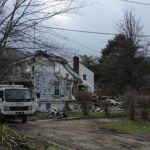
Already in the demolition phase is a structure at the front of 404 Washington Ave., adjacent to the main entrance of WJU. Edgco Inc. of Lansing is performing the demolition work.
Wheeling Economic and Community Development Director Nancy Prager confirmed three demolition permits have been issued for buildings on Washington Avenue. They include the front and rear structures at 404, as well as a house at 200 Washington Ave. which was built by master carpenter George Sonnefeld.
No future development plans have been submitted to the city for the soon-to-be vacant lots.
Other houses previously occupied by university programs include 1108 W. Washington Ave., and 220 Washington Ave. It is unclear which of these structure are slated be torn down or when.
Diocese officials had no comment on plans for the empty lots once the homes are removed. Diocese spokesman Tim Bishop said Friday, however, for now, the lots "will be well-kept green spaces."
Friends of Wheeling President Jeanne Finstein said at least three houses on the street have historic significance and she is saddened that they will be taken down. All of the homes were once occupied by WJU programs including the NASA Classroom of the Future and the National Technology Transfer Center, where Finstein worked.
The stucco house at 1108 W. Washington Ave. was once the home to the famous William "Big Bill" Lias, who owned several houses in Wheeling, Finstein said.
Having worked at the university for many years, Finstein recalled the beauty of some of the buildings.
"I remember a built-in wall safe at the Lias house. I guess he needed someplace to keep his money. The Sonnefeld house had beautiful mahogany woodwork throughout," Finstein recalled.
The house at 220 Washington Ave., where the university's Classroom of the Future had its second office, was for 30 years, the home of William E. Ackermann, vice president of Wheeling Steel.
"From a preservation standpoint, it's sad to see these houses go since they had beautiful workmanship. Once they're gone, that's it. In my opinion, if they put the demolition money into rehabbing, they could be rental properties, but not everyone wants to be a landlord, I guess," Finstein said.
Finstein said she was told the houses are plagued with mold. This and other safety conditions have weighed into the decision to tear them down, she has been told. Several of the buildings have been the target of break-ins recently and drug paraphernalia has been seen in the buildings.
Finstein said when the houses are gone, Washington Avenue will resemble "a smile with teeth gone."
Finstein has written letters to diocesan officials, including the Most Rev. Michael Bransfield, bishop, and Mayor Glenn Elliott, expressing concern for the property values in the neighborhood being impacted by the empty lots.
Karen Berger, a resident of the area, said she moved to Wheeling from Oregon and could not understand why the public was not given an opportunity to give an opinion on the demolition issues.
"This will affect the property values, especially when we don't know what will go in its place when they tear down those houses," Berger said. "It would be nice to be able to weigh in (on future development of the properties)."