
West Virginia U.S. Senate Candidates Square Off During Debate in Martinsburg
Trending
MARTINSBURG -- Except for a ray of light here and there, little daylight shone between candidates' conservative stances Tuesday, as they pledged to defend Second Amendment gun rights, prevent abortions with pro-life policies and fund Trump's touted border wall next to Mexico.
Where the four Republican candidates attending the forum who are vying to win the GOP nomination in the upcoming May 8 primary separated themselves was who among them would best be able to defeat Democrat incumbent U.S. Sen. Joe Manchin.
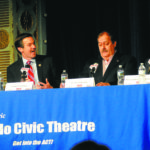
Four of the five candidates for the U.S. Senate seat -- Attorney General Patrick Morrisey, Eastern Panhandle resident Tom Willis, former Massey Energy chief executive Don Blankenship and U.S. Rep. Evan Jenkins -- participated Tuesday night in a question-and-answer forum at Martinsburg's Apollo Civic Theater.
Candidate Jack Newbrough of Weirton did not attend.
Naturally, each candidate put their own polished case forward as to why they were the one.
"Simply put, I am the only proven conservative running for the U.S. Senate," said West Virginia Attorney General Patrick Morrisey, a resident of Harpers Ferry.
U.S. Rep. Evan Jenkins touted his support for President Donald Trump's initiatives, including his vote for tax relief.
Tom Willis, a Berkeley County resident and special forces major in the West Virginia National Guard, highlighted his background as a first-time candidate "political outsider," a veteran, a businessman and "a family man and a man of faith" that many voters are eager to support this campaign season.
"I am the type of candidate that is winning races right now that the voters are looking for," he said.
Former Massey Energy chief executive Don Blankenship, pointing to his past efforts and money to "resurrect the Republican party in West Virginia," promised to be a tough, uncompromising campaigner against Manchin. Referring to the millions he spent in hard-hitting campaign TV ads, Blankenship said, "I'm probably the most hostile campaigner in America."
The Senate candidates spoke during a two-stage forum held by The Journal, WEPM radio in Martinsburg and WDVM-TV in Hagerstown, Md.
In different ways, each candidate supported taking asserted government action to address West Virginia's opioid addiction crisis. Each candidate supported a Trump idea to station U.S. Troops along the U.S.-Mexican border to prevent drugs from entering the country.
In addition to drug testing public officials "to set an example," Jenkins mentioned his support for funding Lily's Place, a Neonatal Abstinence Syndrome center; Trump's effort to build a Mexican border wall; and ending sanctuary cities. He said he is a "proud sponsor" of Kate's Law, a bill to undermine so-called sanctuary cities that might harbor illegal immigrants involved in drug crimes in the country. His vote for the president's tax cut will also bring jobs "with a living wage" and hope to those trapped in addiction, he added.
Agreeing with Trump's efforts to address illegal immigration, to fight illicit drug dealers and efforts to end sanctuary cities, Morrisey described his record as a two-term state attorney general battling the crisis. He cited civil lawsuits he advanced against pharmaceutical distributors, initiatives to facilitate treatment options, educating students and citizens about the perils of addiction, and a best practices initiative to reduce opiate use.
"We need to have an aggressive approach," he said.
Calling the opioid crisis an economic and national security threat, Willis mentioned a youth mentoring program in Martinsburg that he was involved with as one of the creative ways the country could address the problem. Other programs offering "alternative sentencing" and "faith-based initiatives" for those convicted of drug-related crimes should also be expanded, he said.
"I'm not running to make friends of the candidates that you see up here," Blankenship said. Instead, his priorities as a U.S. senator would be reducing drug addiction, creating jobs for people and lifting children out of poverty.
"If we don't quit putting party over country and quit spending $3 billion a day more than we take in, as I said probably 10 years ago, we're going to have to learn to speak Chinese," Blankenship said. "We need to recognize how rapidly the Chinese government is moving beyond us in many areas. Now we are falling behind every year – in terms of our debt and in terms of our society and drug abuse and education.
"But the main thing is, we've got to have capable, honest people that do as Kennedy said – ask what we can do for this country, instead of what the country can do for us."
Blankenship did not mention, nor did his opponents on stage, his conviction and year sentence to prison for a misdemeanor conspiracy charge related to the 2010 Upper Big Branch mine explosion at Massey Energy, which killed 29 miners.
The most combative exchanges between the candidates occurred when Morrisey accused Jenkins, a member of the House Appropriations Committee, of voting for legislation that included money for Planned Parenthood programs. Jenkins denied the accusation, and responded by accusing Morrisey, who touted an endorsement from West Virginians for Life, of benefiting from money his wife allegedly received as a lobbyist representing Planned Parenthood.
After both candidates adamantly denied the accusations, both charges were left unresolved.