
W.Va. House of Delegates Could Vote on Education Reform Package Thursday
Bill could see Thursday vote
Trending
CHARLESTON -- The massive education omnibus bill has survived the committee process and could be passed by the House of Delegates by Thursday.
Senate Bill 451 passed out of the House Finance Committee Tuesday morning with the House Education Committee's Friday strike-and-insert amendment intact, which removed education savings accounts, work stoppage penalties, paycheck protection provisions, and limited the charter school program to a two-school pilot project.
The bill passed the committee 17-8, with two Democratic committee members joining with the Republican majority -- delegates Jason Barrett, D-Berkeley, and Mick Bates, D-Raleigh.
A mere seven hours earlier, the finance committee attempted to pass its own strike-and-insert amendment to the education version that put education savings accounts back in and increased the number of maximum charter schools to five with the West Virginia Schools for the Deaf and the Blind given the option to convert to a charter if they wished to.
The Finance Committee strike-and-insert failed 13-12 with three Republicans voting with Democrats to defeat it. Delegate Steve Westfall, R-Jackson, serves on both the house education and finance committees. He said he couldn't vote for the finance strike-and-insert after all the work education committee members did to improve the bill.
"I couldn't support it," Westfall said. "I couldn't vote one way Friday night and flip my vote on Monday evening."
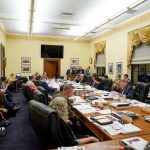
The Finance Committee held two public hearings Monday with more than 100 people showing up and dozens of speakers voicing their support or opposition to the bill. The committee met twice Monday – once in the afternoon and once in the evening – to work the bill and hear from experts on charter schools and education savings accounts, as well as union officials, and legal experts.
Throughout the day Monday, Democratic members of the committee were crafting amendments to the bill only to find out an hour before midnight that their efforts were for naught. Because they were amending the finance version -- which was itself an amendment to the education committee amendment to SB 451-- parliamentary rules prohibited them from amending it further.
Believing that the finance strike-and-insert would pass and wipe out their amendments, Democrats pulled their amendments from consideration.
"It was a very unfortunate incident," Barrett said. "We were under the impression we would be able to offer amendments … we were going to offer them and do our job."
"It was very unfortunate," Westfall said regarding how the House Finance Committee tried to run the bill.
"It did not have to happen, but sometimes it's a learning curve and we learn you don't do things that way."
SB 451 will be on second reading and amendment stage today. At least 51 delegates will need to agree to the education committee's strike-and-insert amendment for it to replace the version of SB 451 that came from the Senate. House leaders expect several other amendments to be introduced today, as well.
"There will be amendments and they will be debated," Westfall said. "It's a process as it should be."
"I think we can still make the bill a little bit better," Barrett said. "There are things in it I don't like. However, there are things in there I do like. I try to be as bipartisan as I can. I try to work with the other side. I try to be reasonable and if we can come to a compromise and work together and get a good product, that's what I'm about."
The bill, as passed by House Education, caps public charter schools at two and only for converting existing low-performing elementary schools; includes no education savings accounts, which would have given state money in the form of a debit card to parents of special needs children for education expenses; eliminates requirements for unions to seek annual approval before collecting dues from member paychecks; and removes a nonseverability clause meant to self-destruct the entire bill if any portion is successfully challenged in court.
It also adds $5 million for the Innovation Zone grant program that gives money to public schools trying new ways to increase education outcomes. It extends tax credits and attendance bonuses for teachers to school service personnel. It includes $24 million in funding for student support personnel, such as counselors and psychologists. It funds small counties at a minimum of 1,400 students even if their student population is less than that.
Union officials representing teachers and school service personnel are happy the Finance Committee version of SB 451 failed but are still watching the bill carefully. Fred Albert, president of the state chapter of the American Federation of Teachers, hopes that education savings accounts stay out of the bill and would prefer to see no charter school pilot program.
"At this point we're still watching it day-by-day because it's probably going to change again," Albert said. "At this point, the bill is where it was at last Friday, which is more palatable to us, but we would still like to see some changes. We're hoping to see some amendments in a positive direction."
The unions have been given the go-ahead to authorize a strike or other work actions, if necessary, over SB 451.