
Trending
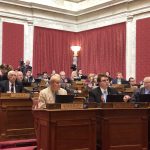
CHARLESTON – The House of Delegates Thursday waded through several amendments, but passed a bill to make the Home Rule pilot programs for cities permanent.
The House passed Senate Bill 4, making the Municipal Home Rule Pilot Program permanent, 87-11.
As well as make it permanent, SB 4 would open up greater participation in the Home Rule program to a limited number of cities and towns with fewer than 2,000 residents.
Members of the House Wednesday approved a strike-and-insert amendment adopted by the House Government Organization Committee to SB 4, which removed language preventing municipalities from enacting rules or ordinances contrary to the state Workplace Freedom Act and Labor-Management Relations Act.
Amendments adopted Wednesday included stripping language from the government organization amendment creating a referendum process for Home Rule cities. In the committee bill, 30 percent of eligible voters could petition the city to put any ordinance approved by a city through Home Rule on the ballot for a special election. It would also require voter approval for bonds.
The amendment to remove the language was co-sponsored by Delegates Steve Westfall, R-Jackson, and Erikka Storch, R-Ohio. Both believe keeping the language in the bill would cause a small number of voters to dictate how a city runs and hurt a city’s ability to finance major public works improvements with bonds.
“Some of these municipalities might have 1,500 to 2,000 people. Some of these elections might have 200 or 300 people vote. If you have 300 people vote in an election you could have 90 people go back and say ‘I don’t like this ordinance,'” Westfall said. “These city elections don’t have big turnouts. If you have a small turnout, you could really turn a city budget upside down.”
“I believe the language is detrimental to the bonds that may need to be issued if there are water or sewer upgrades or something like that that needs to happen,” Storch said. “They put it out for public comment. There is a great deal of communication between municipal elected officials and the people they represent.”
Other delegates opposed the amendment, believing that keeping the referendum provisions gave local control to the people.
“This is a Home Rule bill, not a home government bill,” said Delegate Tom Bibby, R-Berkeley. “We’re not giving power to five city council members to decide for a city or a municipality what the laws are going to be. The people rule in this state.”
“We need to be very cognizant of what we’re doing when we don’t allow the people to rise up and disagree when a small number of people on a council are putting the whole city into debt,” said Delegate Terry Waxman, R-Harrison. “We need to think long and hard and let the citizens...to be able to say something before a bond gets implemented.”
Delegate John Kelly, R-Wood, a former member of Parkersburg City Council, said Home Rule cities across the state are watching this bill. The Home Rule program will expire at the end of July if SB 4 isn’t passed and signed into law.
“I come from city government. I’ve spent time in city government before Home Rule,” Kelly said. “I will tell you those cities in the State of West Virginia that are currently governing under Home Rule need this bill passed. They are holding back. They can’t do their budgets. They can’t do anything right now until we finalize something in this body.”
If the Senate concurs with the House changes to SB 4, its next stop is the desk of Gov. Jim Justice.