
Mental Health Programs Sought by Educators, State Sen. Ryan Weld, R-Brooke
Weld leading charge for state educators
Trending
WHEELING -- Educators are pushing for school mental health programs -- like one that exists in Ohio County Schools -- to be expanded across West Virginia.
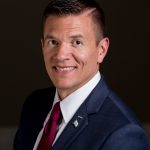
State Sen. Ryan Weld, R-Brooke, is facilitating an effort to make mental health care in schools a priority in the West Virginia Legislature as lawmakers sit down to craft an "education betterment" bill for the state.
The West Virginia Department of Health and Human Resources currently funds an Expanded School Mental Health program for 40 schools across West Virginia, including four in Ohio County -- Middle Creek, Madison, Elm Grove and Woodsdale elementary schools.
The programs focus first on providing mental health lessons for all students on such topics as bullying, the dangers of drugs and alcohol and what to do when violence occurs in homes.
Students then are identified for group and individual sessions with therapists when it is needed.
Last week, Weld hosted a roundtable discussion in Charleston on the topic. Among those attending were experts from Marshall University, West Virginia University, the State Department of Health and Human Resources and the State Department of Education.
Also present were guidance counselors Pam Fazzini of Middle Creek Elementary School and Jessica Watt from Bridge Street Middle School, who told of the successes of the program in Ohio County Schools and the need to expand them across the state.
Fazzini said last year Ohio County Schools reached out to Weld for the need to preserve mental health programs in the schools as it appeared funding might be cut or eliminated.
"He got on board, believed in the program and saw the benefits," Fazzini said.
Typically, the school mental health grants from the DHHR are awarded to mental health agencies, who take their services into a school, she explained.
But the grants received in Ohio County Schools differ in that they were awarded to the four specific schools, who then contract with a mental health provider, according to Fazzini. This gives the schools the flexibility to order what services they determine to be needed.
"It's easier when the counselor runs the program," Fazzini said. "They know what the students want, and go out and get it."
Both she and Weld said the experts in Charleston last week pushed for giving the schools the flexibility to determine their students' own mental health needs.
"I have heard a lot of talk about this issue, and about what students face in their home life," he said. "Many come from broken homes, have parents in drugs and criminal activity, and live in poverty. This is a program that has had a real impact and success rate."
He said the first move would have to be to identify schools and school districts who want to partner with the DHHR, and have the resources to do so.
"We do not want to force a one-size cookie cutter across the state," Weld said. "The experts said that is not the way to go about it."
There will be another meeting sometime in mid-June when all the experts will return with a list of candidate schools that would be a good fit for the program and its expansion.
"I'm just the facilitator," Weld said. "My role is to ensure when we do come up with plan, the state funds its properly."