
Study of Historic North Wheeling Buildings Continues
Trending
By ALEX MEYER
Staff Writer
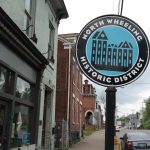
WHEELING -- A survey of early buildings in North Wheeling aims to expand the boundary of the neighborhood's historic district to include more buildings constructed in the early- to mid-19th century.
The second phase of the study conducted by Eastern Michigan University researchers is nearly completed, according to a report received by Wheeling's Historic Landmarks Commission at a meeting last week.
Meanwhile, Wheeling Heritage plans to launch the third and final phase of the survey to be completed this fall. The organization, which manages the project with the commission, recently received a $5,250 grant from the West Virginia State Historic Preservation Office to fund the last portion of the study.
Commissioners heard updates on the second phase of the study, officially called the Early Dwellings of North Wheeling Intensive Survey, at its meeting Thursday afternoon. The phase is on track to be completed by June 30.
"The idea is that they're doing this intensive study so that we can apply to expand the district boundary of North Wheeling," Betsy Sweeny, Wheeling Heritage's historic preservation program manager, said at the meeting Thursday. "Several if not most of these properties aren't within that boundary."
The survey, led by Dan Bonenberger, a professor at Eastern Michigan, found a total of 120 dwellings in North Wheeling that were built prior to 1871, according to the preliminary report from submitted to the commission.
Grants from the State Historic Preservation Office funded and will fund about 70 percent of all three phases, Alex Weld of Wheeling Heritage said. The organization will pay for the remaining amount, she said.
Phase one of the study focused on the middle of the neighborhood, while the second phase expanded its focus to include buildings to the north, near First Street. The research involved comparing old city maps with current aerial photography to determine the oldest surviving structures.
That second phase found an additional 18 dwellings north of Third Street that likely date to 1871 or earlier and recorded a total of 64 early dwellings beyond the current boundaries of the historic district.
"This is the step of gathering that information to then eventually expand that boundary," Sweeny explained.
North Wheeling gained a spot on the National Register of Historic Places in 1988 and saw a district expansion in 2008. The current district encompasses 134 buildings between Sixth and Seventh streets.
Pre-Civil War buildings to the north of the district were omitted originally because they were considered less significant than the grand houses in the southern end of the neighborhood, according to Wheeling Heritage.
Researchers found that three buildings surveyed date to at least 1818, while beforehand it was thought that the oldest still-standing home in Wheeling was built in 1931. That finding indicated a need for additional study.
"The need to extend and expand this project speaks to the significance of the properties in North Wheeling," Sweeny said. "It's incredible how much of the historic fabric of that neighborhood survives."
Commission Chairman Charles Kaiser asked Sweeny what residents of the neighborhood think about the study. Sweeny said she was in the field with researchers recently and heard generally positive feedback.
"There was a lot of interest and skepticism, but several people came out of their houses and stopped to talk to us," she said. "Overwhelmingly, once they understood the scope of the project they were pretty supportive and pretty happy that anything north of Sixth and Seventh was getting attention."
Placement on the National Register deems buildings historically important and worthy of preservation and also provides various tax incentives for property owners.
Through the survey, Bonenberger and the researchers will issue a final report that will recommend a new district boundary. Tom Connelly, the city's assistant director of economic and community development, said he anticipates Bonenberger will present that report to the commission sometime in June or July.
"It's amazing how many antebellum homes have been realized through this survey," Sweeny added. "These properties absolutely deserve to be recognized."