
Wheeling’s Proposed User Fee: Who Would Pay?
Council to Hear First Reading on Ordinance Tuesday
Trending
WHEELING -- City Council this month is set to consider a $2 per week city service fee, which would apply to all full-time, part-time and self-employed workers who work in Wheeling for at least 30 days per year.
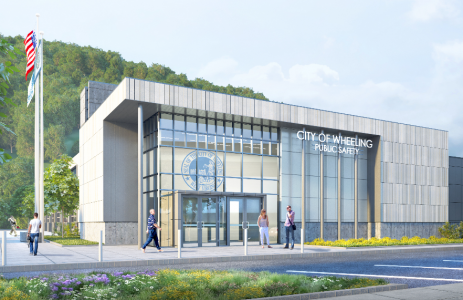
Council members will hear the first reading of an ordinance to enact the fee, part of which would fund a proposed $14.5 million public safety building, at its noon meeting Tuesday. Council could then vote on the matter at its following meeting Aug. 20.
The fee would serve as a $2 weekly tax on people who work in the city and benefit from its services, including police and fire protection, street infrastructure, water and sewer utilities, parking and so on, according to the ordinance.
If approved by council, the fee would go into effect Jan. 1.
The city is considering the fee to fund a 52,000-square-foot, one-story public safety building proposed in July.
The building would house both police and fire departments at a site on 19th Street in East Wheeling.
The ordinance contains language dictating how the fee would affect people who work in Wheeling.
Mayor Glenn Elliott said the ordinance was closely modeled after a similar one in Charleston.
It would apply to all full-time, part-time and self-employed workers who work in the city for at least 30 days per year.
Employees with a Wheeling-based business who work outside the city wouldn't have to pay the fee, Vice Mayor Chad Thalman said.
Those who work multiple jobs in the city would only pay the fee once, per the ordinance. Thalman said workers with two jobs could fill out a form to designate their primary job and submit it to the city so that the fee only applies to that job.
Employers would be required to hold the $2 per week from employees' pay, and the fee would then be remitted quarterly to Wheeling's Finance Department. Self-employed people would be responsible for remitting the fee on their own.
Thalman said that West Virginia code requires that city service fees apply to all workers in the city, so Wheeling can't exempt certain workers.
"We can't pick and choose," Thalman said. "State code says every single person who works in a given week has to pay."
The fee would apply to people who work in Wheeling but live in Ohio or Pennsylvania as well. Though state code doesn't allow cities to tax non-residents, Elliott said the fee isn't a tax and is "deemed a fee for service."
"If it were deemed to be a tax, then concerns about taxation without representation would be justified," Elliott said. "But West Virginia law does afford cities the right to assess fees upon all those who use and benefit from city services, regardless of their residence. One of the reasons we have modeled our ordinance upon Charleston's is because it has been challenged and upheld by the West Virginia Supreme Court precisely on these grounds."
Thalman and Elliott also said they don't anticipate the fee will give nearby Ohio cities a competitive advantage. Many Ohio cities have a 1 percent income tax, which Thalman said would be more costly than a $2 user fee for most people.
"We take any fee increase seriously. We do our best to make Wheeling the most competitive place possible and a desirable place to live," Thalman said. "We think public safety is a crucial component in making Wheeling a desirable place to live and operate a business."
City Council did raise the sales tax a number of years back to 7%, under the administration of former Mayor Andy McKenzie.
Several large West Virginia cities already have user fees in place that range from $2 to $5, including Weirton, Charleston, Huntington, Morgantown, Parkersburg and Fairmont.
"I guess the biggest misconception about a service fee is that it is unusual or somehow extraordinary in West Virginia's larger cities," Elliott said. "It is, for all intents and purposes, often the best tool that cities have to fund projects that are needed but for which other funding options are not possible."
Money generated by Wheeling's fee would fund a special account in the city's treasury to be exclusively used for "police protection, fire protection and emergency medical services related thereto" as well as street and public works projects.
Officials previously said that $1 of the fee would go toward the public safety building and the other $1 would fund "infrastructure." Thalman said such infrastructure funding could go toward road work in the city.
"For me personally, I would like to see additional paving and bridge maintenance work done with the infrastructure portion of a city service fee," Elliott said, pointing to work on the city-owned Washington Avenue bridge as an example.
In addition, the ordinance includes a "sunset provision" stating that the user fee would exist for 25 years, until 2045. At that point, council would decide whether to renew the fee, officials said previously.
Previously, Wheeling considered funding a proposed public safety building with a property tax levy. The levy failed.
Officials later discussed enacting a user fee as another way to fund the building, citing that the majority of voters were in favor of the building. In July, several council members vouched for the user fee, arguing that it's more equitable than a property tax levy and wouldn't affect retirees on fixed incomes.
Wheeling Area Chamber of Commerce President Erikka Storch said the chamber is in the process of polling its members regarding the user fee, and she plans to make a statement on the chamber's stance soon.