
New State Program To Aid In Razing Deteriorating Buildings
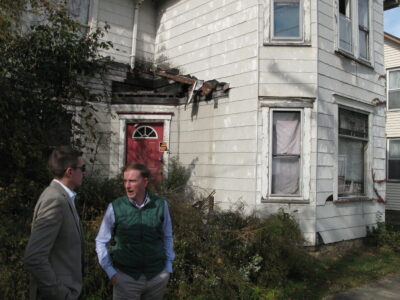
photo by: Photo by Warren Scott
State Sen. Ryan Weld, left, R-Brooke, and state Auditor J.B. McCuskey discuss a vacant house at 1325 Main St. in Wellsburg, one of up to 20 dilapidated structures Weld plans to raze using a $290,000 grant awarded to Wellsburg as part of a pilot program developed by the two.
WELLSBURG — During a visit Tuesday to Wellsburg, state Auditor J.B. McCuskey and state Sen. Ryan Weld, R-Brooke, discussed recent efforts to prevent and address dilapidated structures.
The two stopped by to view a vacant house at 1325 Main St., which the city has acquired and plans to raze through a pilot program of the West Virginia Department of Environmental Protection.
Weld said he will pursue the removal of up to 20 such structures in the city with a $290,000 grant from the program, which is being supported by $9.2 million in federal funds. The grant requires no local match.
Weld said the city paid no money for the house but will assume costs to raze it, including asbestos inspection and removal, using funds from the grant.
McCuskey said the cost to raze one structure is typically about $25,000 but by advertising the demolition of multiple buildings to potential contractors, the costs can possibly be reduced to $10,000 for each.
He noted local governments normally must place a lien on the buildings they have razed, in hopes of recouping the demolition costs, and the program removes the risk in doing so.
McCuskey added, “This protects the safety and health and property values for everybody who lives here.”
Mayor Dan Dudley and City Manager Steve Maguschak noted in addition to being eyesores, such properties can be a fire hazard and home to vermin.
Weld, who also serves as the city’s solicitor, said Wellsburg is one of 21 cities and counties chosen from 80 applicants to participate in the program and the only one north of Fairmont.
He said with just a year to use the grant, he and others have identified structures in all of the city’s four wards, including buildings west and east of state Route 2.
Weld said while some are within the city’s historic district, none are contributing structures.
Designated by the National Register of Historic Places, the district includes an area extending from the 300 block of Main Street to the 2900 block of Charles Street.
Contributing structures are those that are deemed significant for their historic or architectural value.
Weld said while private parties purchasing such properties must pay any delinquent taxes owed for them, the city is tax-exempt. He said in some cases, the buyer of such a property seeks to exploit its former owner.
While the previous owner may seek to buy it back within a 30-month redemption period, that person until recently was required to pay the new owner 12% interest on the taxes that were paid.
Working with McCuskey, who had served with him in the state House of Delegates, Weld crafted Senate Bill 552, which removed interest from the equation while reducing the redemption period to 12 months.
Approved by the state legislature, the new law also establishes a hierarchy of potential buyers with first rights to its purchase, including the former owner, the local government entity with jurisdiction over it and the local economic development agency.
Weld said as a result, the property can fall into the hands of those with interest in using it and not solely to make money from the present owner’s misfortune.
Community
Celebrating differences, building community in Weirton

Bellaire Man Arrested On multiple Felony Sex Charges
Bridgeport Continues to Cash In on PFAS Settlement Payments
Summer Bash Carnival Set On Tap In Steubenville
STEUBENVILLE — Area families are invited to enjoy games, food and inclusive activities during the fifth annual ...
Moundsville Gearing Up For July Fourth Festivities
WorkForce West Virginia Announces July 1 Statewide Virtual Job Fair
CHARLESTON — WorkForce West Virginia will hold its next statewide virtual job fair July 1. Employers and job ...