
Brooke Commissioners Asked To Help With Countywide Cat Problem
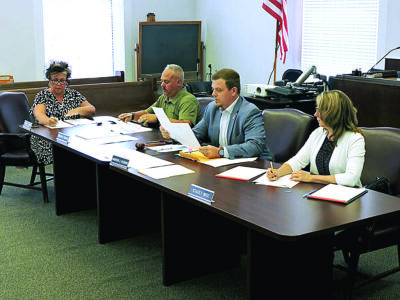
WELLSBURG — There appears to be a growing problem of purring proportions in Brooke County.
The Brooke County Commission was approached Tuesday about ways to curtail an abundance of stray cats, including using a state grant it has received to help residents spay or neuter their pets.
The commission heard from Carri Welsh, who said she’s learned of a Follansbee resident who complained of feral cats in his neighborhood and threatened to poison them.
Welsch and a handful of other residents told the commission they’re aware of an overpopulation of feral and other stray cats and would like to help address the problem in a humane manner.
They questioned whether a $20,000 grant awarded to the county by the West Virginia Department of Agriculture for the spaying and neutering of animals may be used.
At the request of Steve Tennant, a local member of the Federation of Humane Organizations, the commission applied for funds from the grant program, which is supported by a registration fee paid by the makers of pet food sold in the state and a $5 million anonymous donation.
The grant typically covers the cost for local residents to have their pet dogs or cats spayed or neutered and for them to be vaccinated against rabies.
Fellow resident Tami VanCamp told the commission she and others have been trapping feral cats and having them spayed, then normally returning them to their location though in some cases, homes can be found for them.
She said because the cats have been made incapable of reproducing, the practice results in a community of undomesticated felines ultimately dying out.
Donna DeJaro, director of the county’s animal shelter, was asked about the facility’s capacity for dogs and cats and its current occupancy.
She said there currently are 67 cats, including kittens, and 15 dogs at the shelter.
She said a cat room at the shelter has been occupied by as many as 225 felines though that’s not ideal.
Heather Watkins, a member of the county clerk’s staff, suggested if the commissioners decide to use grant money for the strays, they should determine how much of it should be used for that purpose as it could become exhausted quickly.
She added there’s variance in the amounts charged by the veterinarians for spays, and the commission may want to address that.
The current grant period ends in November, after which the commission may apply for another one.
Commission President A.J. Thomas said he’d like confirmation from the Department of Agriculture that the grant may be used for strays.
Tennant advised, “That’s what this program initially was set up for, to control the cat overpopulation.”
“It feels like there’s a way forward on this,” said Thomas while adding he feels more discussion is needed between the commission and the residents involved.
Community
Opioid Dollars Flow, But Hancock County Commissioners Split On $400K Ask
Bipartisan Bill Targets Private School Oversight
A group of bipartisan lawmakers in Ohio want private schools that receive public taxpayer dollars to follow the ...
Blessed To Serve: Weirton Unveils New Fire Engine
Rotary Club Helps House Of The Carpenter
Belmont County gets one bid for DJFS family team meeting facilitator
Cemetery Site Review Awaits State Approval In Steubenville
STEUBENVILLE — The archaeological consultant hired to determine whether remains buried at a Sunset Boulevard ...