
Wheeling Reviews Update on Its Source Water Protection Plan
Trending
WHEELING - The city of Wheeling is prepared to respond to potential emergencies involving its municipal water supplies and, in fact, an updated plan to address these issues was submitted to the state at the beginning of this month.
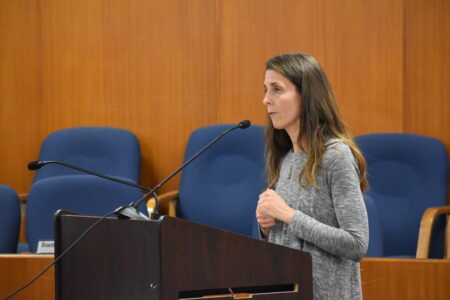
Members of the Public Utilities Committee of Wheeling City Council recently reviewed the city’s updated Source Water Protection Plan during a required public session. Wheeling Water Superintendent Lori Siburt, members of city council and the city administration, and other officials with the Wheeling Water Department received the update and overview of the plan from environmental scientist Kendra Hatcher of Morgantown-based consultant Downstream Strategies.
"Our source water protection program is a very important document that protects our source water, which of course are our wells and our local water," Siburt said. "It’s also required by the Department of Environmental Protection and is updated every three years."
This is the third round of updates the city has seen for its plan since it became an EPA requirement.
Hatcher explained that public water utilities have always routinely developed plans to protect their water sources in case of a contamination event, but it was not until after 2014 that the Elk River spill made strategic planning a state requirement. Around 10,000 gallons of industrial chemicals were spilled just upstream from the Kanawha County municipal water intake in Charleston during the Elk River spill.
"Senate Bill 373 - also known as the Spill Bill - was passed after the spill that occurred," Hatcher said. "It required all public water utilities to complete or update their source water protection plans. It required an inventory of potential contaminant sources within the watershed, and it also created a system for registering and regulating above-ground storage tanks, as that was the source of the spill."
The main purpose of source water protection planning is to minimize the potential of contamination of the local water supply. In the event of a contamination event occurring, a plan of action is outlined as well, detailing steps to minimize the impact to everyone who is served by the municipal water system.
Wheeling not only serves water to a number of other neighboring municipalities in Ohio County and beyond, it also draws a good portion of its raw water from the Ohio River. The Wheeling watershed is massive, covering approximately 25,000 square miles upstream to areas in Northeast Ohio, Western Pennsylvania to the north along the Allegheny and even large portions of central West Virginia where creeks and streams flow into the Monongahela River.
"It’s huge," Hatcher said. "Wheeling is interesting because given the size and where it’s located, we’re not dealing with just West Virginia. We’re also dealing with sites in Pennsylvania and Ohio - so it makes it a little more complicated."
There are hundreds of chemical storage tanks within the watershed, and many of them are huge - containing millions of gallons of potentially problematic materials. There are also industrial facilities and power plants along the rivers that could trigger contamination events. The area has abandoned mine lanes, oil and gas development sites and transportation corridors that could also impact the source water.
All of these factors are considered in the Source Water Protection Plan.
Hatcher said the plan focuses on how to let the public know if something has happened upstream - without creating panic. Ways to isolate or divert contaminated waters, switch to alternative intakes, maximize storage capacity in treated water tanks and other plans of action are also outlined.
Officials noted that the plans are public, but obviously some information regarding the community’s water sources and potential hazards is kept confidential and out of access from those with potentially nefarious motives.
Although Wheeling’s watershed is massive, the plan addresses a Zone of Critical Concern (ZCC) - where materials can reach the city’s water intake within a five-hour travel time, and the Zone of Peripheral Concern (ZPC)- a wider area where materials are beyond the ZCC but within a 10-hour travel time to the intake.
The plan helps the water department understand the scale of what could happen upstream and the time they have to react and implement actions in response. Officials said with an average river flow, material moves about a half-mile per hour.
In 2023, the city’s response to the East Palestine train derailment was a great example of how source water protection planning was put to use, according to Hatcher, who noted that there was open communication with agencies upstream and good coordination with emergency response protocols.
"The city was able to shut down the intake and monitor the water quality," Hatcher said. "All of those things were in play, and it worked smoothly for the city of Wheeling to not have any contamination in the water system."
Wheeling had to shut down its river water intake just one day for eight hours after the East Palestine event.
There are seven wells that, along with the river water, provide source water to the city. Those wells can also serve as backup water supplies in the event that the river intake has to be closed. The city of Wheeling has approximately four to six days of treated water - contained within a total of about 14.5 million gallons of storage space in its tanks - in the event that the water intake has to be shut off.
"Our Water Department does an excellent job of managing in the event of an incident, and obviously we’ve had a number of them on the river," Wheeling City Manager Robert Herron said. "The seven wells that we have automatically provide water in the event that the intake has to be taken down."
Officials said back in the late 1980s, an event on the Monongahela River known as the Ashland Oil Spill prompted the city to develop wells to supplement and diversify its source water supplies. Some rate increases also came as a result of this addition, they added.
"That’s pretty unique in West Virginia. Not a lot of public water utilities have multiple sources of water, so that’s a great place for Wheeling to be in, for sure," Hatcher said.
The Wheeling Water Department takes samples multiple times a day, checking for river water contaminants. They are part of ORSANCO (Ohio River Valley Water Sanitation Commission) and are in constant contact with other municipal providers in Weirton, Pittsburgh and beyond.
"We have 19 storage tanks," Siburt said. "We provide 50% of daily usage through well water. If we should shut off our intake, we may have to conserve a little bit, but we’ll still have water - we’ll be able to provide water."