
‘Master of Plaster’ To Share Tricks of the Trade
 Nora Edinger
 Trending
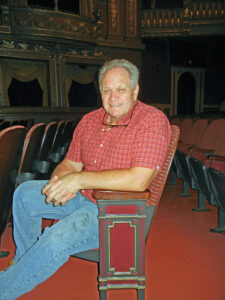
WHEELING -- There's more flaking, sagging and chipping plaster in Wheeling than Sarel Venter has time to fix. The local abundance of both it and stucco is why the South African-born contractor moved his Adventures in Elegance restoration business here eight years ago. It's also why he's making a late-career pivot to education.
"They are special animals," Venter said of Wheeling's historic buildings and the restoration needs that the city (and nation) will face in coming years. He knows there aren't anywhere near enough work boots on the ground to meet the demand.
But, beginning this fall, Venter will begin to transfer skills he honed in South Africa's plaster-rich culture to a new generation through a series of classes and micro-modules offered through West Virginia Northern Community College. First up is an 11-session series aimed at homeowners, while later classes are designed for professionals who'd like to add specific restoration credentials to their resumes
The homeowner-focused classes, which will launch in late September and October, are geared toward area residents who love an old building but don't know how to manage it, according to Phil Klein, vice president of economic and workforce development at WVNCC.
Klein said the community education series will include classroom instruction on repairing and maintaining plaster, information about historic preservation tax credits and some apprenticeship-style training. "We're looking at finding some locations so they can get hands-on with live work," Klein said.
Hands-on is really the only way to learn how to work with various plaster blemishes and cracks, Venter said. This is particularly true when there are judgment calls to be made, he noted. "Some cracks are superficial. Some are structural."
WVNCC is also gearing up to offer intensive, one- or two-week micro-modules beginning in the spring semester, Klein added of the college's unfolding restoration program. Those sessions are intended for professionals who need specific restoration skills -- such as those involving plaster, windows or heating and cooling systems -- for a specific job contract or to broaden their credentials.
Venter considers such training to be a regional complement to a two-year program in building preservation and restoration offered at Belmont College since 1989. He envisions such situations as a drywall crew in another state or even nation coming in for a short-term plaster-restoration class and taking the training back to fulfill whatever contract they have secured elsewhere.
 Nora Edinger
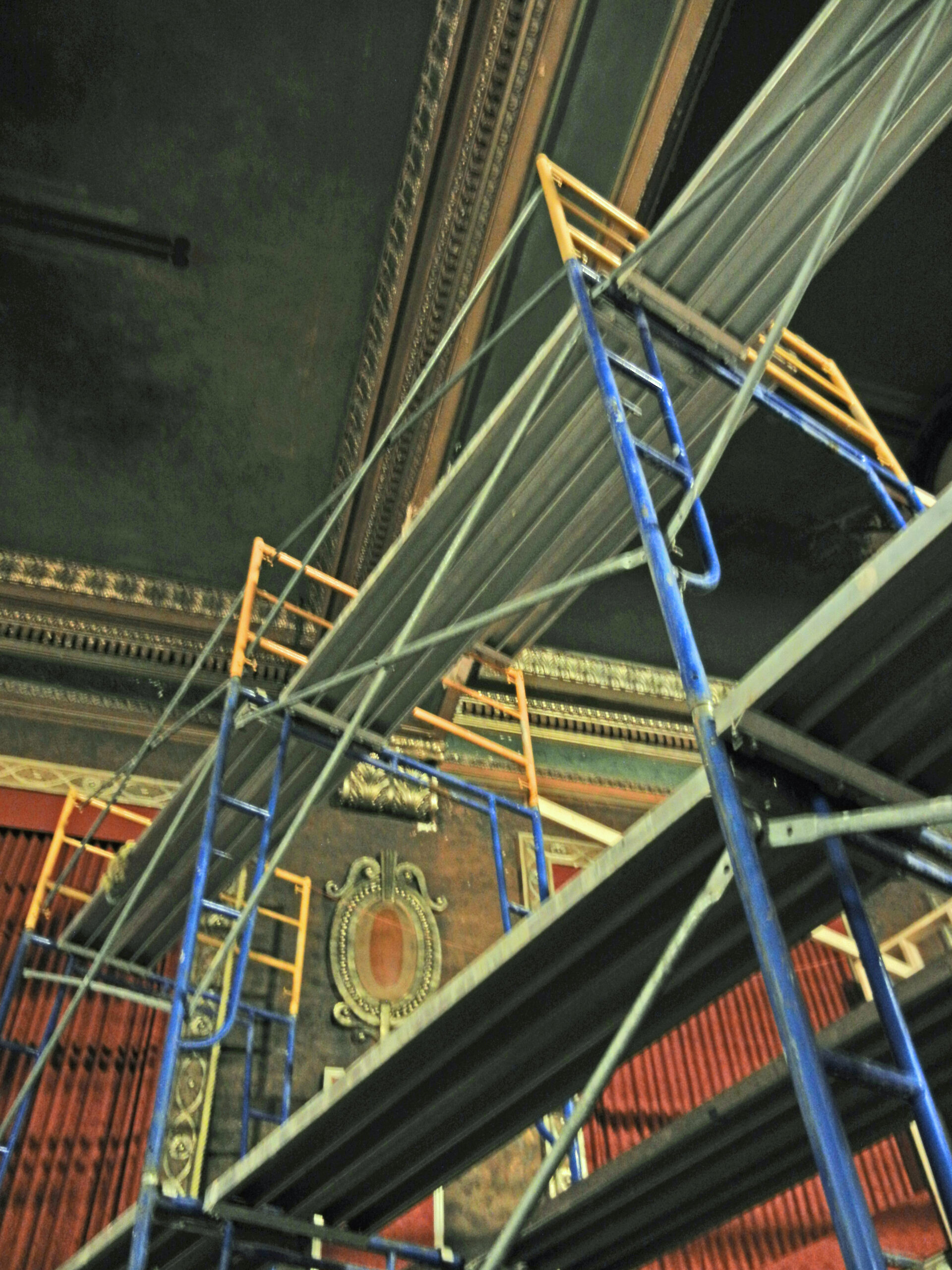
Not only is plaster restoration a tricky business itself, Venter noted that getting to it can require a variety of other skill sets. For the restoration work at the Capitol Theatre, for example, Venter was in the process of building a temporary floor by which to access the high ceilings.
LIVING LAB
Klein added that Wheeling -- with hundreds of intact historic buildings immediately at hand -- is a natural epicenter for this kind of training. "The trades are actually booming," Klein said. "This is a little bit more specialized. It's focused on older construction -- restoring it, repairing it."
Specifically noting Wheeling's abundance of homes and buildings between the ages of 60 and 200 years, Venter sees the city as a living lab for a new breed of contractor.
"That's not a traditional skill," Venter said of restoring plaster and stucco, particularly in a way that meets the federal requirements for historic preservation tax credits or the city's own grant specifications for facade or upper-floor improvements. "You really now have a new trade, which is plaster restoration."
As examples of the difference from new construction, Venter noted that restoring plaster that's damaged in one area to match adjacent-but-intact areas is tricky. (He's doing such a project currently at the Capitol Theatre, which sustained a roof leak.) So is figuring out how to patch surfaces that have been covered with glossy paint. So is just accessing some of the most historic plaster -- which is often soaring well above any ordinary reach.
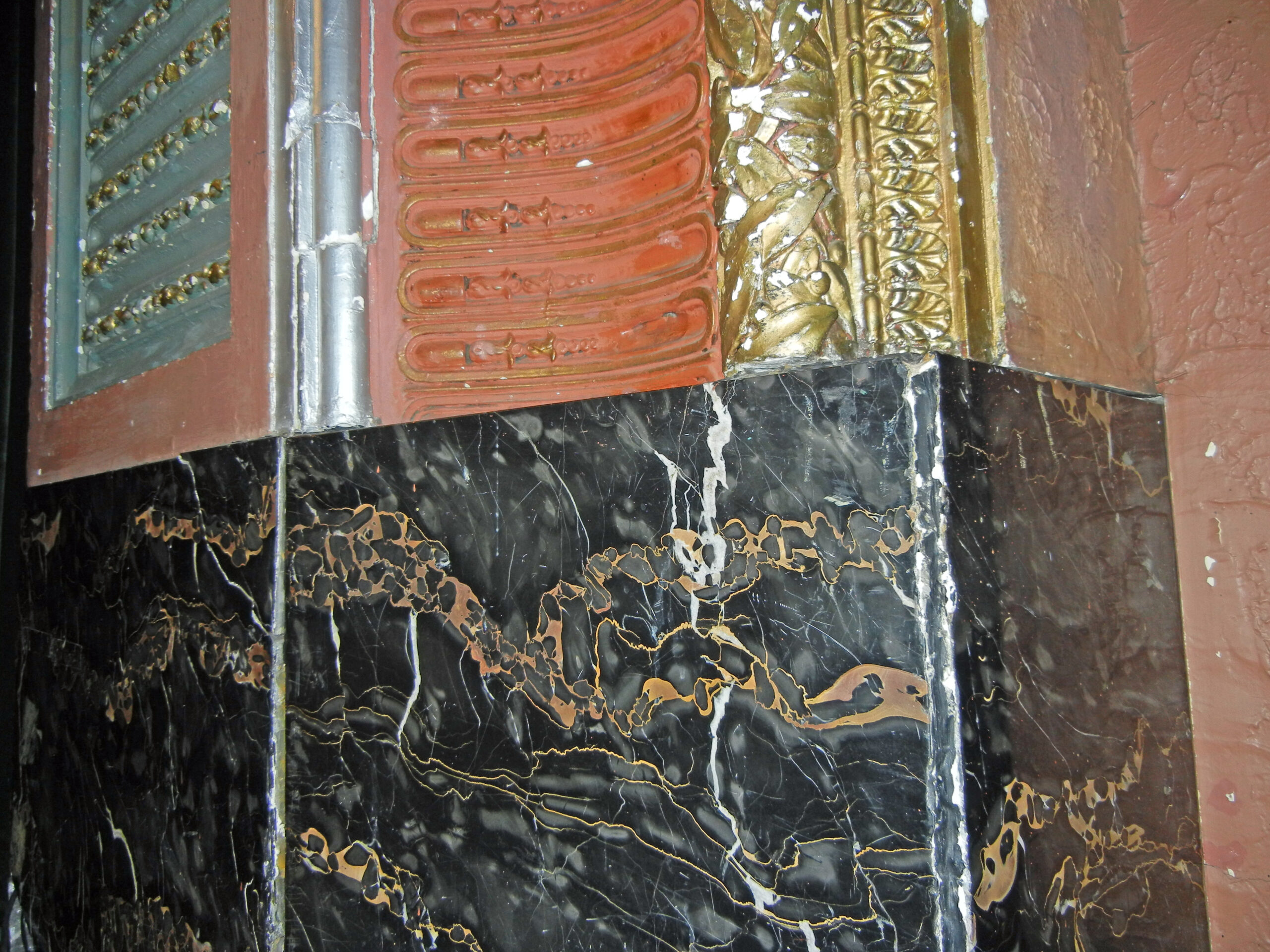
He sees endless career potential for contractors who master such restoration techniques and offered another example of how rare some skill sets have become. Scagliola -- a vintage form of faux marble made from plaster of Paris, mineral pigment and rabbit skin glue -- can be found in many public buildings including the Capitol Theatre.
In spite of its common presence, he knew of only two companies nationwide who can restore it. The market is there, but he said many building owners with damaged scagliola are forced to either paint over it or replace it given the lack of trained contractors.
 Nora Edinger
Venter pointed out sections of scagliola -- a vintage form of faux marble made from plaster of Paris, mineral pigment and rabbit skin glue -- near the stage at Capitol Theatre as an example of the expanding need for restoration professionals. While scagliola is commonly found in many local and national buildings of a certain age, he said virtually no contractors in the U.S. can restore it.
TWO-HOME GROWN
It is no accident that Venter first developed his own skills in his native South Africa.
"Wood is very expensive in Africa," Venter said. "It's usually reserved for roofs and everything else is masonry. If you want a smooth finish, you need plaster or stucco ... A plasterer, you'll find behind every bush. It's not a hidden or forgotten trade as it is here."
He noted that plaster was the wall surface of choice in the U.S. until a huge demand for housing after World War II drove the development of plaster board that only required one coat from a trained plasterer rather than three and, later, drywall sheets that could go up even faster.
Seeing opportunity, he moved to the U.S. in 1984. "America was a choice," Venter said. "West Virginia was a bit of an accident."
Venter was traveling the U.S. to do major restoration projects -- think locations as far flung as Hawaii, California and Minnesota -- when a visit to West Virginia hooked him in a quality-of-life kind of way.
He initially located in Grafton in 1991, purchasing an old school to house his workshop. "I basically had an on-the-road act that went everywhere. But, I was spending more and more time in Wheeling."
Projects like those at the White Palace, the Capitol Theatre, the Scottish Rite and the Fort Henry Club prompted him to make the Friendly City his new home base eight years ago. In addition to restoring other people's buildings, he and girlfriend Rebekah Karelis are working on a Main Street storefront they intend to use as a home.
Readers interested in Venter's initial, homeowner-focused classes at WVNCC can monitor the community education section of the college's website for signup details in coming days.