
Matzo: More Than Just a Cracker
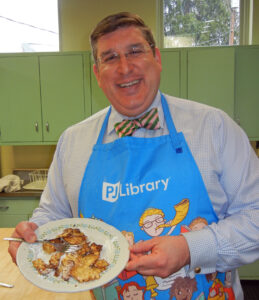 Nora Edinger
 Trending
WHEELING -- Matzo boards are to Passover as leftover turkey, cranberry sauce and stuffing are to Thanksgiving. The snacking twists on such holiday standards are simply endless.
Rabbi Joshua Lief of Temple Shalom -- a cook skilled enough to have won a throw-down competition for charoset, a staple Passover condiment -- has become an expert of sorts.
His school-aged daughters like their matzo (say MAHT-SO) pizza style. He enjoys matzo ball soup. And, matzo brei -- an unleavened, French-toast-like dish he said was introduced to America by Jews from Eastern Europe -- becomes a breakfast delicacy during the week-long spring holiday that begins at sundown on Wednesday, April 5.
"The challenge at Passover time is you can't have anything leavened over the week," Lief noted of one element of an observance that celebrates Jewish freedom from slavery in Egypt. "So, folks over the years come up with replacements for foods they enjoy."
Matzo brei (say BREE), Lief explained of the food's association with breakfast, is Yiddish for "porridge."
While the dish can range from crispy and chip-like to hearty and omelet-like depending on technique, he said both meet the unleavened and grain requirements associated with the holiday.
"Traditionally, they ran out of Egypt in a hurry and didn't let the bread rise," Lief explained with a rumble of laughter. "(But) if they had put the yeast in it, then threw it on their backs, it would have (risen anyway)."
Noting that how grain is used during Passover is, therefore, more symbolic than factual, he said the basic idea is simplicity and purity. Matzo can be made from wheat, oats, rye, barley or spelt, for example, but the grains have to be prepared simply and definitely as unleavened matzo. That precludes other grain-derived recipes ranging from oatmeal to whiskey.
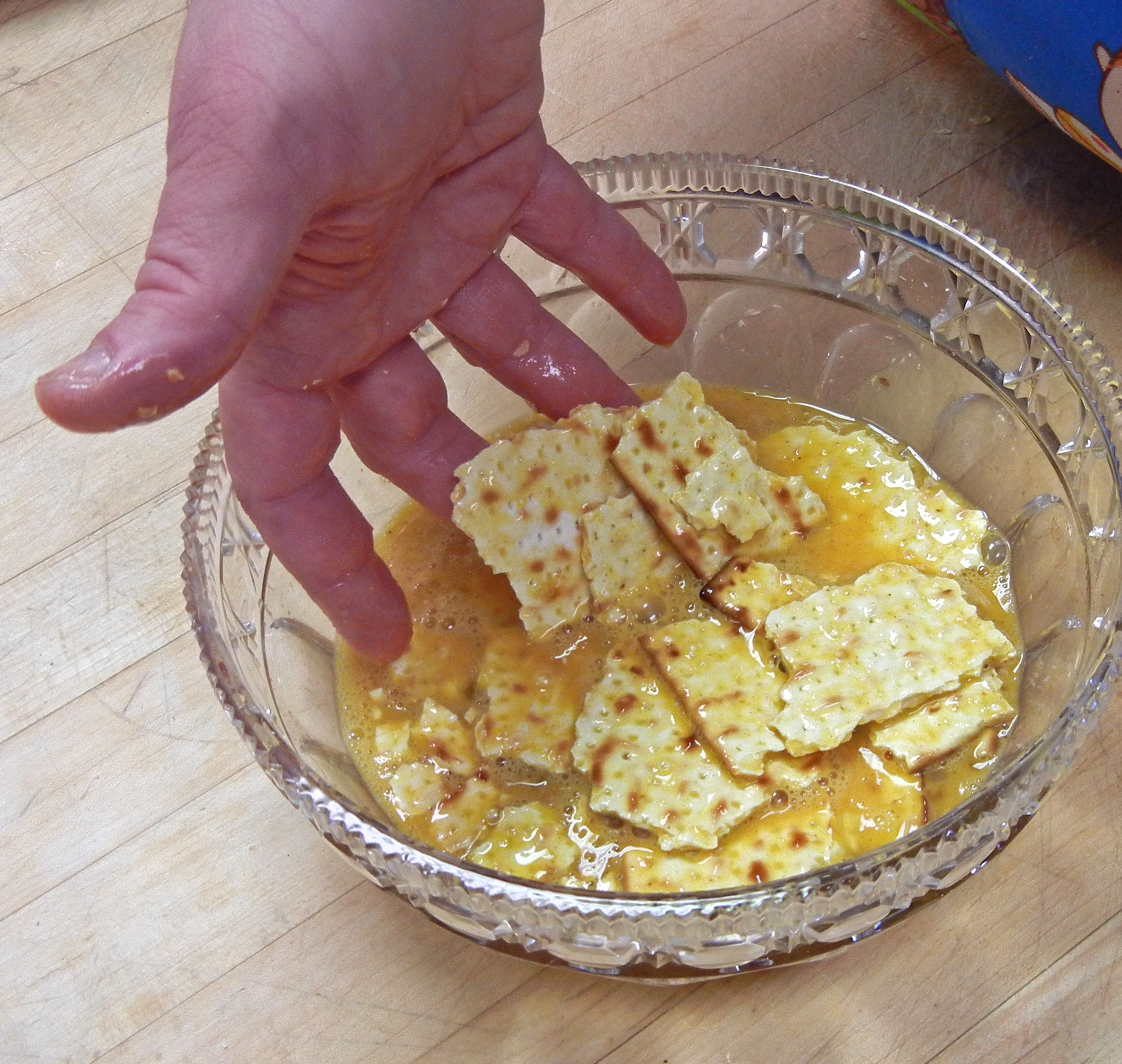
Matzo -- the unleavened bread at the heart of the Jewish Passover's culinary tradition -- can be way more than a cracker. In one recipe that calls to mind French toast or beignets, matzo boards are soaked in an egg mixture, fried in butter and served with a sprinkle of powdered sugar.
MATZO SPIRIT
Lief said using grains for religious observance is a tradition that goes way back in Judaism. Ceremonial sacrifices in the temple in Jerusalem often included "meal" or grain offerings -- a token portion of which was sometimes broken off and burned, with the priests eating the rest.
The offering was always a simple, unleavened one, he noted. It was a flour of some sort mixed with oil and turned into cakes. Passover celebrations -- while nodding specifically to the speed with which Jewish ancestors left Egypt - are a continuation of that same ideal.
He finds it interesting that early Christians such as Paul - all of whom were Jewish - were aware of this long history. When Paul spoke of a little leaven (or rising agent) leavening the whole lump of dough, Lief said the apostle was comparing leaven to sin. But, it wasn't a reference that came from thin air.
"Only a Jew would use that line," Lief said of Judaism informing Christian thought. "It's a Passover joke."
While he considers the leaven-sin comparison to be, "Christian interpretation, not Jewish intentionality," he understands how bread and wine, elements of the Jewish Passover, segued into the observance of Christian Communion.
"I think the issue is really an issue of reconnecting with our ancestor's experiences," Lief said of Jewish thought. "They went from Egypt, from slavery to freedom." That thinking translates into freedom from death through the Resurrection for Christians, he added.
With freedom in mind, Lief will be encouraging those who celebrate the communal Passover meal or Seder at Temple Shalom this week to think big.
"One: You should feel thankful to be free and 2: You should be mindful of other people's experiences and desire to liberate them," Lief said. He went on to list modern enslavement such as literal slavery, human trafficking, poverty and addiction.
 Nora Edinger
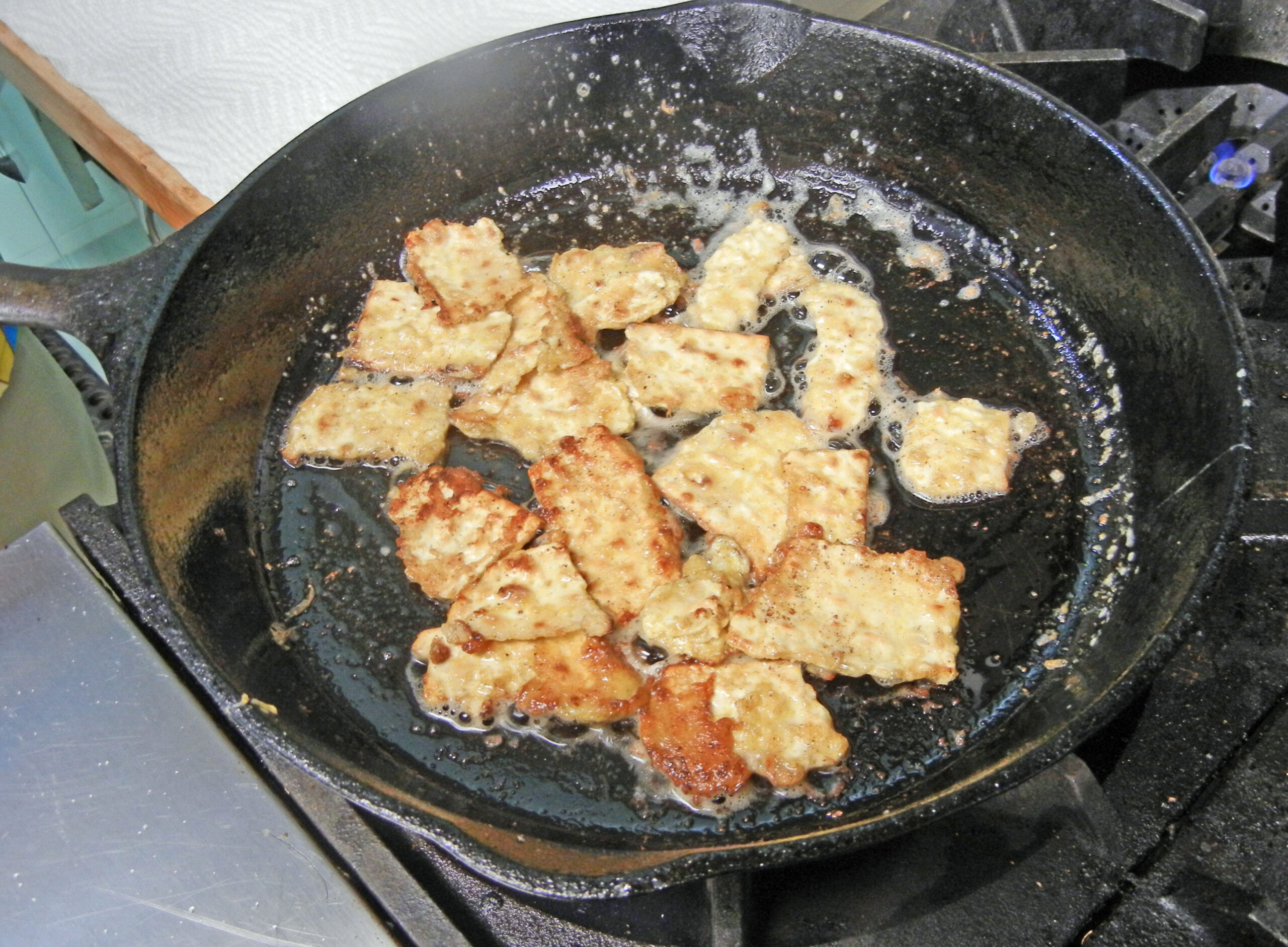
Matzo -- the unleavened bread at the heart of the Jewish Passover's culinary tradition -- can be way more than a cracker. In one recipe that calls to mind French toast or beignets, matzo boards are soaked in an egg mixture, fried in butter and served with a sprinkle of powdered sugar.
THE RECIPE
Preheat an iron skillet on the stove top on a medium flame.
Using about 1 matzo board per person, break the board into bite-sized pieces. Soak pieces briefly - just until dampened - in a mix of (per board) 1 beaten egg, 1 teaspoon vanilla, ½ teaspoon ground cinnamon and 1 teaspoon of granulated sugar.
Melt 1 Tablespoon of butter in the skillet and add matzo pieces in a single layer. Brown on one side. Flip with a spatula and continue browning until a delicate crisp is reached.
Drain pieces on a paper towel. Serve warm with a sprinkle of powdered sugar or fresh fruit.
"I like mine a little crispy brown on the outside," Lief said of keeping the pieces separated during frying rather than letting them form into a patty.
He noted an alternative recipe is to go for patty style - soaking the matzo longer and frying it in an eggier mix so that the result is more like scrambled eggs or an omelet. Various brie recipes can also be taken to the savory side - think sriracha sauce or hummus.
Either way or every way such recipes are prepared, Lief noted that an annual week without bread is certainly the mother of culinary invention. "It's a lot better than just matzoh."