
Labor and Climate Justice
Seventh Reuther-Pollack Labor History Symposium Explores the Intersection of These Two Issues
Trending
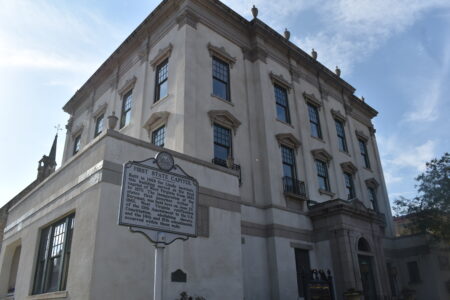
WHEELING -- The Wheeling Academy of Law and Science (WALS) Foundation and the Ohio County Public Library are partnering to organize the seventh installment of the Reuther-Pollack Labor History Symposium to be held at the First State Capitol at Eoff Street in Wheeling on Saturday, Sep. 2.
The event will feature some of the nation's top experts on the subject of reconciling labor and environmental issues, including Dr. Hal Gorby, Dr. Josiah Rector, Dr. Erik Loomis and Dr. J. Mijin Cha.
The theme of this year's symposium is inspired by the 2023 Wheeling Reads: One Book, One Community initiative, which includes a season of programming and events based on author Jennifer Haigh's novel, "Heat and Light."
Wheeling Reads, in partnership with the Writers Association of Northern Appalachia (WANA) and West Virginia Writers Inc., with funding provided by the Wheeling Arts and Cultural Commission, encourages Ohio Valley residents to read Haigh's book, which tells the story of a western Pennsylvania coal town that finds new life and hardship when a fracking company begins operations. Over the summer, the library will host events, lectures and discussions (such as the Reuther-Pollack Labor History Symposium) on issues surrounding the book, including climate change, environmental justice and hope for the future.
The Wheeling Reads initiative also includes an art and writing contest.
The season's programming will culminate at the Wheeling Reads Festival on Sept. 9, at which Haigh will be the guest speaker at the library.
Meanwhile, the labor history symposium is named for Walter Reuther, and Wheeling businessman Augustus Pollack, the only owner ever to have a monument erected in his honor by union employees.
Admission is $30 (students $10). Tickets may be purchased in advance through Eventbrite or by snail mail (send check to WALS Foundation, 1413 Eoff St., Wheeling, WV 26003) or in person by contacting Sean Duffy at lunchwithbooks@yahoo.com.
SYMPOSIUM SCHEDULE
Saturday, Sept. 2
Doors Open: 9:30 a.m.: Registration and Continental Breakfast
10 a.m. -- Dr. Hal Gorby presents "The Ohio Valley's Struggle to Balance Labor and Environmental Justice."
For generations, working people throughout the Upper Ohio Valley have fought for better wages and safer working conditions, and raised concerns about the wider environment. Pollution and diseases tied to industry were very pertinent issues for local labor unions. In the early 20th century, the Ohio Valley Trades and Labor Assembly improved working class life, as seen in their advocating for a filtrated water system. However, laborers' goals did not always align perfectly with the rising environmental movement. Many unions initially raised concerns about strip mining and other new technologies, but as the economy turned precarious in the 1970s and 1980s, many working people came to view environmental regulations as detrimental to their economic security. Striking a balance supporting economic and environmental justice has been a long feature of the region's labor history.
Gorby is a teaching associate professor of History at West Virginia University, and his work focuses on the history of West Virginia and Appalachia. He is the 2020-21 recipient of the Eberly College's Outstanding Teacher award and the University's Nicholas Evans Excellence in Advising Award. His book, "Wheeling's Polonia: Reconstructing Polish Community in a West Virginia Steel Town" was published by WVU Press in 2020, and won the Oskar Halecki Book Prize as the top book on the Polish American experience in 2022-23.
11 a.m. -- Dr. Josiah Rector presents "The Black Lake Center, Deindustrialization, and the Social-Democratic Origins of the Environmental Justice Concept."
This paper argues that UAW President Walter Reuther's social democratic conception of economic justice shaped his approach to environmental issues. Reuther believed that environmental protection should be integrated with the economic agenda of the trade union movement, the civil rights movement and the War on Poverty. The Walter and May Reuther Family Education Center in Black Lake, Michigan, inspired by the Swedish Confederation of Trade Unions' worker education centers, expressed these values. The "Working for Environmental and Economic Justice and Jobs" conference, held at Black Lake in May 1976, promoted the concept of "environmental justice" over five years before the mass protests in Warren County, N.C., which scholars often cite as the "birthplace" of the environmental justice movement. Tragically, however, deindustrialization, automation and union-busting inflamed tensions between environmental and economic justice. Revisiting Reuther's social democratic politics can offer inspiration for us as we grapple with these challenges today.
Rector is an Associate Professor of History at the University of Houston. He received his Ph.D. at Wayne State University in Detroit, where he spent many hours at the Walter Reuther Library of Labor and Urban Affairs. He is the author of "Toxic Debt: An Environmental Justice History of Detroit" (University of North Carolina Press 2022), and two articles about the UAW and environmental politics (in the Journal of American History and Modern American History, respectively).
noon – Lunch break with lunch provided, with a Reuther birthday celebration. A walking tour to the Reuther and Pollack monuments will be led by Dr. David Javersak
2 p.m. -- Dr. Erik Loomis presents "The Lost History of Labor-Environmental Alliances."
The 1970s saw an enormous upswing in both the environmental and labor democracy movements. This talk explores the connections between those movements to demonstrate what could have been and what could be. Versions of a labor environmentalism extend back to the 1930s in the timber industry and these slowly grew, even before the popular environmental movement began rising after World War II. The expansion of chemical usage, toxicity and the environmental crisis increasingly clear to Americans by the late 1960s helped to bring these movements together and created significant alliances between environmental groups and unions in timber, steel, oil, chemicals, auto and other industries. The economic stagnation of the late '70s and the rise of capital mobility that closed factories strained and eventually destroyed these relationships. Today, some unions engage in overtly anti-environmental actions while many environmental groups struggle to speak to working Americans. This talk will explore this forgotten history, discuss current conflicts in historical context, and point the way forward to the rise of new and increasingly meaningful alliances.
Loomis is professor of History at the University of Rhode Island. He is the author of three books, "Out of Sight: The Long and Disturbing Story of Corporations Outsourcing Catastrophe" (2015), "Empire of Timber: Labor Unions and the Pacific Northwest Forest" (2016) and "A History of America in Ten Strikes" (2018). He has written about labor, environmental and other issues for The New York Times, Washington Post, Dissent, The Nation, The New Republic and other publications.
3 p.m. -- Dr. J. Mijin Cha presents "The Power of Environmental Justice-Labor Coalitions to Deliver a Just Energy Transition for All."
Some assert that ending fossil fuel use is necessary for protecting the future of humanity, yet ending fossil fuel use will result in job loss and economic hardship for communities. This talk will discuss the challenges decarbonization raises and how environmental justice and labor interests can work together to build a more just future where all communities can thrive.
Cha is an assistant professor of environmental studies at the University of California, Santa Cruz. She is also a fellow at Cornell University's newly launched Climate Jobs Institute, where she works on the Labor Leading on Climate initiative. Dr. Cha's work looks at the intersection of climate, labor and inequality. Her recent research is on "just transition," how to transition workers and communities equitably into a low-carbon future. Dr. Cha is on the board of the Center on Race, Poverty and the Environment, Greenpeace Fund and a member of the California Bar.