Impact Fund Gets Quick Approval by Committee
CHARLESTON – With one week left until the 2020 session ends, the West Virginia Legislature met Saturday for floor sessions and committee meetings, with one bill sponsored by the Speaker of the House of Delegates moving forward and a bill pushed by the Attorney General being defeated.
House Speaker Roger Hanshaw, R-Clay, returned to the Senate – where he once worked as a staff attorney to the Republican minority – Saturday afternoon to explain his bill creating a new investment program for economic development projects.
The Senate Finance Committee quickly approved House Bill 4001, creating the West Virginia Impact Fund, only making technical improvements to the bill, which has now been reported to the Senate floor.
HB 4001 would create the West Virginia Impact Fund and the Mountaineer Impact Office. The special revenue fund under the state treasurer would become a source for investments.
The bill sets the minimum aggregate investment for the fund at $25 million. It would hold any returns on investment, gifts, contributions and even appropriations as determined by the governor and the Legislature, though it’s not expected that state monies would be used in the fund.
The Investment Committee would consist of a representative of the governor, the secretary of the Department of Commerce, and five members appointed by the governor with the advice and consent of the Senate. The day-to-day management of the fund would be done by the Mountaineer Impact Office. The Investment Committee would appoint a managing director for the office. The director’s job would be to find investors.
Hanshaw told committee members Saturday the HB 4001 would create the first sovereign wealth fund that didn’t include any taxpayer dollars, though the bill doesn’t prohibit tax dollars for being used in the future. According to Hanshaw, there are 16 sovereign wealth funds operated by states that leverage taxpayer dollars with outside investments.
“In each and every instance, the state – sovereign entity – has reached into the pocket of its taxpayers and capitalized a fund to be used for the purposes of economic development, and those funds are being used against us,” Hanshaw said. “We’re not in a position to do that…We are in a position to capitalize a $1 billion fund from private sources around the world looking for a way to flow their capital into the United States.”
On the other side of the building, the House Health and Human Resources Committee rejected a bill supported by Attorney General Patrick Morrisey to protect people with pre-existing medical conditions should his lawsuit against the Affordable Care Act succeed.
Senate Bill 284, which would have created the Health Care Continuity Act, failed in a 12-11 vote Saturday afternoon. The bill created the West Virginia Patient Protection Program for people with pre-existing medical conditions. It would give the state Commissioner of Insurance the authority to activate the program should the Patient Protection and Affordable Care Act is struck down in total or in part.
The bill was introduced on behalf of Morrisey, who unveiled the proposal in January. The bill mirrors similar efforts in Louisiana and most recently in Arizona. In a press release Friday, Morrisey urged House members to support the bill.
“This legislation represents a sensible, state-based solution that prepares West Virginia to take almost immediate steps to ensure continuity of care for our family, friends and neighbors,” Morrisey said.
West Virginia, represented by Morrisey, is among 18 states and the U.S. Department of Justice suing to dismantle the Affordable Care Act adopted under former President Barack Obama. They allege the act is unconstitutional because of the individual mandate that penalizes people who haven’t purchased health insurance.
The 5th Circuit Court of Appeals in New Orleans ruled in December that the individual mandate is unconstitutional, but sent the case back to the U.S. District Court for the Northern District of Texas to work out whether the individual mandate could be separated from the ACA or whether the ACA could be divided into parts. The U.S. Supreme Court announced Monday it will hear the case this year and is expected to render a decision in early 2021.
Community

Students Pitch In to Get Shadyside Ready for Loop Festival
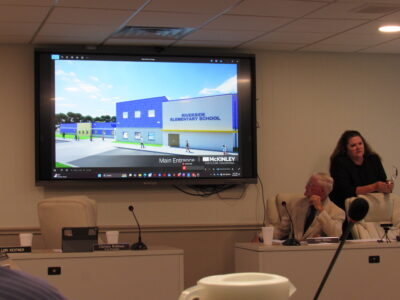
Marshall BOE Gets Update on Future New Riverside Elementary School
Former Fire Chief Faces August Jury Trial
ST. CLAIRSVILLE — A trial date has been set for former Martins Ferry volunteer fire chief William ...
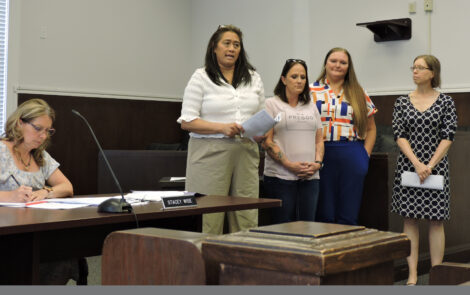
Recovery Advocacy Group Presents Funding Request to Brooke Commission
Brooke High School Class of 2026
The following is the Brooke High School graduating class of 2026. This list was not available by deadline of our ...