Wheeling Hospital Experts Urge Precaution, Not Panic, With Coronavirus
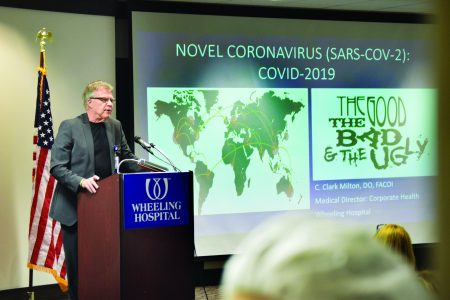
WHEELING — Wheeling Hospital’s medical professionals recommend the public practice precaution, not panic, in response to the threat of coronavirus.
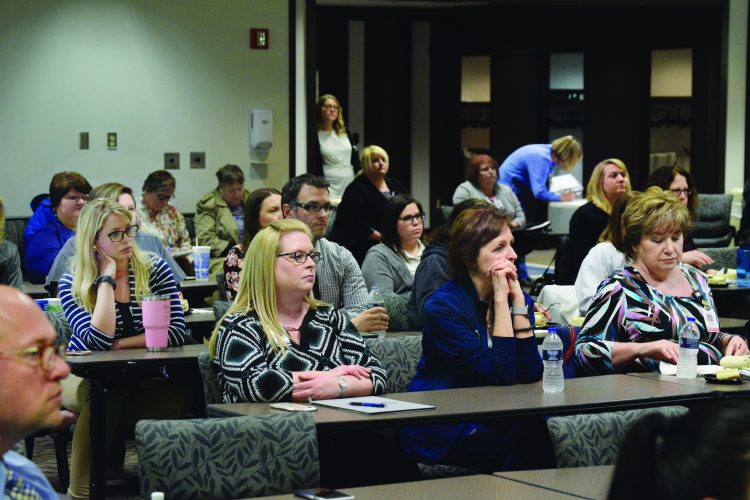
The hospital presented a one-hour educational program for its employees Tuesday on the novel coronavirus known as COVID-19.
“There’s a lot of misinformation. Share facts, not fear,” said Dr. Clark Milton, chairman of the hospital’s infection control committee and director of corporate health.
Basic precautions include good personal hygiene habits: frequent hand washing, avoidance of facial self-touching, avoiding contact with people who are sick, staying home when sick and self-isolation by anyone who traveled to a region where outbreaks have occurred.
Hand sanitizers should have an alcohol content of at least 60 percent, according to the U.S. Centers for Disease Control and Prevention.
People should use household cleaning products and sanitizing wipes that are formulated to kill viruses, said Laura Rafa, Wheeling Hospital’s director of qualitry and infection control. The U.S. Environmental Protection Agency has released a list of effective sanitizing agents, Milton added.
Public readiness involves home preparedness, particularly for anyone age 59 or older, Rafa said. Families should consider access to health care, food and medication if self-distancing becomes necessary.
Parents should learn of emergency plans at their children’s schools or day care centers, she said. Workers should become familiar with their employers’ emergency plans. Likewise, employers should cross-train workers in case other employees have to self-isolate.
“Be informed, be prepared, be smart and be safe,” Rafa said. “We need to be educated and we need to think about this practically.”
A comprehensive preparedness plan has been written for Wheeling Hospital and its division, Harrison Community Hospital in Cadiz. Wheeling Hospital has 24 patient rooms and four procedure rooms equipped to serve as airborne isolation rooms, she said.
If COVID-19 is suspected, a sample — a nasal swab and respiratory culture from the patient– is sent by a local health department to the state department and CDC for testing, Milton said. Eventually, some private labs will be authorized to conduct tests.
Communication between local and state health departments, the CDC and local providers will be needed to stem an outbreak, Milton said. Noting the chain of command, he said health officers “need to take command.”
Comparisons between COVID-19 and influenza are “unfair,” according to Milton.
In the United States, 32 million cases of influenza have been reported this season, with 310,000 hospitalizations, 18,000 deaths and 136 pediatric deaths, he said. As of Monday, 113,583 cases of COVID-19 have been confirmed worldwide, with 600 U.S. cases.
A vaccine and anti-retroviral medications are available to prevent and treat flu. But, because COVID-19 is a new virus mutation, a vaccine hasn’t been developed and population immunity doesn’t exist, he said,
Approximately 80% of people who contract COVID-19 will have mild symptoms; 15% will be severe cases and 5% will require critical care, Milton said, Children appear less likely to be infected.
CDC officials think the current risk to the U.S. public is low, but the disease is expected to spread more widely, he said.
When the first cases of COVID-19 were reported in Wuhan Province in China, containment was the initial step to avoid the spread of the virus, Milton said. As more cases developed around the world, travel restrictions and quarantines were imposed in affected areas, with social distancing and social mitigation also recommended.
Top Headlines

Scoop There It Is: NB Cafe and Creamery Has Reopening Event
One Year Later: Currents Of Hope Flow Through Triadelphia, Valley Grove

Flood Debris Remains Along Ohio County Creeks One Year Later

Remembering Those We Lost

Through The Tragedy Of The 2025 Ohio County Floods, A Community Shows Its Heart