
Ohio County Schools Could Be Out $7 Million Annually If Amendment 2 Passes
 Joselyn King
 Trending
WHEELING -- If proposed Amendment 2 in West Virginia passes on Nov. 8, Ohio County Schools stands to lose about 9% of its yearly budget -- or an expected $7 million annually, according to a member of a Charleston-based public policy organization.
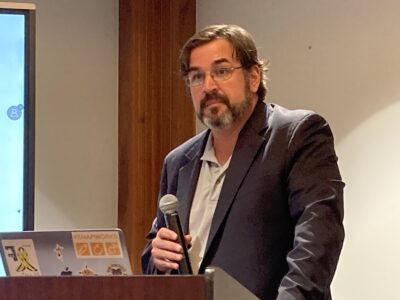
Seth DiStefano, policy outreach director for the West Virginia Center on Budget and Policy, offered a presentation on Amendment 2 during Monday night's Ohio County Board of Education meeting.
Amendment 2, titled the "Property Tax Modernization Amendment," would amend the State Constitution by providing the legislature with authority to exempt tangible machinery and equipment used in business activity, as well as the personal property tax on motor vehicles paid by individuals.
It also would give the Legislature spending control over 27% of all property taxes collected.
The idea behind the amendment isn't new, and the West Virginia Center on Budget and Policy has been "pointing out to state lawmakers for the last decade and a half why this is a bad idea," DiStefano said.
The proposed abolishment of business equipment and personal vehicle property taxes would result in a loss of about $500 million in annual revenue to the state, according to DiStefano. It also would give control of about 27% of property tax collected to the Legislature.
DiStefano focused on Ohio County Schools' annual budget for fiscal year 2020, which was $82,385,000.
He said if Amendment 2 - and the full exemption of proposed taxes - had been in effect at that time, Ohio County Schools would have lost an expected $7,289,000 that fiscal year. The drop would have come from losses in both regular levy and excess levy revenue resulting from property taxes.
The expectation of the Legislature is that West Virginia will continue to have strong tax revenues moving forward, and lawmakers appear to want to have a say in how the money is spent, DiStefano said.
Typically this money stays in the county where it is collected, but the Legislature has no stated plan for distributing this money back to school districts and municipalities, he said.
DiStefano suggested funding to local governments might come in the form of block grants under Amendment 2.
Board President Andy Garber termed the Legislature's ideas for spending the money "arbitrary."
"It could vary from year to year," he explained. "There is no concrete, objective way that schools will be funded in a full manner so we can provide a thorough and efficient school system."
Board member David Croft, a lawyer and an accountant, explained amending the constitution through Amendment 2 doesn't change taxes, but instead creates "carve-outs."
He said what school districts need is "some stability" so that they will know what their budget will be from year to year.
"We have funding needs, and we need predictability in order to budget ..." Croft said. "As I sit here as a board member, it (Amendment 2) has a chilling effect on not knowing how we are going to raise revenue.
"I'm not seeing anything else (from lawmakers) other than, 'We're going to take this money away, and trust us.'"
Garber called for an Amendment 2 discussion to again be placed on the agenda for the board's next meeting set for 6 p.m. on Oct. 10 at the board office, 2202 National Road, Elm Grove.
He suggested the board consider a resolution regarding Amendment 2, and also discuss Amendment 4 that is on the Nov. 8 ballot.
Amendment 4, the "Education Accountability Amendment," seeks to give the Legislature overview of rules and policies from the State Board of Education. If passed, the state board's actions would be "subject to legislative review, approval, amendment, or rejection," the ballot language states.