Top 10 Stories Of 2023: Oglebay Deer Hunt Courts Protests
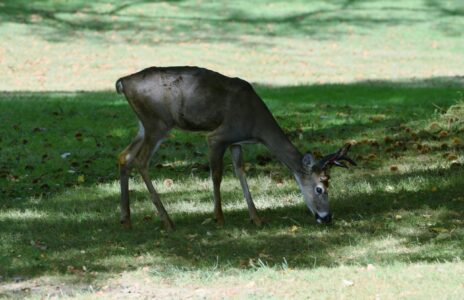
File photo The limited bow hunt to cull Oglebay's deer population drew protest and criticism from some locals, but park officials considered the hunt a success.
Following the Sept. 18 announcement that Oglebay Resort would hold a fall deer culling, protests against the event manifested in social media outcry, legal filings, and petitions.
Despite the backlash, Oglebay officials remained steadfast in holding the event to manage the growing population of deer at the park. Archers collected 16 total deer over the Nov. 6-8 hunt, according to the Vice President of Sales and Marketing at Oglebay Herb Faulkenberry,
The protests against the culling initially concentrated in an Oct. 3 petition to cancel the hunt filed by local attorney Teresa Toriseva, who represented 14 locals who opposed the hunt.
In the petition, Toriseva explained Oglebay Park created the problem of a tame, hand-fed deer herd by allowing locals and tourists to feed them. She also stated the park had “marketed and benefitted” from the hand-feeding of deer at the park.
Outlining that Oglebay “usurped and abused their power to conduct this hunt under these circumstances,” the plaintiffs asked for an injunction from Brooke County Circuit Court Judge Jason Cuomo to cancel the hunt.
Countering with a motion to dismiss the case on Oct. 11, the law firm representing Oglebay, Phillips, Gardill, Kaiser and Altmeyer, argued Toriseva lacked standing in the case. They explained she failed to add indispensable parties to the case, such as the West Virginia Department of Natural Resources and failed to state claims against Oglebay Park and Oglebay Foundation, Inc.
Cuomo ultimately sided with Oglebay, granting the motion to dismiss the suit. Agreeing with the defendants that Toriseva could not prove plaintiffs would suffer “sufficient, concrete and particularized injury” due to the culling, the judge concluded that the court could not preside over the case.
The end of the legal battle did not signal an end to the protests surrounding the deer hunt, as a petition reaching over 1,500 signatures on change.org was the next avenue naysayers of the hunt used to signal their opposition to the event.
Local attorney and member of the West Virginia Animal Law Committee Karen Kahle promoted the petition to spread awareness of the inhumane aspects of the hunt and influence Oglebay to reconsider its population control methods.
Believing Oglebay did not “perform their due diligence” when devising the hunt, Kahle and other concerned locals implored Oglebay officials to delay the hunt. Petitioners wanted the park to consider other “long-term solutions,” such as birth control for the deer, before conducting a culling.
In a Nov. 4 statement addressing the “many news stories, editorials and social media posts” surrounding the hunt, Oglebay CEO Bob Peckenpaugh outlined the park’s reasoning for using the bow hunt to control the deer population.
The park had considered “all forms of deer population control,” explained Peckenpaugh. The other options the park explored, such as relocation and sterilization of the herd, came with “safety concerns.”
“Our research and multiple conversations with the West Virginia Department of Natural Resources and WVU Extension Service led us to decide on the limited-purpose bow hunt,” said Peckenpaugh. “While we understand many believe this to be an inhumane way to reduce the population, we have also taken into consideration the counsel of both nature professionals and hunters who disagree.”
Highlighting that conversations surrounding environmental stewardship for Oglebay and Wheeling Parks have been occurring “over the past three years,” Peckenpaugh noted they are focused on bringing back “balance to our ecosystem” by giving the plants, trees and wildlife of the park “the opportunity to flourish.”
One of the avenues to bring balance back to the park’s ecosystem was through the bow hunt. As stated in the Oglebay Deer Management Plan, the “overarching goal” of the hunt was to control the overpopulated deer hunt and restore balance to the ecosystem.
A stipulation in the hunt rules to achieve their overarching goal was that each archer must take at least one doe during the hunt. 10 of the 16 deer collected were doe, according to Faulkenberry, who labeled the hunt “a move in the right direction.”
“Any reduction in the deer population is a move in the right direction as we continue the work toward a balanced ecosystem for the park,” said Faulkenberry on the results.
The next step for Oglebay in their long-term strategy to balance the park’s ecosystem is distributing new signs, brochures and flyers at the park to educate visitors on the “negative impacts created by hand-feeding any wildlife.”
“Oglebay does not have law enforcement officers,” said Faulkenberry. “However, we believe that, with education, people will understand and cooperate.”
The Wheeling Park Commission is also considering a proposal from members of the community to create a Deer Population Control Task Force.
While pitching the concept at the Dec. 19 WPC meeting, Kahle outlined that the group would consist of representative community members, Oglebay officials and WVDNR representatives. The task force would meet to research, develop and propose a plan for deer population control that used nonlethal methods.
“The Oglebay deer population control methodology presented by the force will satisfy not only Oglebay and the WVDNR but the community at large,” said Kahle. “This will restore the community’s trust in Oglebay’s handling of the deer that live in this beautiful park that we all love.”
Top Headlines

One dead following Thursday night accident in Monroe County
Wheeling Police Introduces New K9 Officer ‘Geist’
Capito Endorses Eddy, Dobkin In State Senate Races
Capito Sees Progress Of Redevelopment Efforts In Wellsburg
Environmental Monitoring Nears Completion at 19th Street Site