
Morrisey Raises Concerns About Possible TANF Deficit
Trending
CHARLESTON - The Temporary Assistance for Needy Families program is facing a structural deficit in West Virginia according to Gov. Patrick Morrisey, with possible cuts to subsidies for child care, clothing allowances and food and nutrition services being considered.
Speaking during a press conference Monday morning announcing the results of audits of several state departments, including the Department of Human Services, Morrisey said a "problematic” discovery was made involving the TANF program, also called WV WORKS.
Morrisey said TANF spending is projected to exceed $40 million. While temporary carryover balances mask the issue, Morrisey said TANF funds are shrinking. The program is estimated to have approximately 18 months of stability before the structural deficit becomes an immediate crisis.
"We saw there were changes that were made going back pre-COVID that kept coming and coming, and then the monies that were going in have led to a situation, a structural deficit of at least $40 million," Morrisey said.
The governor explained that during the COVID-19 pandemic, one-time emergency funding was used to permanently expand state programs and increase baseline expenditures, such as TANF.
"Those who may remember at the beginning of my term, I talked about the danger of when you have one-time money that you’re using for base building. It could be a real big problem. Well, that’s part of what happened here," Morrisey said. "The emergency spending levels created a big structural deficit. And quite frankly, we had these silos operating within (DoHS) that led to inadequate oversight of the TANF budget. So, we’re obviously looking to fix that."
TANF is a federal block grant that puts the states in the driver’s seat at distributing the more than $16 billion allocated nationally. According to the DoHS Bureau for Family Assistance, there were 4,254 West Virginia families receiving TANF as of the end of 2025, with a family of three getting up to $542 per month in cash assistance.
TANF received $176.7 million through the general revenue budget for the current fiscal year, plus $25.8 million for TANF maintenance of effort, a federal requirement for states to maintain a minimum level of historical spending on welfare programs. For fiscal year 2027 beginning July 1, more than $177 million is budgeted for TANF and another $25.8 million for TANF maintenance of effort.
According to the Center on Budget and Policy Priorities, West Virginia spends approximately 36% of ifs TANF block grant on basic assistance. Unspent block grant funds can be carried over into the next fiscal year. According to DoHS records, West Virginia had more than $83 million in unobligated TANF balances at the end of September when the federal fiscal year ended, down from $112 million by the end of September 2024.
Speaking Monday, Morrisey said state programs that use TANF dollars - including subsidies for child care, clothing allowances and family support centers - are being reviewed to reduce the potential TANF structural deficit.
"What was happening is there was, for a long period of time, inadequate financial controls where all these programs were spending and kind of pulling from TANF, there were inadequate controls over them," Morrisey said. "All of those are going to be looked at very, very closely because we’re not going to run a deficit. We have to be responsible."
Members of the House of Delegates were at the State Capitol Building Monday for a two-day series of meetings ahead of next month’s regular legislative interim meetings. Members of both parties said there would likely be little appetite for cutting the child care subsidy program or other reductions that might harm children or families.
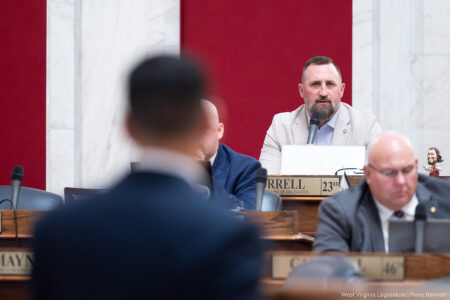
"I’d like to see the data on how we’re $40 million in deficit on TANF, because our family support centers, our resource centers ... they rely on these funds. It’s a big deal," said House Health and Human Resources Committee Chairman Evan Worrell, R-Cabell. “Of course, I’m not going to support cutting child care subsidies or clothing vouchers at all. There’s got to be other ways."
"I’m really concerned when you consider that child care is a public utility that’s absolutely essential for families," said House Finance Committee Minority Chairman John Williams, R-Monongalia. "The cost of child care, as a percentage of household income, is enormous compared to what it used to be ... I’m extremely aware, and I will jealously protect TANF dollars because so many West Virginia families depend on it."
Earlier Monday, Morrisey announced the results of an audit of DoHS by BDO USA that recommended improvements to the department that could generate up to $68.6 million in annual savings.
"I know he just announced an audit through DoHS with potential savings there," Worrell said. "Can we not fill that gap with that without cutting child care? It just seems kind of weird to talk about cutting child care subsidies that we just supported in this past legislative session."
Lawmakers earlier this year passed House Bill 4191, which proposes tax credits for businesses that either build on-site facilities or financially back third-party child care providers for their staff. The bill also mandates a shift toward enrollment-based subsidy payments instead of attendance-based payments, a new reimbursement system for providers and implementation of strategies that prevent families from suddenly losing child care assistance due to incremental pay raises.
Morrisey let the bill become law without his signature. Williams said the Legislature’s recent support for affordable and available child care would likely make cutting child care subsidies a hard sell among lawmakers heading into the general election.
"I think what we heard from the governor today was sort of a soft launch that he’s going to cut child care dollars from TANF," Williams said. "He said he’d confer with the Legislature. I can probably tell you what that conference will eventually come to when it comes to their history on making cuts around here."
Morrisey and DoHS have a certain amount of discretion to move TANF funding around. The governor said changes will be necessary one way or another.
"We have to now make the changes that are going to make sure that there are no structural deficits within TANF," Morrisey said. "This is all achievable, and we’re prepared to move forward administratively with a number of initiatives, but quite frankly, we also want to make sure that we’re briefing the Legislature on a lot of these items, because I think there can be some shared partnerships to really explain what happens."
Steven Allen Adams can be reached at sadams@newsandsentinel.com.