Road Maintenance Bills up for a Vote Today in the West Virginia Legislature
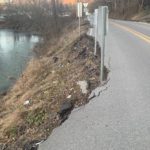
CHARLESTON — As the deadline to pass bills from one chamber to the next inches closer, two similar bills providing for much-needed secondary road maintenance moved to third reading and will be up for passage today.
The West Virginia Senate approved an amendment to Senate Bill 522 Monday, while the House of Delegates read House Bill 2011 a second time. Both bills deal with requirements for the Division of Highways and how it deals with the maintenance of the state’s secondary road system.
SB 522 — also known as “Randy’s Dream” for its lead sponsor, state Sen. Randy Smith, R-Tucker — creates a State Road Repair Fund.
The fund would be paid for by a $110 million appropriation from the general revenue fund in fiscal year 2020 and an additional $110 million appropriation in fiscal year 2021.
It would also create an enhanced road repair and maintenance program that would allow DOH to contract with private companies for pothole repair, paving, ditching, and mowing if 70 percent of the core maintenance plan was not completed in the prior year.
An amendment from state Sen. Eric Tarr, R-Putnam, made some key changes to the bill. It mandated that DOH contract out for core maintenance activities instead of giving DOH the latitude to make that decision. It also changed the priority order for secondary road projects to be based on DOH average daily traffic counts and the county commission’s determination of the road’s level of disrepair.
“One of the things that (DOH) believes should happen is that the determination of the repairs should be a shared responsibility between the Division of Highways and the county commission,” Tarr said.
The Tarr amendment also changes how funds would be allocated to county DOH offices, lowering the minimum grant amount from the State Road Repair Fund from $1.5 million to $1 million.
“For some counties that’s more than needed and not enough for others,” Tarr said. “We want to go down to $1 million so the money is put to the counties that need it.”
According to Tarr, there are 22,000 miles of secondary roads in West Virginia, but not every county has the same road maintenance needs.
“The problem with that is when you look at those miles and how they’re divvied up … there are some counties — the five smallest counties combined — have less square miles than any of the single five largest counties,” Tarr said.
The amendment passed by voice vote, and the bill is up for third reading today.
On the House side, HB 2011 moved to third reading and is up for passage today after two attempts to amend the bill failed.
HB 2011 would create a road maintenance program similar to the one in SB 522, allowing DOH counties and districts to contract with private companies if it can’t complete its core maintenance plans.
Delegate Barbara Fleischauer, D-Monongalia, introduced two amendments to the bill. The first would have created a pilot program in DOH District 4, which includes Doddridge, Harrison, Marion, Monongalia, Preston and Taylor counties. The pilot would have required the company that does the initial paving project to maintain the roads they pave for seven years, with the DOH evaluating the project after seven years.
“You would think that if they did that initial paving contract they would maybe do a better job and it would provide some relief to the understaffed DOH regional districts,” Fleischauer said. “I think it sounds like a good idea…it’s just another tool in the tool box.”
House Government Organization Committee Chairman Gary Howell, R-Mineral, spoke against the amendment. He said the bill already requires DOH to issue reports that will give lawmakers an opportunity to see how the program works. He also said it would cost paving companies money, as they typically don’t have the maintenance equipment.
“Having formerly worked road construction, some of this equipment they would not have,” Howell said. “This would severely limit the people who could even bid on this contracts and drive up costs.”
The first Fleischauer amendment was rejected 40-58. A second amendment, which would have raised the salaries for DOH employees, was ruled as not applicable to the bill.
According to an audit released last week, the state’s 10 DOH districts have spent well below the 70 percent threshold required for road maintenance activities between 2009 and 2018.
Top Headlines
One dead following Thursday night accident in Monroe County
Wheeling Police Introduces New K9 Officer ‘Geist’
Capito Endorses Eddy, Dobkin In State Senate Races
Capito Sees Progress Of Redevelopment Efforts In Wellsburg
Environmental Monitoring Nears Completion at 19th Street Site