
Collectors Enjoy Easter Egg Hunts
Trending
Collectors enjoy all kinds of decorative eggs, both old or new, and hunting for the perfect addition to your collection is always fun!
Egg collectors seek colorful German papier mache eggs, vintage spun sugar eggs with scenes inside, hand painted eggs, carved eggs, African ostrich versions, Ukranian Pysanky eggs and the most famous decorative egg of all, Faberge eggs.
I have a few treasured Easter eggs myself. My favorite is a 1940-era turquoise blue Bakelite egg, decorated with rhinestones, that was my mother's. Actually an Elizabeth Arden marked cosmetic trinket box, the egg is in great shape and would appeal to collectors of accessories like compacts, as well as fans of holiday items, advertising and Americana.
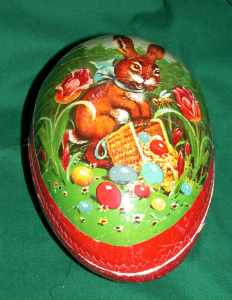
Another type I like are German composition Easter eggs. These colorful treasures, designed to delight children, include straw inside to hide treats. Germany was tops in manufacturing in the early 1900s and most of the fine antique holiday paper decorations that collectors seek from this era were created there.
Pysanky eggs are masterpieces of skill and workmanship. The process of painting these eggs involves applying melted beeswax to a fresh white egg. These are then dipped in successive baths of colored dyes. After each dip, new wax is painted over the area where the artist wants the color to remain. Eventually a complex pattern of lines and colors emerges and the wax is baked off, to create a finished work of art.
Faberge-like eggs are especially popular today with many variations produced by collectible companies and museum stores. The story behind these eggs is a fabled tale of Imperial extravagance.
Czar Nicholas II gave stunning examples of jeweled eggs to his wife and mother in the late 1800s and early 1900s. Many are today in museums of art or private collections. These gold and precious metal eggs were encrusted with jewels and designed with rare workmanship and attention to detail. The originals from the Peter Carl Faberge workshop are valued in the millions.
Replicas are available today at luxury retailers that look very much like the most famous Faberge examples. These copies sell for thousands of dollars.
I own a pop-out book of these beautiful treasures from the Metropolitan Museum of Art that I display at the spring holidays.
But there are only 50 original Imperial Easter Eggs in the world. Faberge eggs represent the height of the jeweler's art and rare quality. Their story continues to fascinate collectors and art lovers everywhere.
Modern Easter egg ornaments are still being made and many times collectors blend the old with the new in their personal inventory. New examples are available in a wide variety of materials, designs and price points. Hallmark, Christopher Radko, Old World, Lenox and other popular retailers create collectible eggs annually for enthusiasts to enjoy.
As always, quality materials, fine details and careful workmanship are the qualities to consider when purchasing collectible eggs. Most recently, I added a decorated quail egg, set on a little pedestal, which opens to reveal a picture frame, to my collection.
Easter eggs aren't the only collectible for egg-crazed enthusiasts either. Many fans save vintage postcards and greeting cards, old books like Easter Ideals and children's storybooks, baskets, and bunnies. Happy Easter, readers!
For comments or suggestions on local treasures to be featured in Antique of the Week, Maureen Zambito can be reached via email at zambitomaureen@hotmail.com or by writing in care of the Sunday News-Register, 1500 Main St., Wheeling, WV 26003.