
Belmont County Juvenile Court Honors Virtual Learning Graduates
Trending
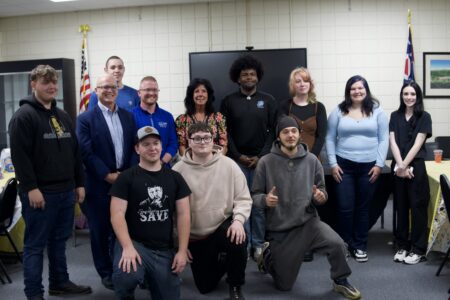
ST. CLAIRSVILLE -- Twelve students graduated from Belmont County Juvenile Court's Virtual Learning Program on Thursday afternoon.
The program held its annual graduation ceremony at the Belmont Career Center, where students are provided a small, supportive classroom setting and the opportunity to engage with peers facing similar challenges.
Al Davies told the graduates that earning their diplomas marked a major step in the right direction.
"Graduations are always wonderful times, but this graduation just means a little something more, because these are kids that maybe some folks gave up on a little bit, didn’t think they could get here today, or didn’t think that they had what it takes to get that high school diploma. But they have, and they’ve excelled, and they’ve flourished in this environment. And it just goes to show that there are many different ways of learning, and just because one way doesn’t work, or just because a way works for every group of kids, that doesn’t mean it’s gonna work for all the kids," Davies said. "It’s a matter of finding that environment, finding that technique and finding that person that can really help these kids and get them to where they are today, so this is just a great day."
Davies explained that schools often identify students who are struggling in traditional classroom settings or experiencing behavioral issues and refer them to the court for evaluation.
"It could be a situation where my probation staff or myself in court identifies somebody that would be appropriate for this program, and that’s the way that we get them into this," Davies said. "At juvenile court, we have incredibly talented and dedicated individuals that work for us, whether it’s our probation officers, our clerical support staff, or the staff we have here at the alternative school, they do everything possible to help kids and families, and without them, this very important day would not have occurred."
Concentrated Conduct Adjustment Program Director Noah Atkinson said the online program, overseen by Belmont County Juvenile Court, gives students who may not thrive in traditional school settings the opportunity to succeed.
"They might come in with zero credits, but they work their butts off and they gain those requirements to graduate," Atkinson said. "We have a teacher that sits with them and works with them diligently on their school stuff, so it gives them that ability to excel in something that in a traditional school setting they weren’t getting."
The teacher Atkinson referred to is Virtual Learning Program teacher Melanie Haswell.
Haswell congratulated the students during the ceremony for their continued hard work and determination.
She added that she believes this is one of the best classes she has taught during her seven years with the program.
"There wasn’t a lot of drama, they were a really good bunch of kids, and I appreciate that. I appreciate you parents, it was hard sometimes getting them here. Sometimes I had to do small bribes to get them here. But I just knew that without a high school diploma, it’s going to be hard to get anything, and that’s why I put my heart and soul into it," Haswell said.
Davies added that the graduation was a moment the students will remember for the rest of their lives.
"There are moments in life that stop you in your tracks, moments where you look around and you realize something important just happened. This is one of those moments, and I want you all to understand something before we go any further, the fact that you are sitting here today is not a small thing. It’s a very, very big thing. Not everyone who sits in a traditional classroom thrives there. That’s not a flaw, that’s just reality. Some of the most capable, creative, determined people in the world don’t learn best in four walls, in rows of desks, or following a schedule that someone else designed for them," Davies said. "And what you found, this environment, this program, this different path, wasn’t the easy way out. Let me be clear about that. It was the hard way forward. It took self-awareness to recognize what you needed. It took courage to pursue it, and it took real grit to see it through to today. You didn’t fail the traditional system, in a lot of ways the traditional system failed you."