
Lions Club Donates Pediatric Vision Screener To WVU Medicine Wheeling Hospital
Trending
WHEELING -- The Wheeling Lions Club donated a pediatric vision screener to WVU Medicine Wheeling Hospital on Wednesday afternoon.
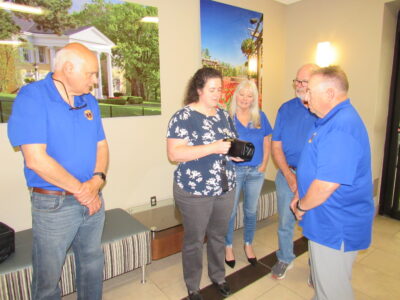
Several club members -- Andy Garber, Lisa Olson, Charlie McFadden and Bill Fisher -- met with pediatrician Dr. Claire Paxton to learn more about the device they purchased.
The spot vision screener, which costs about $6,000, will be used to check the vision of children as young as 6 months old, as well as older children who are nonverbal or autistic and cannot communicate changes in their eyesight.
Garber said helping people improve their vision is one of the Lions Club's initiatives.
"We bought vision screeners for all of the public schools," he said. "The nurses in our public schools screen students' vision. They will make recommendations if they need to see an optometrist. The Lions will pay for the optometrist visit. And if they need glasses, they can apply and we can assist them with purchasing glasses."
Garber said the club also plans to purchase portable vision screeners for parochial schools.
"Vision is an important part of learning," he added.
Paxton, who has worked at Wheeling Hospital for eight years, said the spot vision screener can be used on children as young as 6 months old.
"They just have to look at this area for just a few seconds, and it magically comes out with an output and it will say whether a kid has astigmatism or a refractive error, like needing glasses, and we can correct that sooner," she said.
Paxton said the technology has been available for several years but is expensive. She said the device will be used in her office and shared with other pediatricians working at Wheeling Hospital.
"We just really appreciate it," she said. "This is super helpful, and we will be able to help kids a lot younger than we otherwise would have."